Midterm Vote Tests Trump’s Grip on Republican House and Senate
With over 50 million ballots already cast, voters decide if the president’s popularity can offset historical midterm losses for the governing party.
By Nikolai Morales ·
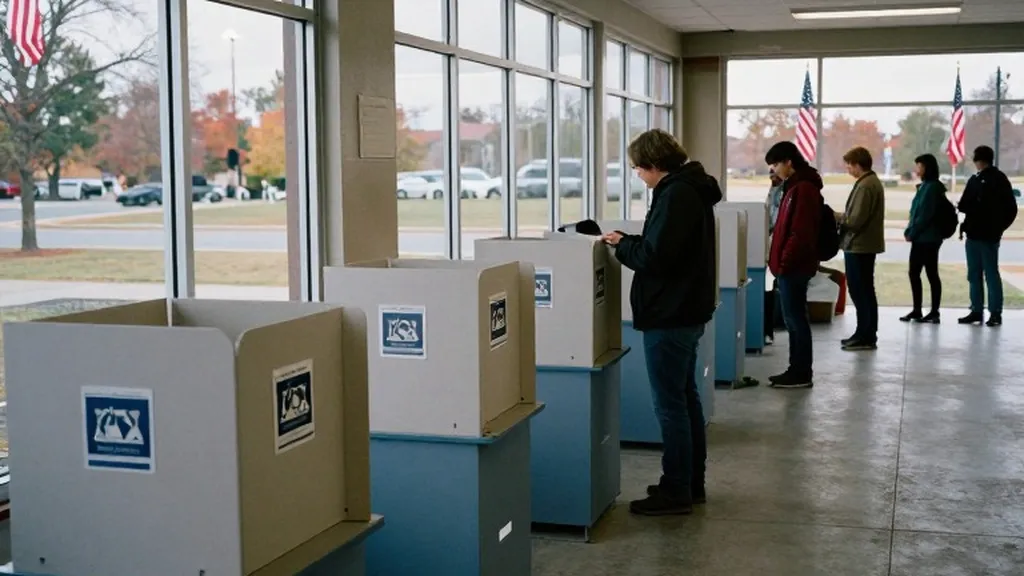
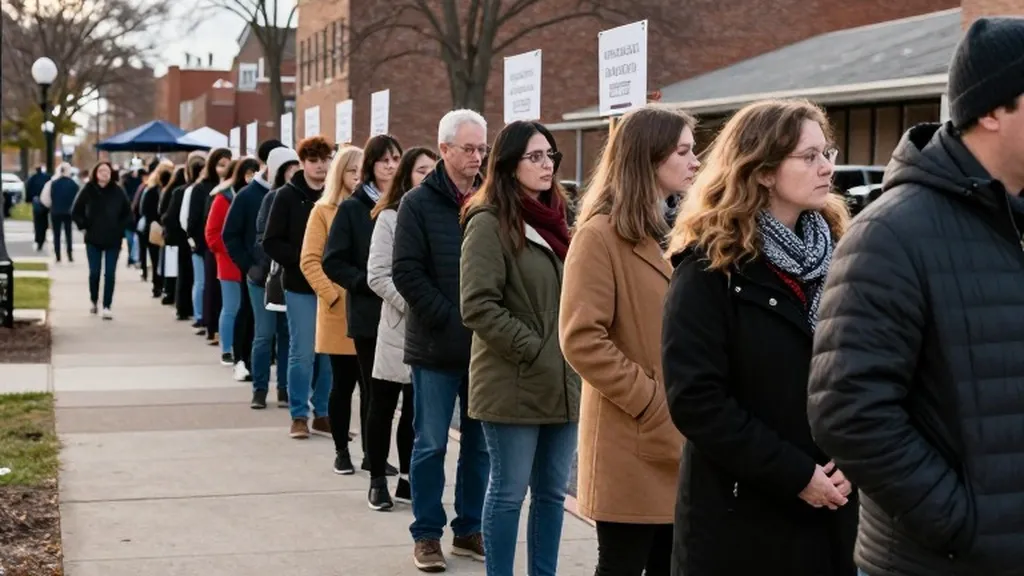
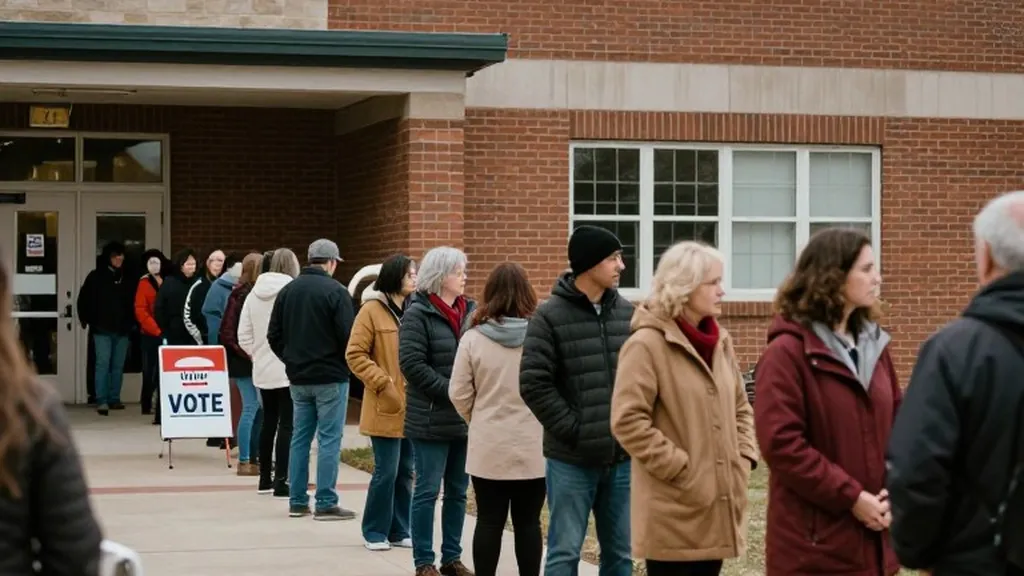
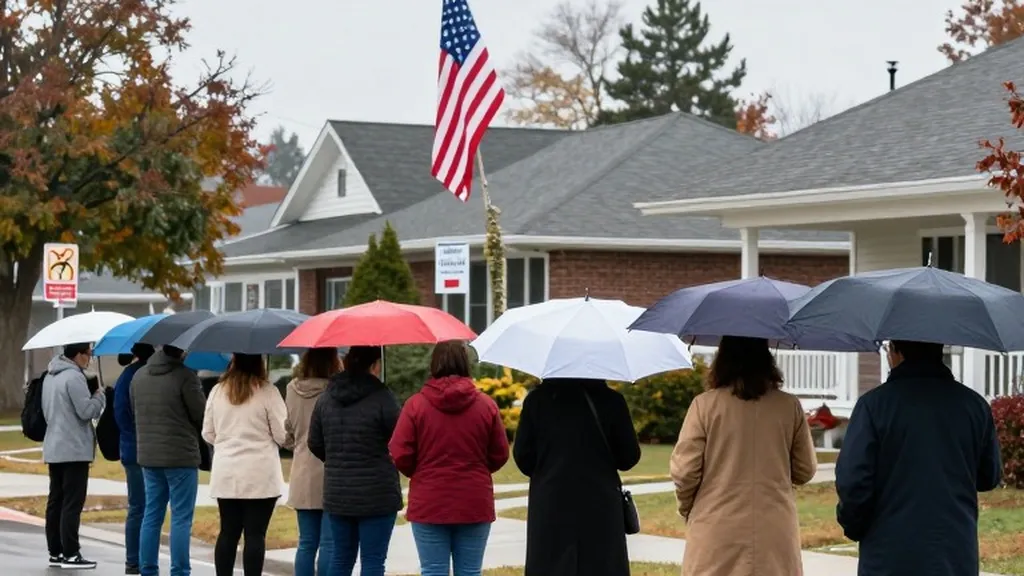
President Donald Trump is not on the ballot Tuesday, but his approval ratings and the performance of his administration will define the outcome of the midterms. More than 50 million Americans have already voted, and the results will determine whether Democrats can seize control of both chambers of Congress for the first time since 2006.
Historical data suggests a difficult night for the Republican Party. In almost every modern midterm election, the party holding the White House has lost seats in Congress. Democrats hope this trend continues, citing Trump’s low approval numbers and voter frustration with the war in Iran and rising gas prices. Trump is counting on his base of white working-class voters to save his allies, a strategy that fueled his victories in 2016 and 2024.
The House race hinges on a potential shift in voter demographics. Republicans hold a slim 220-215 margin at the start of the current Congress. Strategists believe Democrats are on track to win a majority, targeting more than 60 districts. However, redistricting and deep partisan divides between metro and rural areas have reduced the number of competitive races compared to 2018, when Democrats gained 40 seats. Key indicators will come from Pennsylvania’s 1st District, where Brian Fitzpatrick runs, and redrawn districts in Florida and Virginia.
The Senate contest requires Democrats to win four seats to take the 53-47 advantage. To achieve this, they must carry states that Trump won in 2024, including Ohio, Iowa, Kansas, Texas, and Alaska. Early East Coast results will provide crucial clues. Democrats Roy Cooper in North Carolina and Jon Ossoff in Georgia are favored to win their seats. A loss for either candidate, or a razor-thin margin, would signal a stronger Republican performance in other states.
Concerns about federal interference have led to a massive election protection effort. The Trump administration’s Department of Justice is sending about 1,000 staff members to observe voting. Tensions rose after a judge rejected a Justice Department lawsuit in Alaska seeking to block certification of the Senate race if Republican Sen. Dan Sullivan loses. Trump labeled the situation voter fraud at the highest level. The administration also attempted to block California from counting 20,000 ballots from individuals identified as likely noncitizens. While the administration says it has no current plans to deploy federal immigration agents or the National Guard, nonpartisan watchdogs have trained tens of thousands of volunteers to monitor polling places.
The election will also test the internal dynamics of the Democratic Party. The outcome in Michigan, where progressive nominee Abdul El-Sayed faces Republican Mike Rogers, will signal the strength of the left flank. If El-Sayed wins, it proves progressives can carry a battleground state. Conversely, losses in Michigan and Minnesota, where Lt. Gov. Peggy Flanagan runs against Michele Tafoya, could cost Democrats the Senate and trigger internal blame games. A broad Democratic victory across urban, suburban, and rural areas would leave the party identity debate unresolved and set the stage for a contentious 2028 presidential nominating fight.
The results will also reveal the impact of Trump’s gerrymandering push. Texas redrew its congressional boundaries last year, prompting California and other states to follow. The Supreme Court’s recent decision to weaken part of the Voting Rights Act allowed several Southern states to redraw districts with majority or near-majority Black populations. On paper, these changes shift nine seats to Republicans. However, the strategy relied on Latino and other nonwhite voters backing Trump’s party again. Tuesday’s vote will show if that calculation held.
Governor’s races offer a chance to diversify the nation’s chief executives. Maryland’s Wes Moore, the only current Black governor, seeks reelection. Seven other major party nominees are Black, each running to become the first in their state. In Texas, Gina Hinojosa aims to become the first Latino governor. In New Mexico, Deb Haaland, a former U.S. interior secretary, is the first Native American woman running for a state’s top job. In Florida, Byron Donalds seeks to be the first Black Republican governor elected in the state.
Source: WTOP News