Johnson Warns of Two Years of Chaos as Democrats Win Historic House Majority
The outgoing speaker cited France as a preview of Democratic governance, while House Republicans highlighted a record of tax cuts and border security ahead of the new leadership.
By Pedro Tanaka ·
Speaker Mike Johnson spent the final week of the campaign warning that a Democratic-controlled House would bring a period of intense political conflict. In a USA Today op-ed published on October 30, Johnson described the incoming majority as being held hostage by the Democratic Socialists of America. He argued that even a narrow victory for Democrats would result in a body of lawmakers who were beholden to the party's far-left wing. Johnson suggested that the political instability seen in France served as a dark harbinger for what could happen in the United States if the opposition party took control of the legislative agenda.
The speaker’s comments were part of a broader effort to frame the election as a choice between stability and disorder. In an interview with The Ingraham Angle on Fox News, Johnson predicted that it would be chaos every day for two years in the next Congress. He noted that voters would be turning the keys over to a group of angry Democrats who would seek retribution against President Donald Trump and his administration. Johnson emphasized that the incoming majority would likely attempt to open the borders and repeal the Working Families Tax Cut, creating a significant burden for the executive branch.
Johnson’s warnings echoed sentiments expressed by Democratic strategist James Carville, who had previously stated that he would prefer Republicans keep the House rather than see Democrats win by a small margin. Johnson agreed with Carville’s assessment in his op-ed, stating that the party would be hostage to the DSA. He pointed to the platform of the Democratic Socialists of America, which called for eradicating borders and prisons and replacing the presidency with an executive handpicked by a DSA-run Congress. Johnson used these points to argue that the ideological shift within the Democratic Party was irreversible and would impact the day-to-day operations of government.
Despite the gloomy forecast for the next two years, Johnson left office with a strong emphasis on what his Republican majority had accomplished. In a statement commemorating the third anniversary of his speakership, Johnson highlighted a record of results that included $4.6 trillion in lower taxes. He described this as the largest middle- and working-class tax cut in history, which prevented what he called the largest tax hike ever. Johnson also cited a $1.6 trillion reduction in wasteful government spending and the creation of the first-ever nationwide school choice program as key achievements of the 119th Congress.
The Republican leadership pointed to economic indicators as evidence of their success. Johnson noted that more than one million private-sector jobs had been added to the economy during their time in power. He claimed that American manufacturing was reshoring due to pro-growth policies and that stock market indexes had reached record levels. In interviews, Johnson contrasted these results with what he described as the Democratic agenda, which he said focused on defunding the police and the Department of War. He argued that the Republican record was one of building and strengthening the nation’s foundations.
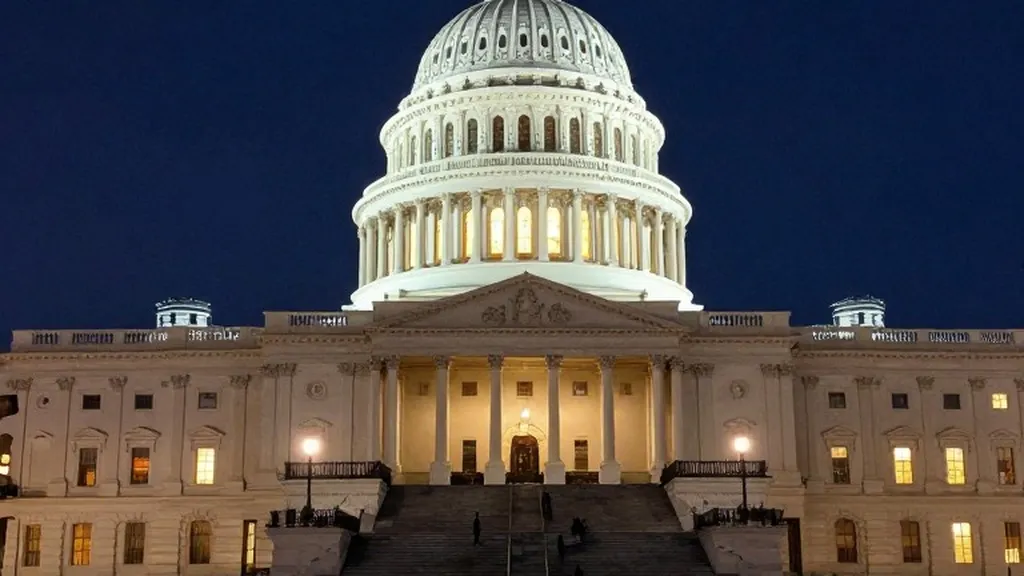
The election results confirmed Johnson’s fears, as Democrats secured a decisive victory in the House of Representatives. According to Ballotpedia, Democrats won 233 of the 435 House races, while Republicans won 138, with 64 races remaining uncalled as of the morning of November 4. This represents a net gain of 30 seats for the Democratic Party, shifting the balance of power in the lower chamber. The Associated Press reported that the results were part of a sweeping Democratic wave that also delivered the party control of the Senate, setting up a divided government for the next two years.
The new Democratic majority, led by House Leader Hakeem Jeffries, has already signaled a robust agenda for the coming session. Jeffries stated that the party is prepared to hold the administration accountable and launch a robust oversight agenda. Democrats have promised a 100-day plan that includes efforts to lower the costs of gas, groceries, and other goods. They also intend to reverse cuts to healthcare programs and launch investigations into the Trump administration, a move that aligns with the retribution Johnson warned about in his final interviews.
The transition of power will be marked by a significant shift in legislative priorities. Johnson’s final days as speaker were defined by a message of urgency and a belief that the Republican record would stand the test of time. He told supporters that the American people were looking at a record over rhetoric, suggesting that the tangible results of the past three years would be judged against the promises of the new majority. The election outcome suggests that voters were more concerned with the current state of the economy and the direction of the country than with the speaker’s warnings of future chaos.
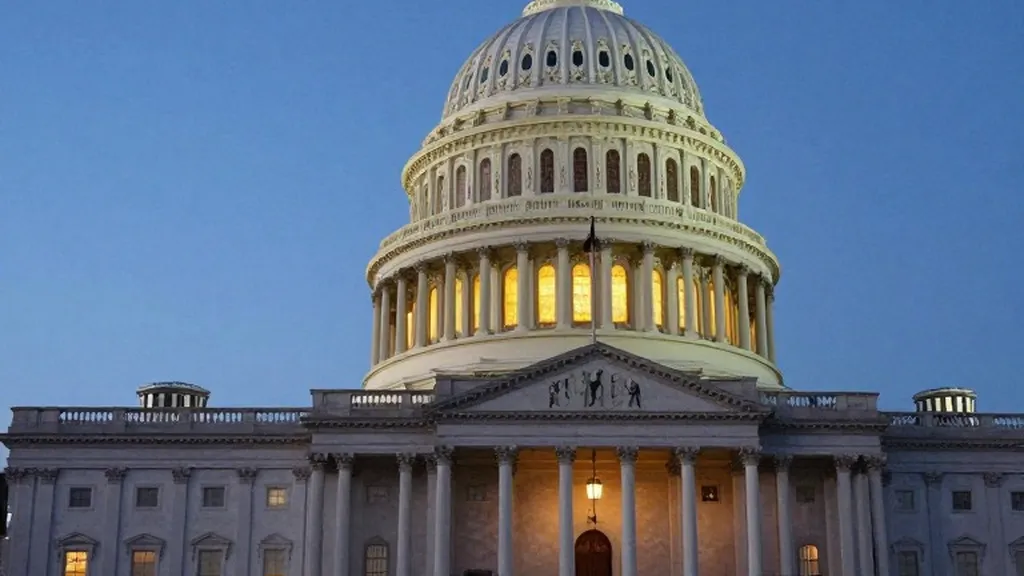
As the new Congress prepares to convene in January, the dynamic between the White House and Capitol Hill is expected to be tense. President Trump has already hinted at a strategy of using the presidential veto to strike down Democratic legislation, describing it as a potential period of gridlock. The contrast between Johnson’s vision of a stable, results-oriented government and the Democrats’ promise of dramatic change will define the political landscape for the next two years. The coming session will be a direct test of whether the Democratic majority can deliver the changes voters sought without falling into the disorder Johnson predicted.