Israelis cast ballots in contested 2026 Knesset election
More than 7.3 million eligible voters head to the polls in a tight race that pits Benjamin Netanyahu against Gadi Eisenkot following the 2023 Hamas attack.
By Nikolai Morales ·
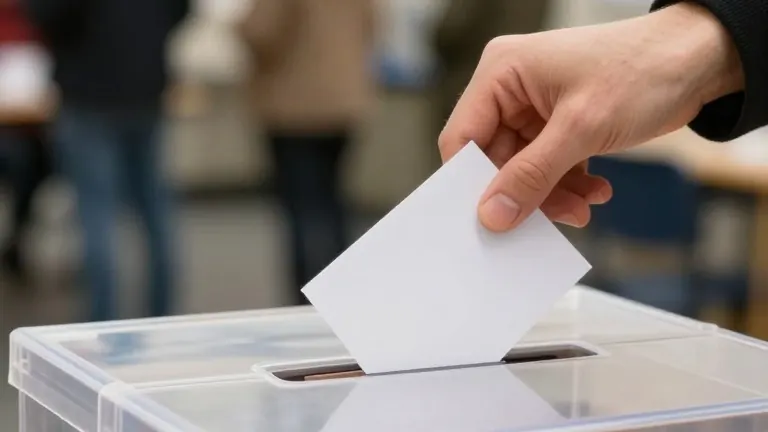
Polls across Israel opened Tuesday as millions of citizens prepared to select the parties that will form the next government. The vote is widely viewed as a direct test of Prime Minister Benjamin Netanyahu's leadership in the years following the Hamas-led attack on October 7, 2023, and the subsequent wars in the region.
The election process involves voters choosing parties rather than individual candidates. These parties then negotiate alliances to secure a majority in the 120-seat Knesset. No single party has ever achieved the 61 seats required to govern alone. Opinion polls indicate a narrow margin between the blocs, suggesting that coalition talks could extend for weeks or months among the roughly dozen parties expected to win representation.
Tensions were visible at polling stations throughout the country. In Jerusalem, Noga Mizrahi, a resident of kibbutz Nirim which was attacked in 2023, described the moment as critical. In Kiryat Shmona, a supporter of the opposition tore down a poster of Gadi Eisenkot, the former military chief and Netanyahu's primary rival. In Tel Aviv, families of victims and former hostages observed a minute of silence. Yona Adam, the mother of a victim named Mapal Adam, urged voters to remember those who no longer have a voice.
Eisenkot campaigned in Ofakim, a southern community targeted during the 2023 assault. His presence there was intended to emphasize the security failures of the current administration and the government's decision to forgo a state commission of inquiry into the events of that day. Eisenkot lost his son and two nephews in combat in Gaza. Netanyahu has served as Israel's dominant political figure for nearly two decades. A loss could end his career, while a win would solidify his reputation as a political survivor. U.S. President Donald Trump endorsed Netanyahu earlier in the month, a move that analysts noted was a late strategic choice for the Likud leader.
According to Israel’s Central Election Committee, more than 7.3 million Israelis are eligible to vote. This total includes approximately 330,000 young citizens who spent their high school years during the wartime period. Around 12,000 polling stations have been established across the country. Volunteers from groups such as Elections Guards are monitoring the process to ensure procedural integrity. One volunteer, Eyal Sher, stated that every vote matters in an effort to maintain fair procedures against a government he described as corrupt.
Polling stations are scheduled to close at 10 p.m. in most areas. Ballots will be counted manually at each location immediately after voting ends. The campaign focused heavily on Netanyahu's role in the security breakdown of October 7, his plans for judicial reform, and efforts to exempt ultra-Orthodox Jews from military service. The candidates largely avoided debate on the specific conduct of the war in Gaza, a conflict that has resulted in an international arrest warrant for the prime minister.
The outcome will determine whether Netanyahu continues his tenure or if Israeli politics enters a new phase under Eisenkot or another coalition leader. The result hinges on the ability of the leading parties to secure the necessary majority in the Knesset.
Source: Philadelphia Daily News