House Control Hinges on 46 Toss-Up Districts Amidst New Maps
With a razor-thin margin of three seats, the House fight has narrowed to a specific set of competitive races across seven states with newly drawn boundaries.
By Pedro Tanaka ·
All 435 seats in the U.S. House of Representatives are up for election on this Election Day, a fight that will determine who controls the chamber for the final two years of President Donald Trump's second term. The current balance of power is incredibly tight, with Republicans holding 218 seats and Democrats holding 214. This leaves a margin of just three seats between a majority and a loss of the chamber. Republicans can afford to lose no more than two districts to maintain control, while Democrats need a net gain of three seats to take over. This mathematical reality has turned the midterm election into a high-stakes contest where a handful of districts will dictate the legislative agenda for the rest of the administration's term.
Ballotpedia has identified 46 battleground districts that could shift the balance of power. Of these, 25 are currently held by Democrats and 21 by Republicans. The competitiveness of these races is heightened by recent redistricting efforts. Seven states are using new congressional maps following mid-decade redistricting cycles, including California, Florida, Missouri, North Carolina, Tennessee, Texas, and Ohio. These new boundaries have created different dynamics for incumbents and challengers alike. Some of these newly drawn districts may not vote as predicted based on their past history, adding an element of uncertainty to the final tally.
The political landscape is further complicated by the number of incumbents who have stepped aside. A total of 60 House members are not running for re-election, including 23 Democrats and 37 Republicans. This wave of retirements opens up significant opportunities for challengers. Additionally, the alignment of voters with the presidential candidate from the previous cycle offers insight into potential shifts. Twenty-one districts currently held by Democrats voted for President Trump in 2024, while nine districts held by Republicans voted for former Vice President Kamala Harris. These crossovers suggest that partisan loyalty in certain areas may be fluid, making the 46 battlegrounds even more critical for both parties to target their resources.
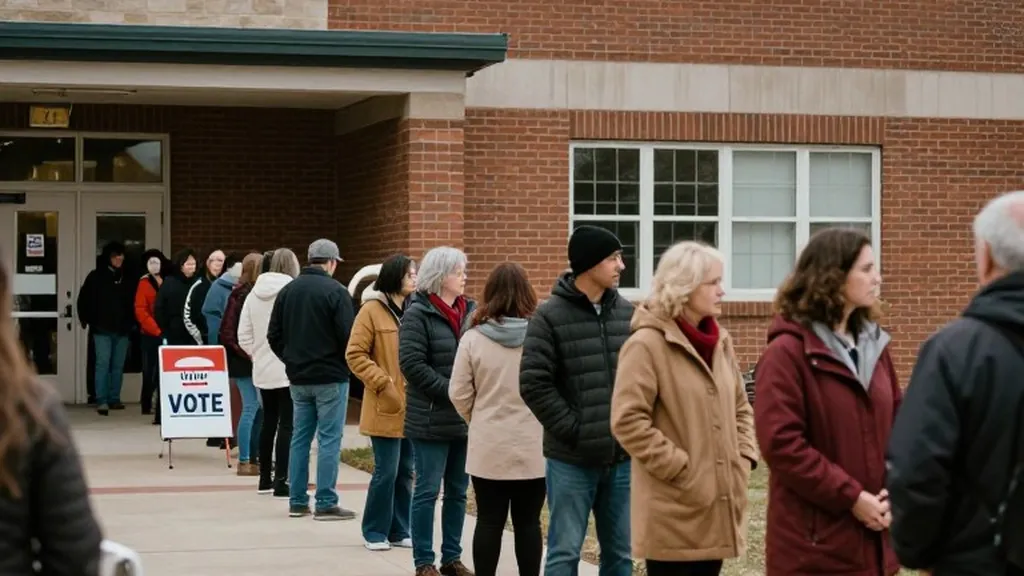
Republican Party leaders are focused heavily on turnout as the primary driver of their success. RNC Chairman Joe Gruters stated that everything depends on getting their voters to the polls. He emphasized that if they turn out their base, they win, a strategy they have been planning for throughout the campaign. This focus on turnout is particularly important given the tight margin of error. Republicans are bracing for the possibility of losing the House while fighting to hold onto the Senate. The Associated Press notes that one or two seats could tip the balance in either chamber, making every vote in the 46 battleground districts potentially decisive.
Democrats, on the other hand, describe themselves as cautiously optimistic. DCCC Chair Rep. Suzan DelBene said that the American people are angry and want change. This sentiment is reflected in polling data from the AP and NORC, which found that 35 percent of U.S. adults approve of President Trump's job performance. Only 25 percent approve of his handling of the economy, and about seven in ten Americans say the country is heading in the wrong direction. Most respondents blamed the president for high prices. These economic concerns are central to the Democratic strategy in the 46 battleground districts, where voters are grappling with the cost of living.
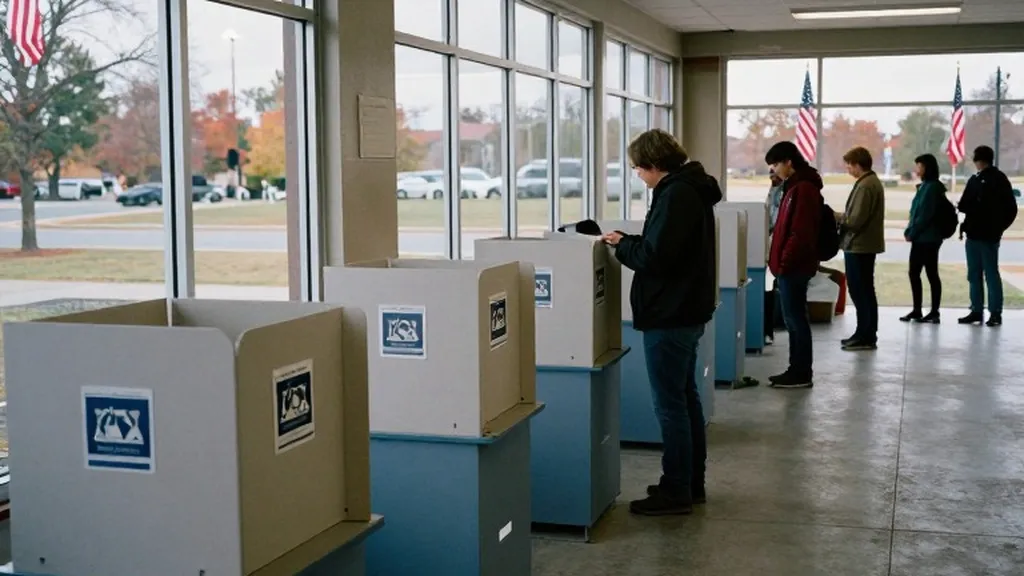
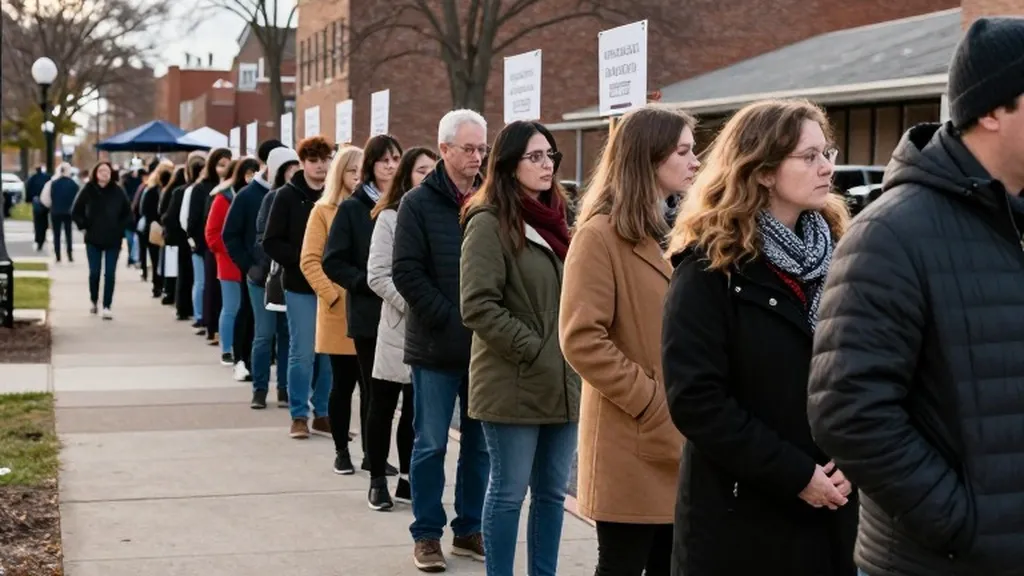
The election is being viewed by the Associated Press as a referendum on the president's second term. Voters are struggling with high prices and are angry over an unpopular war with Iran. More than 57 million people had already voted as of Monday, surpassing the early vote totals from four years ago in many closely watched states. This high level of early participation suggests that the final numbers in the battleground districts will be heavily influenced by the last-minute surge of voters on Election Day. The race for the House is not just about who has the best candidate but about who can mobilize the most voters in these specific competitive areas.
Financial resources have played a significant role in shaping the campaign landscape. The 2026 elections are likely to be the most expensive in history. Republican committees outraised and outspent Democratic committees at the national level, aided by Trump-affiliated groups and Elon Musk. However, at the candidate level, Democrats managed to outraise their opponents. An analysis of AdImpact data by the AP shows that 88.1 percent of Republican general election TV ad spending went to states and districts that President Trump won in 2024. This includes more than $850 million in spending in areas where he won by 10 points or more. This concentration of spending reflects the Republican strategy to consolidate support in safe districts while focusing on the 46 battlegrounds.
The mood among voters varies by location and ideology. Mark Barker of Palm Beach Gardens, Florida, expressed support for the president, saying he has been following Trump the whole time and thinks he is doing an awesome job. In contrast, James Moore, a 57-year-old librarian in Raleigh, North Carolina, cited economic pressures as his primary concern. He noted that he is paying more taxes, more for healthcare, and more for everything else. These personal narratives capture the broader economic anxieties that are driving turnout in the 46 battleground districts. Voters in these areas are making decisions based on their daily experiences with inflation and cost of living.
Election administration issues have also raised concerns among voters and officials. A federal judge temporarily barred the Trump administration from carrying out a plan to prevent noncitizen voting, which critics said risked disenfranchising eligible voters. Another judge ordered the administration to stop demanding that California election officials segregate ballots cast by people on lists of suspected noncitizens. These legal battles have added a layer of complexity to the election process. The U.S. Postal Service added hours, staff, and special lines to ensure mail ballots are counted on time, a crucial step in states where mail voting is prevalent. These logistical efforts are essential to ensuring that every vote in the 46 battleground districts is counted accurately.