NASA seeks new astronauts with Dec. 3 deadline to expand lunar program
The agency needs more crew members as it prepares for Artemis IV and aims to establish a permanent base on the Moon by the late 2020s.
By Nikolai Morales ·
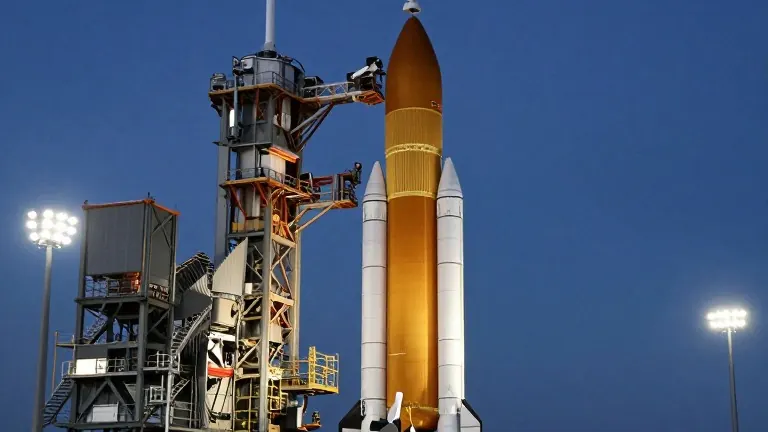
NASA is accepting applications for a new group of astronauts who will support the expansion of its Artemis program. The agency announced the search on Saturday during an air show at Kennedy Space Center in Cape Canaverals, Florida. The event promoted lunar exploration and recent advances in aviation and technology.
The current deadline for submission is Dec. 3. NASA plans to finalize the selection process by late 2027. Successful candidates will begin their mandatory two years of training by early 2028. This timeline aligns with the agency’s goal to return humans to the lunar surface, a milestone not achieved since the 1970s.
Randy Bresnik, the commander for the upcoming Artemis III mission, stated that the agency requires more personnel to manage its growing workload. He told The Associated Press on Saturday, “We have far more work than we have astronauts.” NASA currently lists 32 active astronauts. The space agency’s previous recruitment cycle concluded in September 2025, when it selected 10 individuals from a pool of more than 8,000 applicants.
Bresnik and his crewmates are scheduled to launch into orbit next summer. Their mission will focus on docking their capsule with two lunar landers. One lander is built by SpaceX, while the other is constructed by Blue Origin. This flight will remain in close proximity to Earth and serve as a rehearsal for the Artemis IV mission. Artemis IV aims to land two astronauts near the lunar south pole the following year.
Frank Rubio, a member of the Artemis III crew, emphasized the long timeline required to become a spaceflyer. He holds the U.S. record for consecutive days in space, having spent 371 days in orbit. Rubio noted that the actual time spent on the Moon will represent a small fraction of a candidate's career. He added, “It's important for them to realize most of that work is not going to the moon, right? That will be about 1% of your experience. What you're doing is contributing to the mission of going to the moon.”
Applicants must be U.S. citizens who hold college degrees and possess professional work experience. The training process is rigorous and can take several years to complete. This upcoming class will be NASA's 25th astronaut class since the original Mercury Seven group was selected in 1959. The new crew members will help build infrastructure on the Moon, including rovers, robots, structures, and power grids.
The agency aims to accelerate humanity's presence beyond low-Earth orbit. The Artemis II crew completed a lunar flyaround in April, marking the start of the current lunar campaign. NASA officials view the new recruitment drive as a necessary step to sustain the program's momentum through the late 2020s.