NASA Concedes Artemis Moon Landing Likely Requires 22 Starship Launches
New internal estimates suggest the lunar landing program will need far more propellant resupply flights than previously acknowledged, raising concerns about the timeline for returning humans to the Moon.
By Jian Chen ·
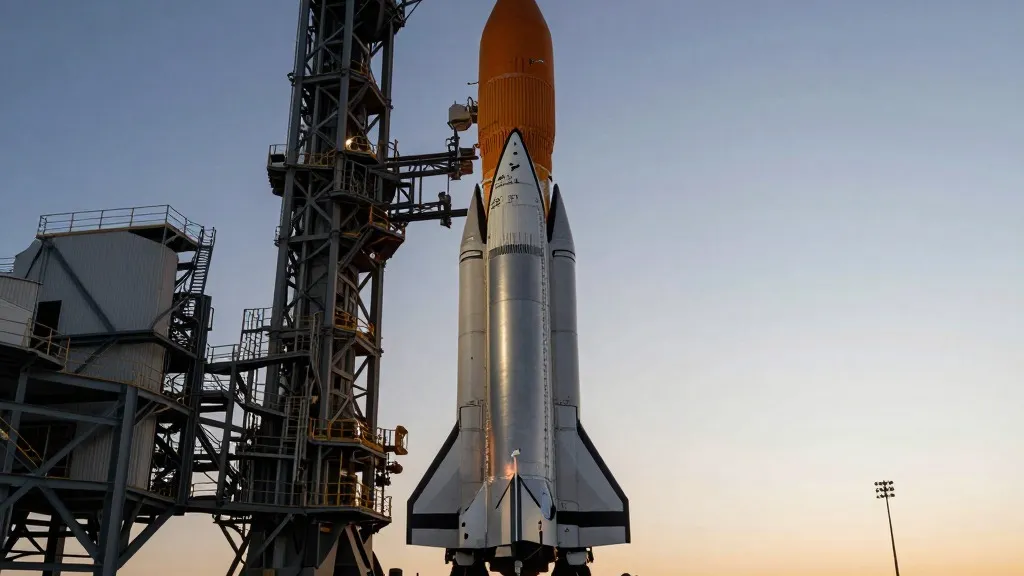
NASA has historically treated the specific logistics of fueling its lunar lander with a level of secrecy usually reserved for nuclear security codes. While the agency does not possess or desire nuclear weapons, it has long guarded the precise number of SpaceX Starship launches required to assemble a fully fueled vehicle in low-Earth orbit. This metric is critical to the Artemis Program, which aims to send astronauts to the lunar surface and return them safely to lunar orbit. For years, the agency has deflected questions about this figure, citing uncertainty as a reason to avoid providing a definitive answer to the public.
In 2023, Lisa Watson-Morgan, who served as the director of NASA’s Human Landing System, acknowledged to Ars Technica that while the agency had a general idea of the requirements, she was reluctant to specify the exact count. She later characterized the necessary number of flights as being in the "high single digits to the low double digits." This estimation implied that roughly a dozen launches would be required. Under such a scenario, SpaceX would need to deploy a single "depot" Starship to serve as a stationary fuel tank, followed by eleven separate "tanker" Starships to deliver the necessary liquid oxygen and methane propellant for the lunar voyage.
Some other officials have previously suggested the number could reach the "high teens," reflecting ongoing uncertainty. The prevailing hope among program stakeholders was that SpaceX would significantly enhance the lift capacity of the Starship vehicle. Such an improvement would theoretically reduce the number of tanker flights needed to fully load the depot, streamlining the complex in-orbit refueling process. However, recent internal discussions suggest that this dramatic improvement in payload capacity may not materialize in time to support the current timeline.
Concerns have emerged among certain NASA officials that SpaceX might not achieve the necessary lift capacity improvements soon enough for Starship to play a meaningful role in returning humans to the Moon within this decade. The stakes are high, as the logistics of in-orbit propellant transfer are among the most untested aspects of the Artemis architecture. If the number of required launches remains high, the complexity and risk of the operation increase substantially.
On Thursday, during the quarterly meeting of the NASA Aerospace Safety Advisory Panel, the issue came to a head. Charlie Precourt, a former NASA astronaut and panel member, addressed the risks associated with the Artemis Program. In his remarks, he highlighted the specific challenges posed by the lunar landing logistics. His presentation provided a clearer picture of the operational hurdles facing the agency.
The new estimate indicates that 22 Starship launches are likely required to support a Moon landing. This figure represents a significant increase from the earlier "low double digits" estimates and aligns with the higher-end projections previously mentioned by some officials. The move toward a higher number suggests that the agency is now accounting for a more conservative assessment of SpaceX’s lift capabilities in the near term.
For the Mid-Atlantic region and the broader nation, this shift in logistics underscores the scale of the upcoming space endeavor. The requirement for over twenty launches highlights the intensive coordination needed between government and private partners. As the Artemis Program progresses, the focus remains on ensuring that the complex choreography of launching, docking, and transferring propellant can be executed safely and efficiently to meet the decade’s goals.
Source: Ars Technica