Tesla Limits Self-Driving Rollout to Specific Cities in 2027
The company announced that unsupervised driving will debut in the second quarter of next year, but only within existing Robotaxi service areas.
By Jayden Sweiler ·
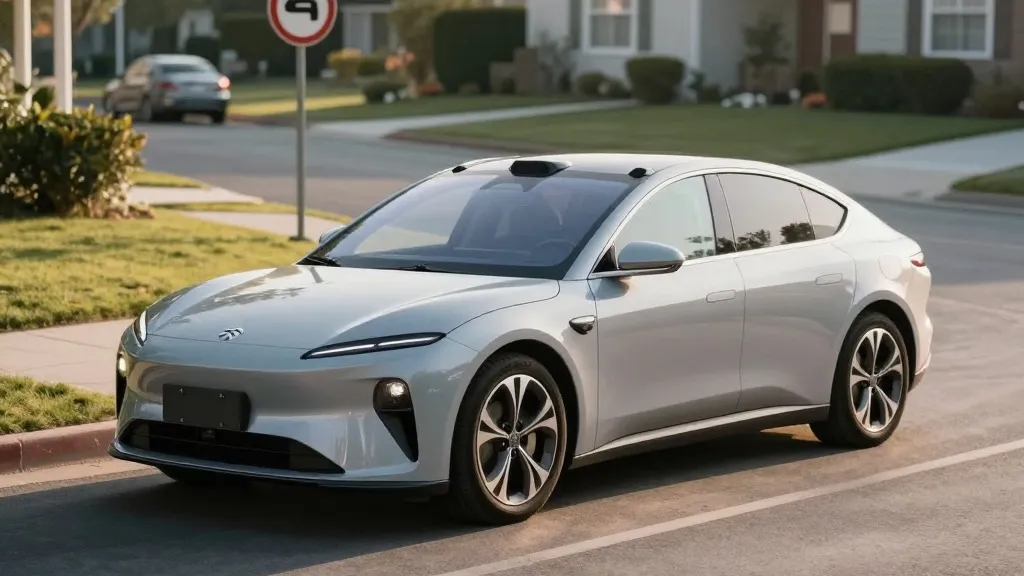
Tesla has set a new date for its most anticipated feature.
Unsupervised Full Self-Driving will arrive in the second quarter of 2027. This is the latest target for a promise the company has made for nearly a decade. However, the scope of the rollout is narrower than many investors expected. It will not be a universal software update for all owners. Instead, it is a specific service tied to location.
The company shared these details during its third-quarter earnings call today. Ashok Elluswamy, the head of AI, explained the plan to shareholders. He clarified that this is not about owners getting a car that drives anywhere. It is about owners adding their vehicles to Tesla’s managed fleet. The cars will only operate unsupervised where Tesla’s Robotaxi service already runs. This means the feature is limited to specific geofenced zones.
Shareholders were eager to hear this update. One of the top retail questions asked when unsupervised driving would be available in customer cars. That question was backed by approximately 1.1 million shares. The answer was Q2 2027. Elluswamy framed the step as a network integration rather than a standalone capability. Owners will not be able to sleep in the back of their Model Y on a random highway trip. Their cars will join a network where Tesla controls the operation.
The current Robotaxi zones are relatively small. The service operates in six U.S. metropolitan areas. Most of these service areas cover only small slices of the cities. In Miami, the zone covers mostly West Miami and a strip toward Doral and Sweetwater. Orlando and Tampa launched in July with similarly small boundaries. Inside these zones, the service sticks to low-speed routes. It largely stays off highways and avoids the harder parts of town. In the Bay Area, the service is not unsupervised at all. California rules require a safety driver in every car because Tesla does not want to release data to the DMV beyond a level 2 system.
The fleet size remains modest. Tesla reported that Robotaxi reached nearly 2 million cumulative unsupervised miles by the end of the third quarter. This milestone came a month after the Cybercab joined the Austin fleet. Third-party tracking this spring showed that the number of fully driverless Teslas on the road is in the dozens. This is far from the hundreds of thousands Musk had previously discussed. Waymo, a competitor, was already in Orlando and Tampa before Tesla arrived. Waymo has logged over 3 million miles.
This new plan differs from the original pitch. For years, the promise to FSD buyers was a car that would eventually drive itself anywhere via a software update. Musk told investors in July 2025 that unsupervised FSD would be available for personal use by the end of that year in certain geographies. A year earlier, he said he would be surprised if Tesla did not have unsupervised self-driving the following year. Owners of the HW3 hardware have already been told their computers cannot run unsupervised FSD at all. There is no clear upgrade plan for them. Now the target is Q2 2027, and the product is more constrained.
The product is now defined by Tesla’s terms. Your car joins Tesla’s fleet. It operates in Tesla’s zones. It follows Tesla’s rules. This shift moves the goalpost from a car that drives you anywhere while you sleep to a car that can work as a Robotaxi inside a small geofence. There are no highway road trips. There is no driving you home from the airport across town. There is no unsupervised commute unless you live and work inside one of these specific zones.
If one thing was clear from the call, it is that Tesla is still refining its timeline. The company has no precise idea of when it will fully happen. They are making educated guesses. Elluswamy reiterated that safety is the primary bottleneck. This is why Tesla limits itself to low-speed roads and avoids harder environments. He guesses that these safety issues will be fixed by next year, but he does not know for certain. For now, the promise remains tied to a specific, limited set of conditions.
Source: Electrek