New maps in seven key states face test as Democrats win control
California, Florida, Texas and other battlegrounds see significant shifts that challenge traditional voting patterns in the new congressional districts.
By Nikolai Morales ·

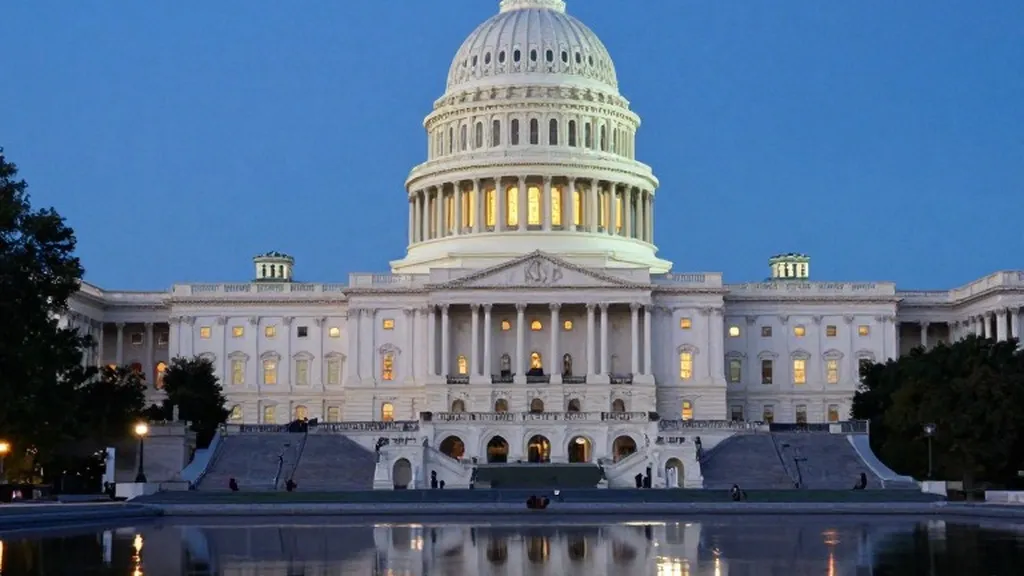
Democrats have secured majorities in both chambers of Congress following the midterm elections, a result that reshapes the political landscape in seven critical states. The party picked up at least 43 House seats and seven Senate seats, all previously held by Republicans. This net loss of at least seven Senate seats places the election in the top 20 percent of historical seat swings against a president's party. In the House, Republicans lost at least 42 seats, leaving them with a historically small conference. The new maps in California, Florida, Missouri, North Carolina, Tennessee, Texas, and Ohio now serve as the backdrop for this significant power shift.
The new district maps in these seven states were drawn with the intent to influence voting outcomes, yet the results suggest they may not function as predicted. In California, voters rejected a first-in-the-nation tax on the net worth of billionaires, a measure that drew substantial opposition from prominent tech leaders. The "no" side raised roughly 10 times as much as the "yes" side, with Google co-founder Sergey Brin contributing more than $100 million to a political action committee. This outcome highlights a disconnect between the drawn districts and the actual voting behavior of the state's diverse electorate.
Florida and Texas also saw significant activity in the new maps. In Texas, the state is represented in the leadership race by Rep. August Pfluger, who is vying for the position of Republican whip. The new maps in these states often group voters in ways that favor one party, but the 2026 results indicate a strong Democratic turnout that may have overridden these structural advantages. The scope of Democratic victories suggests that the maps did not insulate Republican candidates as effectively as anticipated in several of these districts.
Missouri and North Carolina present another layer of complexity. In Missouri, Sen. Josh Hawley cited the election as a repudiation of the focus of the previous Congress, particularly regarding reductions to Medicaid and rural hospital funding. The new maps in these states may have been designed to protect Republican incumbents, yet the results show a clear preference for the opposing party. In North Carolina, the state's role in the trifecta changes is evident, with six states shifting from divided governments to Democratic trifectas.
Tennessee and Ohio round out the group of seven states with new maps that are facing this test. In Ohio, Rep. Jim Jordan won the race to serve as House Republican leader, defeating Rep. Steve Scalise in a secret ballot election. The vote was 106-73. Jordan, a co-founder of the House Freedom Caucus, will lead a historically small Republican conference. His victory signals a shift toward a more aggressive oversight strategy as the party prepares for its new role in the minority.
The AP Voter Poll indicates that voting patterns in California varied significantly by age and income. The majority of young voters under 30 voted yes on the billionaire tax, while roughly 7 in 10 voters aged 65 and older voted no. About half of voters with household incomes under $100,000 supported the initiative, whereas closer to 6 in 10 voters with incomes of $100,000 or higher opposed it. This demographic split suggests that the new maps in California may not align with the traditional conservative or progressive blocs in the way they were originally designed.
Republicans' net loss of seats in the Senate was substantial, with the party losing at least seven seats. This loss is a key factor in the overall wave election status. The new maps in these seven states were often criticized for being gerrymandered, but the 2026 results show that voters in these regions were willing to cross party lines or vote in large numbers to change the balance of power. The election results indicate that the maps may not have been as protective for Republican candidates as previously thought.
In the House, Democrats will have at least a 250-157 majority, a significant shift from the previous Congress. The new maps in these states contributed to this outcome by potentially making it easier for Democratic candidates to win in competitive districts. However, the fact that Republicans still hold 157 seats shows that the maps did not completely erase their presence. The new leadership under Jim Jordan will have to navigate this reduced majority and prepare for the challenges of leading the minority.
The election results also show that Democrats won a majority of governorships for the first time since before the 2010 elections. This shift in state government control is a testament to the effectiveness of the new maps in facilitating Democratic gains. The trifecta status changed in 11 states, with six moving from divided governments to Democratic trifectas and five moving from Republican trifectas to divided governments. This widespread change indicates that the new maps in these seven states were not sufficient to prevent a major political realignment.
Looking ahead, the new maps in California, Florida, Missouri, North Carolina, Tennessee, Texas, and Ohio will be scrutinized as the new Congress convenes. The results suggest that while the maps may have influenced the outcome, they did not dictate it. The 2026 election results show that voters in these states were willing to vote in large numbers to support Democratic candidates, challenging the notion that the maps were fixed. The new leadership in both chambers will have to work within the constraints of these maps while trying to build a stronger coalition for 2028.