Brazil Unveils Fossil Fuel Transition Plan: Detailed Road Map Released at Antalya Summit
The framework offers specific tools for nations to replace coal, oil, and gas, a move praised by delegates as a necessary shift from vague promises to actionable policy.
By Pedro Tanaka ·
Brazil released a detailed framework on Tuesday designed to guide nations away from fossil fuels, providing the first concrete set of tools for countries seeking to replace coal, oil, and gas with renewable energy sources.
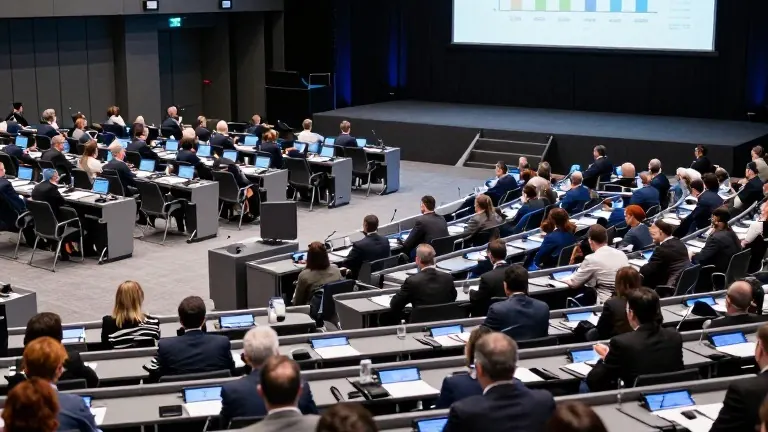
The document was presented at the United Nations Climate Change Conference, known as COP31, currently held in the Turkish resort city of Antalya. Brazil hosted the previous year's conference and had committed to producing this transition plan, a deliverable that previous summits had promised but never fully provided.
The road map outlines specific levers that governments can pull to facilitate the shift toward wind and solar power. Ana Toni, the CEO of COP30, stated that the goal is to be pragmatic and assist countries in moving forward. The plan emphasizes halting the construction of new fossil fuel power plants and reducing subsidies that support the existing industry.
Delegates at the Antalya talks expressed a strong preference for actionable steps over further diplomatic pledges. John Kerry, the former U.S. secretary of state and climate envoy, said the world no longer needs more promises but requires specific plans. He noted that the recent U.S. midterm elections, in which Democrats won control of both chambers of Congress, indicated that voters were making climate change a central issue.
The United States is absent from this year's negotiations, marking the second consecutive year that the country is not participating directly. President Donald Trump has previously described climate change as a major deception and has pursued policies favoring fossil fuel production, including the removal of certain power plant emission rules and opposition to offshore wind projects.
Brazil faces a complex domestic energy profile while pushing for global change. The country holds most of the world's largest rainforest and possesses significant oil deposits, making it a major exporter of fossil fuels. However, the majority of Brazil's domestic energy is generated from hydropower. Toni declined to directly comment on how the plan affects Brazilian oil exports but asserted that the road map is beneficial for both Brazil and the global community.
Stientje van Veldhoven, the Dutch minister of climate and green growth, noted that many nations, including the Netherlands, rely on imported fossil fuels. She stated that such road maps provide a clear path toward a clean energy future at global, regional, and national levels. Climate Action Network, an environmental group, praised Brazil for working out how to deliver on agreed-upon goals.
In addition to the fossil fuel transition plan, Brazil is presenting other road maps at COP31. These focus on addressing deforestation and securing the $1.3 trillion in climate finance required for poorer nations. Stela Herschmann, an international policy lead for Observatório do Clima, a network of Brazilian environmental organizations, said that while every country has a different starting point, all can begin their own path.
Logistical issues have complicated the second day of the conference, with traffic congestion and road closures forcing the rescheduling of several morning meetings. Greta Thunberg, a prominent activist, arrived at the talks to emphasize the urgency of the situation. The United Nations reports that more than 68,500 participants are registered for the conference, supported by a workforce of nearly 25,000 people.
The talks are taking place against a backdrop of recent climate-related disasters and a reassessment of global temperature goals. In September, the U.N. adjusted its decade-old target of limiting global warming to 1.5 degrees Celsius, acknowledging that the world is moving past that threshold. Turkey is currently pushing for a goal where electricity, preferably from renewables, makes up 35% of global energy consumption by 2035, an increase from the current 23%.