Dominican Republic backs Salvadoran troops in Haiti
President Abinader confirms logistics and intelligence support for El Salvador’s independent military operation in the neighboring country.
By Pedro Tanaka ·
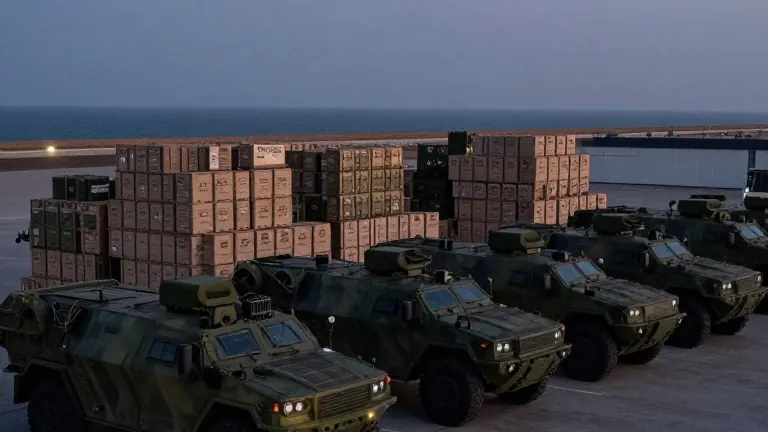
The Dominican Republic is providing logistics and intelligence support to El Salvador as approximately 2,500 Salvadoran troops combat violent gangs in Haiti. President Luis Abinader announced the collaboration on Tuesday, noting that the two defense ministers speak almost daily. The Dominican government has not disclosed the specific nature of the assistance, but Abinader stated that his administration is working to decisively support the Salvadoran military effort.
The Salvadoran deployment began following an attack on October 18 in which four aviation technicians were killed deep in gang-controlled territory. Those individuals remain missing. Since then, Salvadoran forces have operated largely outside the framework of the United Nations-backed multinational gang suppression force. This independent operation has drawn scrutiny regarding coordination with other security actors on the ground.
Salvadoran President Nayib Bukele celebrated a recent joint attack by Haitian police and his troops that destroyed the home of Wilson Joseph, the leader of the 400 Mawozo gang. Joseph survived the Sunday assault. Bukele posted on X on Tuesday that the gang members fled without fighting, calling them cowards. He said the forces kept their promise to strike at the gang headquarters.
Igor Rugwiza, the spokesperson for the multinational gang suppression force, stated that the force is coordinating closely with Haitian authorities and international partners. He said in a statement that effective coordination among all security actors is essential for sustainable security outcomes. The force conducts its activities under its mandate, command and control arrangements, and applicable human rights law obligations.
Haitian Prime Minister Alix Didier Fils-Aimé is scheduled to visit El Salvador next week. The trip aims to discuss the future role of Salvadoran troops in Haiti. This meeting comes as experts warn that the security environment in Haiti is becoming increasingly complex due to the presence of multiple forces with different operational approaches.
Sophie Rutenbar, a senior expert at the Global Initiative Against Transnational Organized Crime, described Haiti as extremely crowded with security forces. These include Haitian police, soldiers, the multinational force, private security firm Blackwater, and now Salvadoran troops. Rutenbar noted that coordination mechanisms are currently unclear, creating a difficult situation for maintaining order.
Wolf Pamphile, founder of the U.S.-based think tank Haiti Policy House, stated that the 400 Mawozo gang remains the primary challenge for Haiti’s government. He suggested that Salvadoran troops would benefit from working within the existing structure of the multinational force in the long term. He argued that it would have been better if the Haitian government had integrated the Salvadoran soldiers into that structure from the start.
The Dominican Republic shares the island of Hispaniola with Haiti. Abinader pledged to monitor the shared border using drones, soldiers, and armored vehicles. He said his government will respond to any actions that might threaten the stability of the Dominican Republic. The Salvadoran operation is considered an expensive proposition, with questions arising about how long El Salvador can maintain its current pace of engagement.