Virginia sets March deadline for I-495 Southside approval to prevent policy reversal
State officials aim to secure regional consent before Governor Spanberger's term ends in January 2030, avoiding a potential change in administration that could stall the 11-mile express lane project.
By Nikolai Morales ·
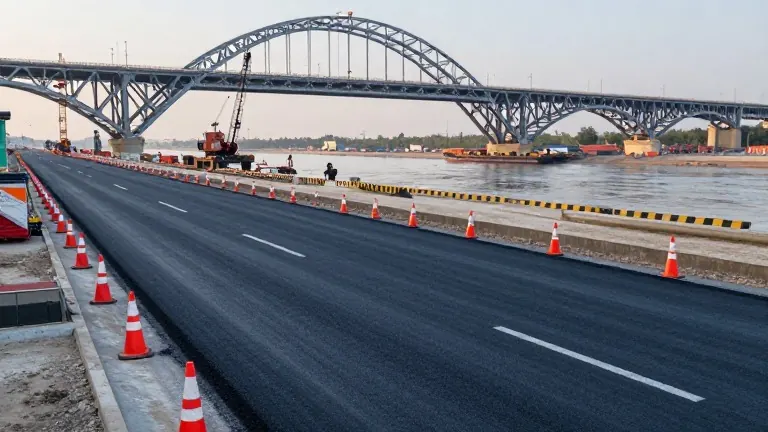
Virginia officials have set a target to secure regional approval for the I-495 Southside Express Lanes project by March 2027, a timeline driven by the end of Governor Abigail Spanberger's term in January 2030. Transportation Secretary Nick Donohue warned that a delay beyond this window could allow a future administration to reverse the state's commitments, effectively stalling the 11-mile route.
The proposed design includes four general-purpose lanes and two express lanes in each direction. To accommodate future rail service across the Woodrow Wilson Bridge, the plan narrows breakdown lanes to a few feet, rendering them unusable for disabled vehicles. The state proposes to station tow trucks on both sides of the bridge continuously to manage crashes and mechanical breakdowns.
Donohue presented the revised plan to the Transportation Planning Board (TPB) on October 21. He stated that the state understood it had work to do after regional leaders voted in late 2025 to exclude the project from the Visualize 2050 long-range plan. He emphasized that the current approach is a collaborative process designed to correct messaging and policy errors from the previous administration.
The route extends from just east of the Springfield Interchange in Fairfax County to just east of Maryland Route 210. While no funding currently exists for the billions of dollars required to build Metrorail across the Wilson Bridge, the new design reserves central space for that future use. Donohue described Virginia as a ready, willing, and able partner for the region's transit goals.
Kanti Srikanth, the TPB staff director, outlined the procedural steps required to reach a final vote. The board must first authorize an air-quality analysis of the new design. Srikanth estimated this review could be completed within a few months because much of the preliminary work is already finished. If the report is completed by early February, a mandatory public review period will precede the final vote in March.
Maryland and local Virginia officials expressed cautious optimism but demanded written guarantees. Joe McAndrew, Maryland's assistant secretary of transportation, thanked the administration for its engagement but noted that more progress is needed. Monique Ashton, Mayor of Rockville, insisted that agreements must be in writing to ensure the plans do not change over time.
Local concerns focus heavily on spillover traffic onto neighborhood streets. Canek Aguirre, an Alexandria City Council member, said the project's direction has changed significantly, improving his willingness to consider it. Eric Olson, a Prince George's County Council member, stressed that public engagement must remain central to the process, particularly regarding impacts on local roads in his jurisdiction.
Jennifer Boysko, a state senator who helped block the previous version of the proposal, said the revision gives her hope. Susan Cunningham, an Arlington County Board member, urged the group to finalize agreements that outlast current officials to prevent the project from moving backward. Virginia officials plan to hold public information meetings on both sides of the Potomac before the end of the year, though specific dates have not yet been set.
If regional leaders approve the plan early next year, Donohue expects construction to begin in late 2029 or early 2030. The state aims to deliver on its commitments within the current governor's term to lock in the project's future.
Source: ALXnow