New Delhi AQI Breaches 350 as Diwali Smoke Mixes With Winter Stagnation
Fireworks released during the festival of lights compounded seasonal haze, prompting health complaints from residents despite Supreme Court restrictions.
By Lorenzo Patterson ·
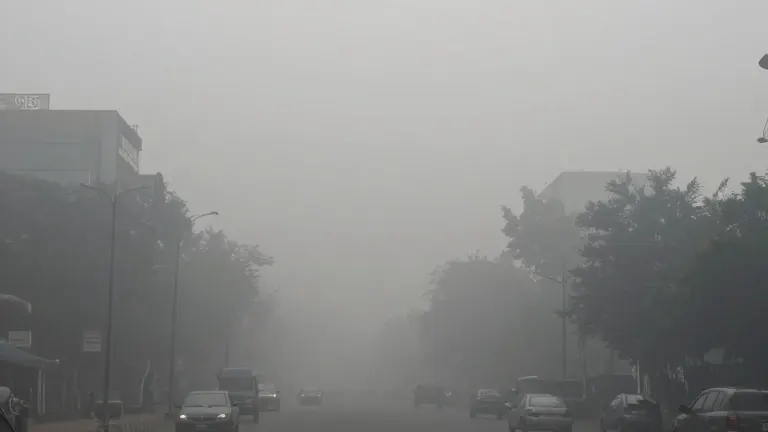
New Delhi residents faced severe air pollution Monday after firecrackers released during Sunday evening Diwali celebrations added to an existing seasonal haze. The city’s air quality index exceeded 350 in several districts, placing the air in the severe category and creating health risks for millions.
Residents lit conventional firecrackers despite restrictions, injecting smoke and fine particulate matter into the atmosphere. A gray haze covered streets and high-rise buildings, reducing visibility across the capital. Monitoring stations recorded these alarming levels while the metropolitan region, home to more than 30 million people, struggled with the annual winter crisis.
India’s Supreme Court sought to limit Diwali pollution in October by restricting conventional firecrackers. The court allowed only approved green firecrackers under specific conditions for three-hour windows on Saturday and Sunday. These approved crackers produce fewer emissions than standard ones, but they are not pollution-free and still release particulate matter.
Local conditions amplified the impact of the fireworks. Cooler weather in late October and November prevents pollutants from dispersing due to low wind speeds and stagnant atmospheric conditions. Smoke from crop-residue fires in neighboring Punjab and Haryana also drifted toward New Delhi, mixing with local vehicle and industrial emissions.
Residents reported immediate physical effects from the degraded air. Isyad, a New Delhi resident who uses one name, cited throat irritation and eye itching caused by the pollution. He noted that the worsening smog was taking a toll on his health during the festival period.
Authorities implemented measures to curb pollution, including limits on construction activity and restrictions on diesel generators. Courts also imposed restrictions on firecrackers. However, these steps have not prevented the return of severe pollution in recent years. Environmentalists argue that long-term solutions, such as cleaner energy and stricter vehicle emission controls, are necessary to address the root causes.
Shweta Narayan, a public health expert at the Global Climate and Health Alliance, described the government’s current response as knee-jerk and temporary. She stated that a lot of interventions happen only because the government is pressured or pushed in a corner to do something.