Netanyahu Claims Foreign Funding in Bid to Block Eisenkot Alliance
Likud alleges Qatar and Turkey bankrolled Arab voter surges, a move critics say aims to sever the opposition's only path to forming a government.
By Nikolai Morales ·
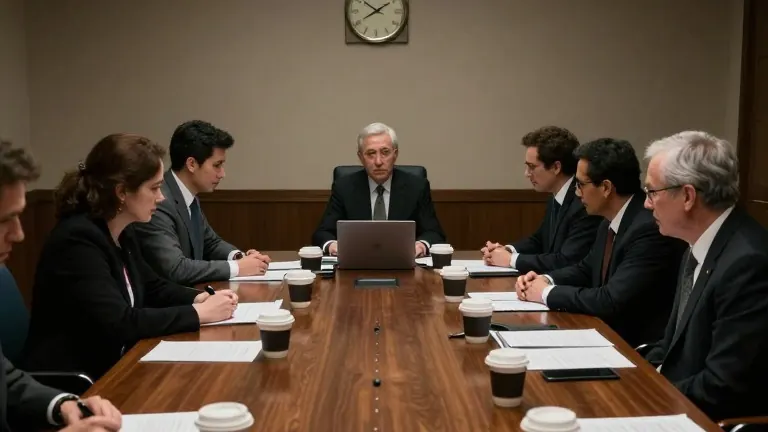
Prime Minister Benjamin Netanyahu has alleged that foreign powers interfered in Israel's recent parliamentary elections, a claim that has intensified the political standoff over the formation of a new government. The accusation targets the Arab-led parties that secured a record number of seats, positioning them as the decisive factor in whether Netanyahu's Likud party remains in power or the opposition can assemble a coalition.
The final tallies confirmed that neither political bloc achieved a majority in the 120-seat Knesset. Netanyahu's right-wing coalition won 53 seats, while the opposition bloc led by Gadi Eisenkot secured 48 seats. The remaining 19 seats went to the two Arab party lists, the Joint List and Ra'am. This distribution makes the Arab parties potential kingmakers, as they hold the balance of power required to form a stable cabinet.
Likud officials stated that the Central Elections Committee (CEC) requested an investigation by the Shin Bet home security agency regarding 'serious suspicions' of foreign interference. The specific allegation is that Qatar and Turkey provided illegal funding to increase voter turnout among Arab communities. Israeli media reported that the CEC was presented with evidence suggesting Qatar aimed to boost participation in Arab areas, a claim the Doha foreign ministry called 'ridiculous and dangerous.'
The security services have moved to contain the narrative while continuing their review. Acting CEC Director General Dean Livne stated there is 'no basis for allegations of systematic violations of election integrity.' The Shin Bet clarified that its investigation does not implicate the entire Arab community, which voted legally, but is focused on specific financial flows. This distinction attempts to separate the technical inquiry from the broader political battle unfolding in the Knesset.
Opposition leader Gadi Eisenkot, who was briefed on the ongoing review, characterized the situation as a premature judgment. He told reporters that it is too early to determine if any irregularities occurred. Eisenkot accused Netanyahu of running an orchestrated campaign to delegitimize the results, arguing that the goal is to make it politically difficult for his bloc to negotiate with the Arab parties.
The timing of the allegations aligns with a surge in Arab voter turnout that defied historical patterns. Many Arab Israelis, who make up about one-fifth of the population, had previously boycotted elections. Their high participation this time was driven by a desire to end what they view as the most right-wing government in the country's history. Balad chairman Sami Abu Shehadeh rejected the funding claim, describing it as a 'racist blood libel' constructed by the losing side to overturn the results.
Netanyahu has framed the election outcome as a 'political earthquake' and an 'attack on democracy' against the right-wing government. He has used social media to describe the high Arab turnout as an 'emergency' and a 'matter of life or death' for his camp. These remarks, combined with the official investigation, have created a pressure point for any future coalition partners.
The path forward remains constrained by existing political alliances. There are three plausible options for the next government: a national unity deal between Netanyahu and Eisenkot, a right-wing coalition relying on defectors from the opposition, or an Eisenkot-led minority government supported by the Arab parties. Eisenkot and all but one member of his bloc have historically refused to govern with Arab parties, though recent speculation suggests an agreement may be possible.
A recent poll by Hebrew University indicated that voters across the opposition bloc preferred an Eisenkot-led minority government with Ra'am support, with the Joint List providing external backing. This preference highlights the tension between ideological stances and the mathematical necessity of forming a government in a fragmented parliament.
Source: BBC News