Kosovo Protests Demand Justice After Arlinda Zekaj Murder
Demonstrators are calling for the removal of senior officials after a woman who filed multiple police reports was killed in her home near Peja.
By Lorenzo Patterson ·
Kosovo has been in a state of public turmoil following the death of Arlinda Zekaj, a 49-year-old woman who had filed repeated complaints with local police before her murder.
Zekaj died on October 25 in Vitomirica, a village near the western city of Peja. This incident marked the eighth femicide recorded in the country this year. On the day of her death, she reported her husband to authorities, and he was subsequently arrested. She also requested protection from her husband's family, but officers did not grant it. Police drove her home at 8:58 p.m. An emergency call arrived shortly after, and officers found her body in her bedroom at 9:10 p.m. She had been killed with an axe. Albert Sylaj, her brother-in-law, fled the scene but was arrested near Peja on October 27. He is currently under investigation for murder.
The timeline of events leading to the killing spans several months. During the summer, Zekaj reported her husband for threats. A court in Peja issued a protection order that gave her temporary custody of her son and allowed her to stay in the family home. The order permitted her husband to remain in the house, provided he stayed at least two meters from her indoors and 20 meters away outside. Zekaj chose to stay in her home rather than move to a women's shelter. She continued to file complaints about threats from Sylaj. On October 22, three days before her death, she told police that Sylaj and other family members were in her home against her will. Sylaj warned her to leave or he would kill her. Police questioned him only as a witness in the case against her husband.
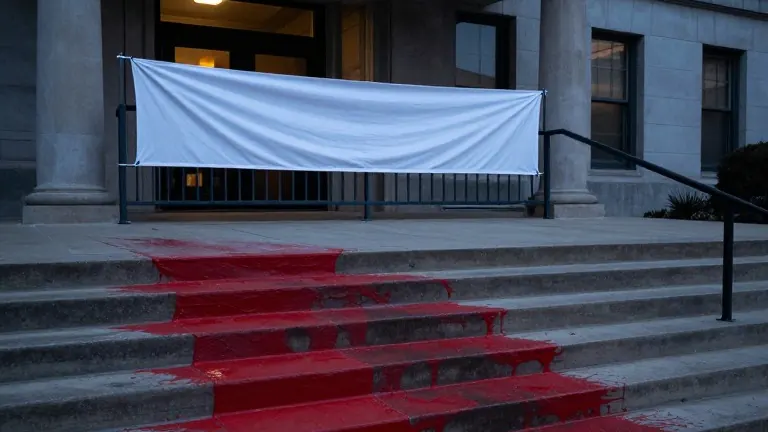
Public anger erupted the day after the murder. On October 26, feminist activists poured red paint on the steps of the government building in Pristina. They hung a banner at the entrance that read, "The state killed Arlinda." Thousands of people demonstrated across the country in the following days and again on November 1. Many carried photographs of murdered women. A recurring slogan among the crowd was, "The government has blood on its hands."
Protesters are demanding criminal charges against the police officers and prosecutors who handled Zekaj's case. They are also calling for the resignations of Interior Minister Xhelal Svecla and Justice Minister Donika Gervalla. Prime Minister Albin Kurti appointed Gervalla in March as the national coordinator for protection against domestic violence. Both ministers have rejected calls to step down. Kurti has acknowledged that certain state institutions failed in their duties.
Since 2010, 55 women in Kosovo have been killed by partners or family members. These deaths often followed years of documented abuse and ignored complaints. Successive governments have passed laws to combat violence against women, including provisions for life sentences in femicide cases. Activists argue that police, social services, prosecutors, and courts have not applied these measures consistently. Lawyer Njomeza Zejnullahu wrote that this repeated pattern amounts to a collapse of the state and society in relation to women.
In response to the killing, several senior police officers from Peja and the surrounding area have been suspended. A prosecutor who handled Zekaj's complaints was also suspended. Demonstrators argue that these measures are insufficient. Liridona Sijarina, a political scientist and activist with Kolektivi Feminist, said that all those involved in the chain of responsibility must be removed from office and criminally prosecuted. She stated that this should extend from police and prosecutors to judges, Peja Mayor Gazmend Muhaxheri, and government ministers.
Activists are also pressing the Interior Ministry to create a dedicated unit that treats women's safety as a matter of national security. They want the government to prioritize draft legislation on affordable social housing and to make survivors of domestic violence eligible for it. Sijarina said the government now has the opportunity to show whether it truly takes women's lives seriously.
Source: Deutsche Welle