Godzilla Minus Zero prioritizes human drama over monster spectacle in new sequel
The 135-minute film, set in 1949, features a new threat in Ghidorah while focusing on a Japanese family's postwar trauma.
By Nikolai Morales ·
Godzilla Minus Zero, a sequel to the Oscar-winning Godzilla Minus One, opens in Japanese theaters on Tuesday and in wider release on Friday. The film is distributed by GKIDS and carries an R rating from the Motion Picture Association for some violent content and bloody images. It is presented in Japanese with English subtitles and runs for 135 minutes.
Director Takashi Yamazaki set the story in 1949, two years after the events of the previous film. The narrative follows Kōichi Shikishima, a former kamikaze pilot, his wife Noriko, and their daughter Akiko. The family navigates the lingering trauma of World War II, a theme that Yamazaki uses to ground the story in the specific historical context of postwar Japan.
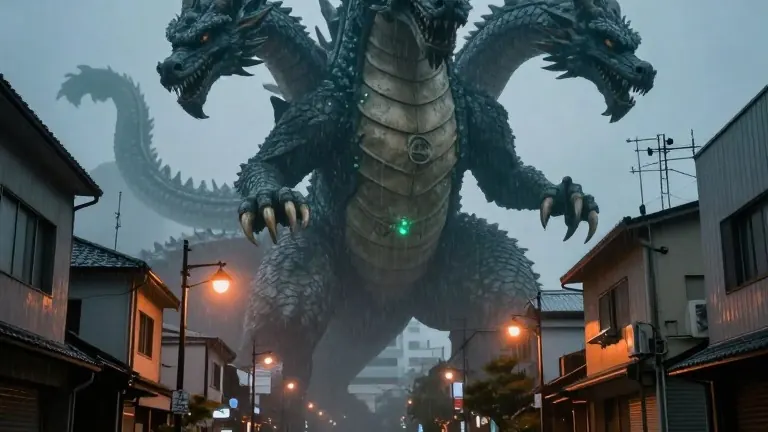
A new threat emerges in the form of Ghidorah, a dragon-like kaiju that spews lightning. The monster destroys the city of Matsumoto, an event that triggers severe PTSD in Professor Kanji Murakami. Murakami lost his family in the atomic bombing of Hiroshima and witnessed the leveling of Tokyo’s Ginza district in the earlier film. His anger toward the U.S. Army, which is portrayed as self-serving and distant, adds a political layer to the conflict.
The defense against Ghidorah is led by naval engineer Kenji Noda and his team, which includes meteorologist Makoto Aoyama. Aoyama predicts kaiju movements using weather patterns. Kōichi and Noriko join the effort but face the difficult decision of leaving their daughter behind. The film features two major monster set pieces, including an aerial sequence involving a seaplane and Godzilla.
Critics note that the human melodrama often overshadows the kaiju spectacle. The runtime is described as lengthy, with the story feeling bloated at times. While the visual effects and period details are praised, the character dynamics are viewed as artificial. The film relies heavily on the absence of Godzilla to build tension, a stylistic choice that leaves the monster waiting for extended periods.
The climactic battle between Ghidorah and Godzilla is staged with a focus on the human characters around the giants. The action is described as labored, contrasting with the high-energy style of the first film. Yamazaki’s direction emphasizes dread and somber mood, aided by a pulsating score from Naoki Satō. The film is initially available on IMAX screens.
The movie serves as a follow-up to the 2023 release that revitalized the franchise by returning it to its roots in postwar Japan. It is the second installment in this specific series of Japanese-language films directed by Yamazaki. The production aims to balance the personal grief of the survivors with the scale of the ecological disaster.
Source: WTOP News