Fewer hospitals can treat critically ill children
The number of U.S. hospitals with overnight pediatric care dropped by nearly 30% between 2008 and 2022, forcing families to travel farther for emergency treatment.
By Nikolai Morales ·
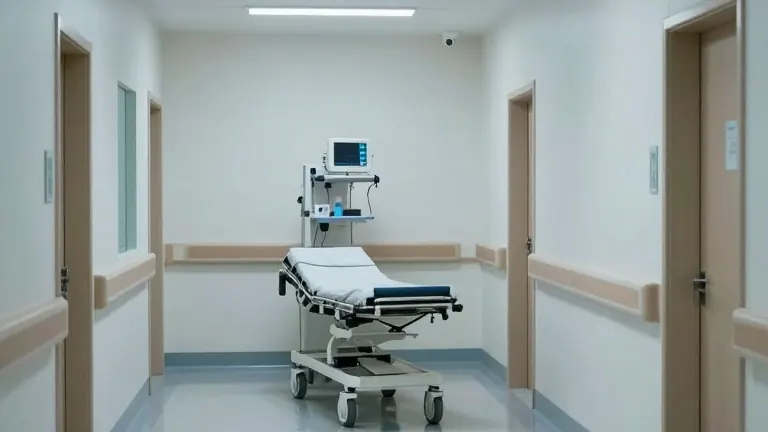
Community hospitals across the United States are closing units dedicated to the most seriously ill children. In the past year, facilities in Montana, Oregon, and Missouri shut down pediatric critical care wings. Hospitals in Illinois and California have also stopped providing overnight care for older kids. This shift leaves many families with fewer local options when their children face life-threatening conditions.
The decline is measurable and steep. An analysis of pediatric inpatient units showed a drop from 1,749 hospitals in 2008 to 1,226 in 2022. That represents a decrease of nearly 30%. As a result, three-quarters of U.S. hospitals no longer offer any form of pediatric inpatient services. The reduction forces medical care toward large regional hubs, increasing the distance between rural patients and specialized treatment.
Elizabeth Mack, a pediatric critical care doctor and spokesperson for the American Academy of Pediatrics, described the situation as a financial calculation. She stated that cutting these services is a spreadsheet issue. Mack explained that the units are expensive to maintain and difficult to sustain. She noted that there is no simple answer to the problem. Hospitals often cite low patient volumes as the primary driver for closure. It is rare for a child to require intensive care, making it hard to justify the cost of staffing and specialized equipment.
The financial pressure is compounded by staffing shortages and reimbursement rates. Pediatric subspecialists earn less than their adult-focused counterparts. Hospitals are typically paid less to treat children than adults, and equipment for kids adds extra expense. The gap is most acute in rural areas. Cutbacks are occurring in both small nonprofit hospitals and those owned by large private equity firms. Federal Medicaid changes also impact revenue, as administrative hurdles and stricter eligibility rules reduce enrollment. Since about half of the nation's children are covered by Medicaid or related programs, fewer enrollees mean less money for hospitals.
For families, the consequences are immediate. Darby Waldbillig’s daughter Siobhan was diagnosed with bacterial meningitis in 2022. The family lived in Helena, Montana, but had to fly 100 miles to Missoula for critical care. Siobhan spent more than a week in the pediatric intensive care unit at Community Medical Center. That unit closed in October 2026. Waldbillig credited the local doctors with saving her daughter’s life. She expressed concern about where to go if a similar emergency occurred today.
Greg Cook, the CEO of Community Medical Center, said the decision to close the unit was about quality of care. He explained that the hospital can still treat most children who enter the facility. However, the sickest patients, such as those needing ventilators or continuous seizure monitoring, will be stabilized and then transferred. Cook estimated the closure will affect about 25 patients per year. The next closest pediatric intensive care unit in the state is in Kalispell, 150 miles away. The hospital has struggled to recruit local specialists since its last doctor retired eight years ago.
Other hospitals cite similar reasons. St. Vincent Medical Center in Portland, Oregon, closed its four-bed unit last November. The hospital’s parent system, Providence, reported a $15 million shortfall in Oregon in 2024. Spokesperson Lisa Helderop said the unit was often empty. Raj Basu, a critical care division chief at Lurie Children's Hospital in Chicago, warned that community hospitals without adequate experience may put complex patients at risk. He noted that children who survive are often sicker when they arrive at regional hubs. Basu said doctors observe a creeping sense that patients are presenting with more severe conditions.
Kenneth Michelson, a researcher at Lurie Children's Hospital, pointed to the broader impact on routine care. The number of hospitals performing pediatric appendectomies dropped by more than half between 2003 and 2022. He warned that regional centers could become overwhelmed during spikes in demand. In 2022, emergency departments sometimes had to call 10 to 20 hospitals to find a bed. Michelson described pediatric critical care as a national necessity rather than a standard market good. Lauren Wilson, a pediatrician at Community Medical Center, said the hospital will still provide most forms of pediatric care, including emergency treatment and surgeries.
Source: CBS News