2007 Harmony Delivery Doubled Station Interior
Shuttle Discovery launched the node in October 2007, expanding the outpost from a three-bedroom to a five-bedroom scale.
By Lorenzo Patterson ·
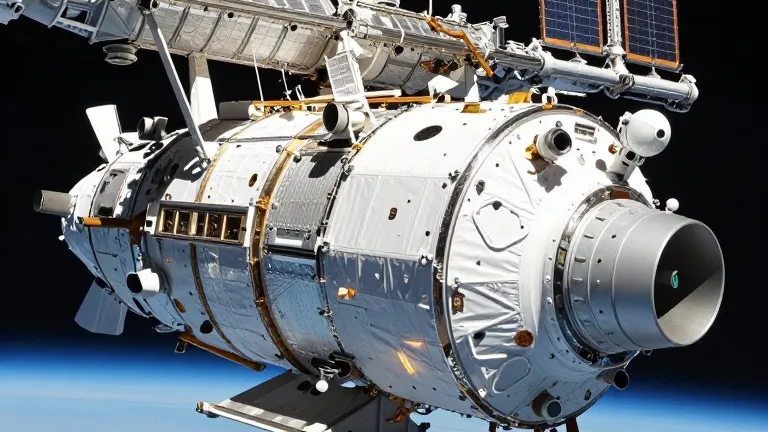
The space shuttle Discovery launched on October 23, 2007, carrying the Harmony module to the International Space Station. This flight, designated STS-120, delivered the utility hub that expanded the orbiting complex's interior volume by a wide margin. The arrival of the module marked a major shift in the station's physical capacity.
Harmony measures 14 feet wide and 24 feet long, a size comparable to a minibus. Before its installation, the station's living space approximated that of a three-bedroom house. With Harmony in place, the available volume expanded to resemble a five-bedroom residence. The module was built by Italy-based Thales Alenia Space for NASA and serves as a central utility hub.
The gap in station growth had stretched for six years prior to this delivery. The last new room added before Harmony was Russia's Pirs docking module, which arrived in 2001 and has since been discarded. Harmony, originally designated Node 2, followed Unity as the second NASA-led hub module for the station. It contains five common berthing mechanisms that act as connection points for other components.
Upon arrival, astronauts initially attached Harmony to the Unity node as a temporary measure. After the shuttle departed, the crew used the station's robotic arm to move the shuttle docking port on the Destiny module. This maneuver cleared the forward port for Harmony's permanent berth. The relocation took place during the roughly two-week duration of the STS-120 mission.
From its permanent position beside Destiny, Harmony connects to the European Space Agency's Columbus module on the starboard side and Japan's Kibo laboratory on the port side. The module also hosts a docking port on its roof for visiting vehicles. Several of its ports have been used by cargo ships over time. Inside, the module houses eight payload racks, with four dedicated to avionics and the other four used for stowage or crew quarters.
NASA's astronaut sleeping quarters are located within Harmony. The name was selected through a public naming contest run by the agency. The module's integration provided the necessary infrastructure for future station growth by linking international laboratories to the main U.S. segment.
Source: Space.com