Trilateral Summit Overtakes APEC Trade Goals
Leaders in Shenzhen focus on geopolitical tensions as the IMF reports the region is growing at a 3.4 percent annual pace.
By Pedro Tanaka ·
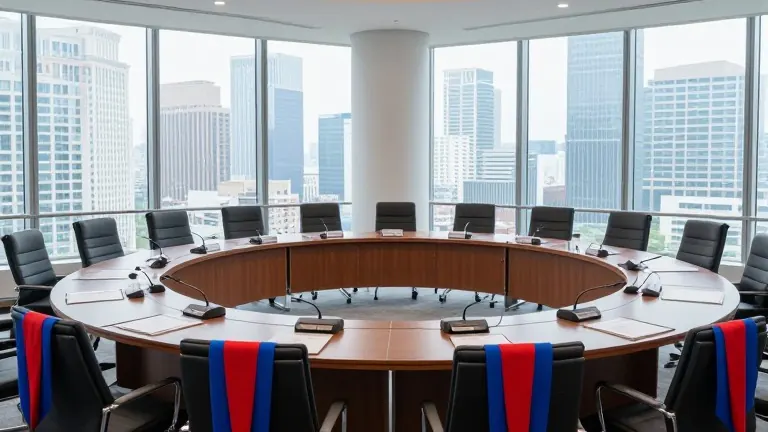
The APEC region’s economies are growing at a 3.4 percent annual pace, a rate slightly faster than the global average of 3.1 percent, according to data presented to leaders in Shenzhen, China.
These figures were released Thursday as the Asia-Pacific Economic Cooperation summit convened in the financial hub. The gathering typically emphasizes open trade and technological cooperation among its 21 member economies. This year, however, the agenda was dominated by the scheduled meeting between Chinese President Xi Jinping, U.S. President Donald Trump, and Russian President Vladimir Putin.
The trilateral summit is set to address nuclear arms, the conflict in Ukraine, and tensions in the Middle East. This high-level diplomatic engagement has overshadowed the group’s long-standing effort to establish a free trade zone around the Pacific Rim.
In his opening remarks, Xi urged leaders to unite behind shared interests in open trade. He described APEC members as passengers riding the same boat. To weather the winds and waves of the Pacific, he argued, they must join forces and strengthen their bonds of shared interests.
Vladimir Putin, making his first appearance at the summit in nine years, echoed this sentiment. He stated that APEC must set a tone of unity and develop a constructive agenda for cooperation.
Donald Trump offered a different focus during his brief address. He cited the strength of the U.S. economy and predicted the signing of new trade agreements in the near future. Trump claimed his administration has brought in trillions of dollars in new investment and created trillions in new wealth. He also pledged to oppose globalist efforts to regulate what he calls super intelligence.
The issue of artificial intelligence remains a point of friction. Washington recently tightened restrictions on remote access to advanced computer chips. This move closed a loophole that had allowed access to billions of dollars worth of Nvidia chips used for AI. Beijing views these restrictions as a sore point, particularly following the recent controversy involving Nvidia founder Jensen Huang and a Chinese technology executive.
Asian leaders, including Xi, have pushed for the fair sharing and regulation of AI technology. They argue this is necessary to ensure financial stability, cybersecurity, and equitable growth. In contrast, Trump positioned the U.S. stance as a defense against excessive regulation.
Kristalina Georgieva, managing director of the International Monetary Fund, addressed the leaders on the economic impact of these developments. She noted that global trade expanded at a rate of 4.6 percent, largely driven by the AI investment boom. This growth helps offset the energy shocks caused by war in the Middle East.
Georgieva described AI as the most significant factor for medium-term competitiveness and productivity. She called it the fastest transformation in human history and warned that to put it very simply, you snooze, you lose.