Xi pledges deeper market access in Shenzhen
China’s president urged APEC leaders to embrace open trade while Trump’s tariff policies create friction with Beijing.
By Nikolai Morales ·
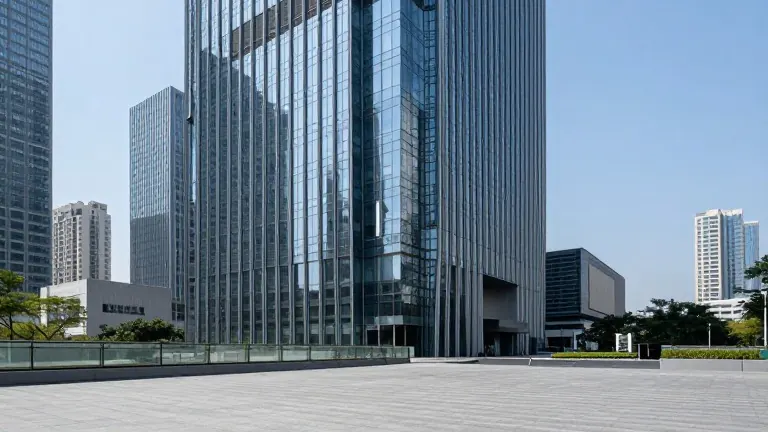
Chinese President Xi Jinping told business executives in Shenzhen that the Asia-Pacific region must pursue open trade and equitable growth to maintain stability. He made the remarks on Wednesday during the annual Asia-Pacific Economic Cooperation summit, holding the event in a city that has transformed from a fishing village into a major center for export manufacturing and technology over the past four decades.
Xi stated that China will cut tariffs and expand market access. He added that Beijing intends to reform challenging areas including rules, regulation, and standards to improve conditions for global investors. "China will not only cut tariffs and expand market access, but also go a step further," Xi said. "We will carry out reform in challenging areas such as rules, regulation, and standards."
U.S. President Donald Trump arrived in Shenzhen later Wednesday to join other leaders for the APEC summit. Trump traveled from the Philippines, where he had attended a summit of the Association of Southeast Asian Nations. His administration’s “America First” approach, which includes tariff hikes and limits on Chinese access to leading-edge American technology, contrasts with APEC’s goal of forming a Pacific Rim free trade zone.
Xi’s comments avoided direct criticism of U.S. policy, but analysts noted the message emphasized China’s role as a partner in global technology development. George Chen, partner and chair of Digital Practice at The Asia Group, observed that Xi’s speech highlighted China’s aim to lead global industrial transformation. "While he didn’t say so explicitly, his message was clear: China wants to be seen as a partner in global technology development, in contrast to Washington’s more restrictive approach," Chen said.
Domestic economic pressures in China include slowing retail spending and a prolonged property market slump. The economy continues to grow at a rate of more than 4%, largely driven by surging exports. China’s trade surplus is on track to exceed $1 trillion for the second consecutive year. Trump’s focus on friendly relations with Xi may lead to an extension of the trade truce reached last year after a series of tariff escalations.
Other world leaders addressed the gathering with distinct priorities. Russian President Vladimir Putin criticized sanctions and export restrictions as tools of economic dominance. He said Russia has submitted a bid to chair APEC in 2035 and noted that trade with the region accounts for more than half of its total trade. Malaysian Prime Minister Anwar Ibrahim told executives that bigger economies cannot impose limits on smaller countries. "Countries cannot impose their position, their own peculiar circumstances to countries to decide," Anwar said.
The 21 APEC economies account for 60% of global economic activity, half of global trade, and 40% of humanity. Leaders met behind closed doors on Thursday for a first-ever trilateral meeting between Trump, Putin, and Xi. APEC does not take binding decisions but serves as a forum for building consensus on cooperation and open trade.
More Business · Business Complaints · Report a business · Got a Story?