Starlink speeds restored for Ukrainian forces after connectivity dispute
Ukrainian military operations regain full satellite internet capability following a week of speed caps that hampered drone missions and communications.
By Lorenzo Patterson ·
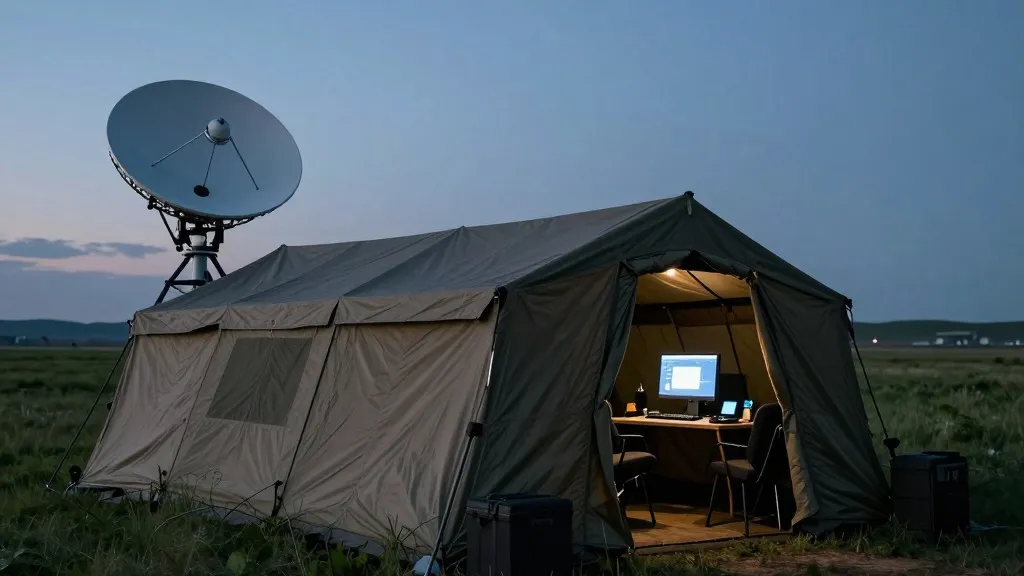
Frontline soldiers in Ukraine can now rely on high-speed satellite connections without the speed limits that disrupted their operations for several days. The restoration of full network capability removes a significant technical hurdle for troops coordinating complex battlefield activities.
Defence Minister Yevhenii Khmara confirmed the return to normal service in a statement released on Saturday. He noted that data transfer rates exceeding 400 kilometers per hour are once again achievable. Khmara emphasized that this stability is critical for the war effort, specifically citing its impact on drone operations, logistics, and general communications among units.
The military relies heavily on the Starlink system and its secure variant, Starshield, to pilot drones and manage operations across the country. The network consists of 10,000 low Earth orbit satellites and is particularly vital in remote areas where traditional infrastructure is lacking. Musk has indicated that the US military controls Starshield, suggesting the Pentagon may have been involved in the recent technical issues.
Tensions rose last week when Ukrainian officials claimed that US President Donald Trump instructed Elon Musk to impose restrictions on the service. Under those rules, drones reportedly lost their connection if they traveled at speeds of 161 kilometers per hour or higher. Trump initially denied issuing such an order but later stated that Musk had resolved the situation by restoring the settings.
This technical dispute occurred against a backdrop of diplomatic friction between Washington and Kyiv. The two leaders have been at odds over Ukrainian attacks on Russian oil infrastructure. With midterm elections approaching next month, Trump has eased some sanctions on Russia and agreed to import Russian diesel for the American market. This move has drawn criticism from Ukraine and its European allies.
The debate centers on the economic impact of the strikes. Trump argues that attacks on refineries have driven up global fuel prices. Conversely, Kyiv maintains that these strikes are essential for reducing Moscow's primary revenue stream from the war. While global prices have risen this year, analysts attribute much of that increase to the conflict in Iran rather than the strikes alone. Zelensky also claimed the US threatened to stop sharing intelligence if the attacks continued, a claim Trump rejected.
Combat operations continue on the ground despite the connectivity improvements. Russian defence officials reported on Saturday that their air defenses downed 616 fixed-wing Ukrainian drones. These attacks targeted several regions, including the Russian-annexed territory of Crimea. Sergey Aksyonov, the Moscow-backed governor of that region, stated that power and water restrictions were implemented due to outages caused by the drone strikes.
Ukrainian authorities detailed their own recent successes in the past 24 hours. They claimed to have struck a missile component factory, a chemical plant, and an aircraft at a military airfield within Russia. Additionally, they reported that Russian forces launched 88 air raids on Friday, deploying 309 glide bombs and 10,270 kamikaze drones.