Tesla Targets 20,000 Weekly Robot Output After Converting Fremont Line
The company cleared its Model S and X production space in 46 days to begin assembling first-generation commercial Optimus units.
By Pedro Tanaka ·
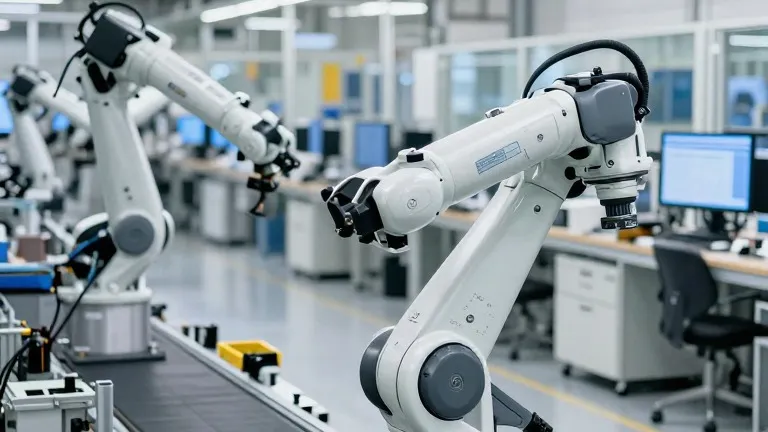
Tesla began assembling Optimus robots on the high-volume line inside its Fremont factory, marking the start of commercial production for the humanoid platform. The company stated in its third-quarter shareholder letter that the units leaving this line are the first to meet production-quality standards. Management confirmed that the current manufacturing process is suitable for a commercial product.
The transition required clearing the space that previously built the Model S and Model X. Tesla removed the old vehicle line in 46 days to make room for robot production sized for one million units annually. On Wednesday's earnings call, Elon Musk noted that most equipment for that capacity is already installed. He indicated that output will climb toward roughly 20,000 robots per week as the line ramps up.
Musk described the production ramp as following an S-curve, noting that the initial slope is shallow. The engineering team is currently refining the robot's AI, electromechanical design, reliability, and service life. Musk expects this work to be finished by the end of next year. At that point, Tesla plans to start delivering Optimus units to outside companies for dangerous, repetitive, and around-the-clock jobs.
A key operational challenge is generating training data for the robots. Unlike the automotive fleet, Optimus lacks millions of vehicles sending real-world data back to the AI team. Musk acknowledged this gap during the call. Tesla's solution is the Optimus Academy, where 10,000 to 20,000 robots will practice a wide range of tasks. Every unit produced at Fremont will feed its learned behaviors into the next version of the model.
Hardware improvements are also scheduled for the coming year. Tesla plans to integrate its AI5 chip into Optimus units. Musk said a new video demonstrating the robot completing tasks driven by AI rather than preprogrammed motions will arrive within one or two months. He criticized rival humanoid demos that rely on scripted routines, arguing those methods will not hold up in real-world conditions.