Iraq-Jordan Pact: Nine Deals Signed Amid Border Tensions
Prime Minister Ali al-Zaidi returns from Amman after signing memoranda on trade and security, but the proposed duty-free zone remains uncodified.
By Lorenzo Patterson ·
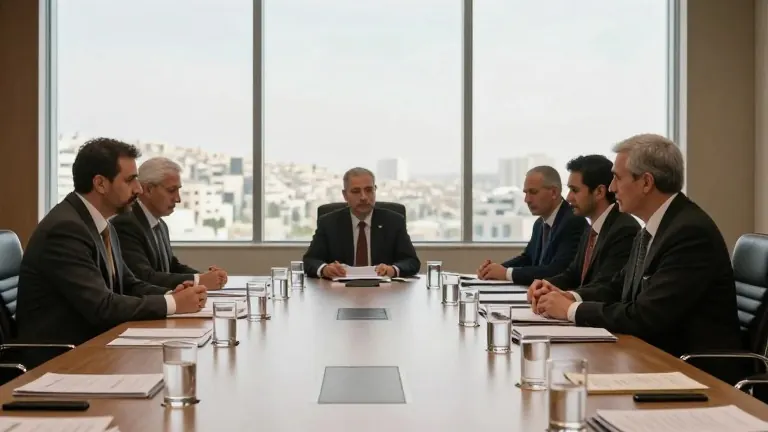
Iraqi Prime Minister Ali al-Zaidi returned to Baghdad on October 26 after a trip to Amman that produced nine new cooperation documents. For business leaders and investors, the visit signals a push to formalize economic links, though the specific duty-free zone discussed in talks was not included in the signed paperwork. The agreements cover higher education, environmental protection, consumer rights, diplomacy, culture, and support for small and medium-sized enterprises.
Zaidi’s tour of the region began in Riyadh on October 14. He then traveled to Amman, his first official visit to Jordan since assuming office. During the trip, he met with King Abdullah II, Jordanian Prime Minister Jafar Hassan, and Palestinian President Mahmoud Abbas. The meetings focused on expanding trade, energy connections, and security coordination between the two nations.
The diplomatic push comes as Iraq seeks to diversify its economic partners and reduce reliance on traditional routes. Zaidi, a former banker, emphasized the need for a duty-free economic zone to boost commerce. Jordan’s Prime Minister Jafar Hassan stated that the two countries aim to move joint projects to the implementation stage with clear timelines. Despite the focus on free trade, the nine signed memoranda did not formally establish that zone.
Energy remains a central component of the bilateral relationship. Jordan previously imported 10,000 to 15,000 barrels of Iraqi crude daily under a bilateral deal. Deliveries paused in late December 2025 after the agreement expired and sourcing issues arose. Jordan’s Energy Ministry recorded approximately 2.76 million barrels of Iraqi oil imported during 2025. A proposed pipeline from Basra to the Red Sea port of Aqaba is under discussion to provide Iraq with an alternative export route, bypassing the Strait of Hormuz.
Security concerns in western Iraq drive the urgency of these talks. The shared border stretches nearly 180 kilometers, with Anbar province serving as a critical corridor for trade and movement. Stability in Anbar is essential for cross-border commerce. The recent attack on a church in Karak on October 23, which left nine dead and 40 wounded, prompted Jordanian authorities to arrest three suspects. This incident underscores the shared need for border security management.
Zaidi is scheduled to visit Cairo on November 23 to continue trilateral cooperation with Egypt on energy and infrastructure. He also plans a trip to Damascus for talks with Syrian officials, a journey previously postponed. These moves align with Baghdad’s strategy to strengthen ties with Arab neighbors while managing its complex relationship with Tehran.
The two nations share historical roots in the Hashemite dynasty, which ruled Iraq until 1958. While trade volumes are currently modest, officials view the expanded agreements as a foundation for deeper integration. The next physical step will depend on the implementation of the signed memoranda and the resolution of the crude oil supply gap.
Source: The Jerusalem Post