Democrats Sweep Both Chambers, Ending GOP Control of Congress
With at least 43 House and seven Senate seats flipped, Republicans face a historic midterm loss that reshapes the balance of power in Washington.
By Lorenzo Patterson ·
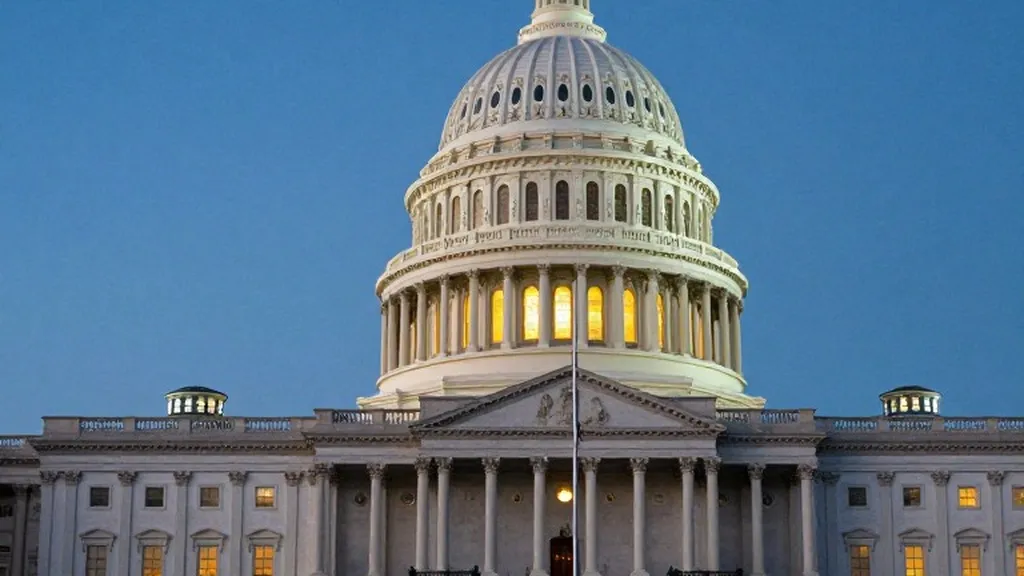
The midterm election results are in, and the outcome is a decisive shift in power for the nation's capital. Democrats have secured majorities in both the U.S. House and the U.S. Senate, effectively ending the Republican control that has persisted in the legislative branches. According to the latest tallies, the Democratic Party picked up at least 43 seats in the House of Representatives. Of those, 42 were previously held by Republicans and one was held by an independent. In the Senate, the party captured seven seats that were all previously held by Republicans. This performance marks a significant reversal in the political landscape, giving Democrats a commanding position in both chambers of Congress.
The scale of the Democratic gain in the Senate is particularly notable for historians of American politics. Republicans' net loss of at least seven U.S. Senate seats places this year’s election in the top 20% of election years in terms of seat swings against a president’s party. This threshold is often defined as a wave election, a term used to describe periods when voters overwhelmingly support one party over another. While the House results have not yet reached that specific wave threshold, the loss of 42 seats is a substantial blow to the Republican majority. Uncalled races could still change that total, but the current numbers suggest a strong mandate for the opposition party.
In the House of Representatives, the new Democratic majority is projected to be at least 250 to 157. This wide margin provides the party with the leverage to pass legislation and control the agenda for the next two years. The shift in control means that the legislative branch will be more unified in its opposition to the executive branch, which is currently led by President Donald Trump. For conservative voters who prioritized keeping Republican majorities, the results represent a challenging period that will require strategic adjustments in both state and national politics. The economy, border security, and other key issues will now be debated in a Congress where Democrats hold the reins.
The impact of the election extends beyond the federal government to the state level, where Democrats also made significant gains. The party won a plurality of state government trifectas, which includes the governorship and control of both legislative chambers. This is the first time since before the 2010 elections that Democrats have held a majority of governorships. In the 36 gubernatorial races that were decided, Democrats won 22 and Republicans won 12. Two races remain uncalled, but the trend is clear. Five states changed party control from Republican to Democratic, further consolidating the party's presence in statehouses across the country.
State legislative control also shifted decisively toward the left. Democrats won 46 of the 88 state legislative chambers on the ballot, while Republicans won 39. One chamber went to a bipartisan coalition, and two remain uncalled. The change in control was almost entirely in favor of the Democrats, with 12 chambers changing hands and none changing to the Republicans. This broad base of state-level power gives Democrats the ability to influence policy on education, healthcare, and infrastructure from their respective state capitals. The alignment of federal and state power under one party will likely accelerate the pace of legislative action in the coming months.
President Trump has already begun responding to the results by reshaping his administration. He announced that he is replacing his longtime adviser Susie Wiles with Stephen Miller to serve as the next White House chief of staff. Miller is known as the architect of the administration's hard-line immigration policies and is among the most determined of Trump's inner circle. This shake-up follows a period of transition in the White House, including the brief tenure of press secretary Katie Zacharia, who left the job after five days. The president also offered the role of White House press secretary to UFC boss Dana White, an unconventional choice that underscores the administration's search for a new voice to defend it against what Trump called the Lunatic Left.
The election results also have implications for the ongoing legal disputes facing the administration. A federal judge has appointed a former U.S. attorney to investigate whether the government misled her in a lawsuit challenging the renovation of a historic public golf course in Washington. The case, which involves the East Potomac Golf Course, has become a focal point for debates over executive power and transparency. The judge, Ana Reyes, indicated that she intends to examine whether officials with the Interior Department and the National Park Service violated ethics or misled the court. This development comes as the administration plans to close the course on Nov. 15 to begin construction on a new championship-level facility.
In Mississippi, the race for U.S. Senate remains a point of intense focus for voters and candidates alike. Democrat Scott Colom has not yet been declared the winner, but he is being welcomed as a historic figure in the state's capital. The local prosecutor is poised to become the first Black senator from this Deep South state since post-Civil War Reconstruction. The contest is too early for the Associated Press to call, but Colom stated that ballots tallied since Tuesday's election lean in his favor. His opponent, Republican Sen. Cindy Hyde-Smith, has not appeared publicly since election night and has declared that the election is not over. The final count could determine the composition of the Senate and the balance of power in the chamber.