Albanian PM Edi Rama Faces Escalating Street Upheaval in Tirana
Tens of thousands of citizens in Albania’s capital clashed with security forces on Saturday, marking a sharp intensification of the ongoing national protest movement.
By Lorenzo Patterson ·
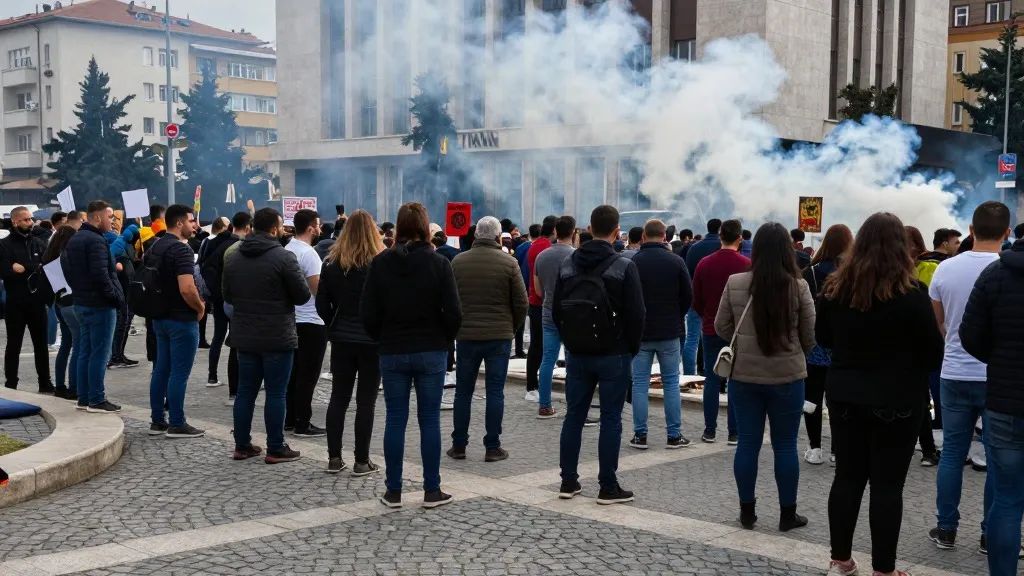
Albania’s capital became the center of a major public confrontation on Saturday as security forces moved to control a large antigovernment gathering.
The situation on the ground involved significant physical force from both sides of the divide. Police deployed water cannons, rubber bullets, and tear gas to manage the crowd. Authorities reported that more than 300 people, including both protesters and officers, sustained injuries during the clashes. Dozens of demonstrators were taken into custody, and several government facilities suffered damage during the disturbances.
The rally drew thousands of participants who traveled from across the country following calls from student leaders. The event was supported by a broad coalition of groups, including university professors, artists, and opposition political parties. In anticipation of the large turnout, local media noted that police increased security measures around Tirana and conducted inspections on vehicles entering the city. The Ministry of Education building served as a primary target for the crowd, with participants throwing stones and rolling burning trash bins toward the structure.
This latest escalation follows a period of relative calm in recent days. The broader wave of unrest began in mid-October, initially sparked by complaints about poor school conditions and the rising cost of living in the Balkan nation. Since that start date, tensions have remained high, with repeated clashes between citizens and law enforcement occurring with some frequency.
The current crisis is part of a longer pattern of political tension that dates back to May. At that time, reports surfaced regarding a luxury hotel project connected to the family of United States President Donald Trump. That revelation helped fuel a wider campaign against perceived corruption and economic hardship. Protesters are now demanding the resignation of Prime Minister Edi Rama, the leader of the Socialist Party.
Rama has responded by pointing to external influences, specifically accusing Russia and Iran of driving online misinformation to fuel the violence. He has also invited further dialogue, a gesture symbolized by red cushions placed outside the government headquarters on Saturday. Protesters responded to this symbolic offer by setting the cushions on fire. The demonstrators have directed their frustration at the entire political class, with some signs criticizing Rama’s main rival, centre-right leader Sali Berisha.
The stakes for the Albanian government are high as the movement continues to grow. The combination of economic grievances and political distrust has created a volatile environment in Tirana. With the prime minister’s administration facing pressure from multiple fronts, the coming days will likely determine whether the current cycle of protest leads to negotiated changes or further unrest.