Taiz water costs jump 75% as Houthi siege cuts off supply routes
Families in Yemen’s third-largest city are stretching 10 liters of water over four days while fuel shortages strain hospitals and sanitation services.
By Nikolai Morales ·
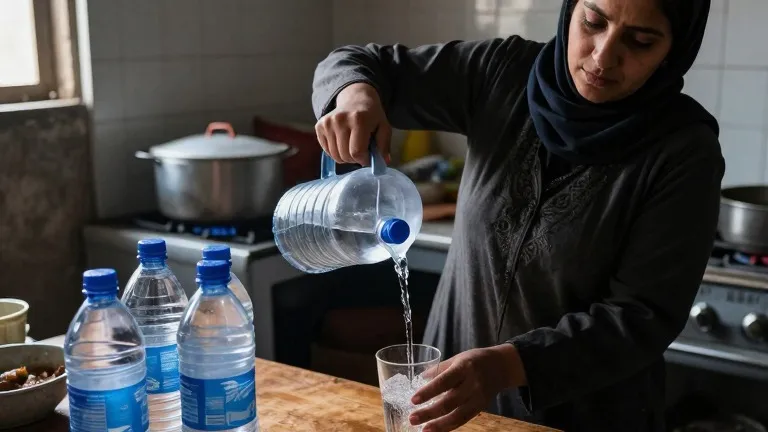
Water bills in Taiz, Yemen, have risen by as much as 75 percent in recent weeks. The price spike coincides with a tightening Houthi siege that has blocked key supply routes. Aid groups report that basic needs for the city’s more than 1 million residents are now barely being met.
Hadil al-Shahid, who runs a hair salon, said her family used to consume about 10 liters of bottled water daily for drinking and cooking. That same amount now lasts roughly four days. "We stopped drinking coffee and tea, which we used to drink daily," she said by phone. Some households are buying water on credit to cover the higher costs.
The Houthi rebels, backed by Iran, have escalated their conflict with government forces around Taiz. They captured the port city of Mokha last month. Mokha sits about 130 kilometers away and controls vital Red Sea shipping lanes. The advance has cut off access to nearby wells and limited the number of water trucks that can enter the city.
Truckers making the dangerous journey into Taiz have tripled their rates in some cases. The city’s water utility and desalination plants are running well below capacity because fuel is scarce. Desalination plants specifically lack the fuel needed to operate at full speed.
The squeeze on water is part of a wider crisis. Grocery shortages have pushed food prices up. Flour and rice cost about 50 percent more than in the summer. Cooking gas prices have more than quadrupled, according to Hani Bafaqih of the aid group CARE. Some families now burn wood, charcoal, or cardboard to heat their homes.
Fuel shortages are also hampering hospital operations and sanitation services. This creates public health risks, including a higher likelihood of cholera. Families are using unprotected wells because other sources are unavailable. Jens Laerke, a spokesperson for a UN emergency aid division, warned that disease becomes more likely as thirsty families rely on these unsafe sources.
Taiz province has absorbed about 124,000 people displaced from other parts of Yemen since August. Laerke said some of these families live in makeshift shelters or tents. They survive on one meal a day. Community kitchens have slowed down or shut down due to fuel and food shortages.
Ahmed Abdel Gaber, who was displaced with nine relatives, is sheltering in the ruins of a building. His income from hauling construction material has become unstable. "We heavily rely on assistance and donations from people to get food," he said. Al-Shahid closed her salon because customers prioritized food and water. Her children now eat mostly rice, bread, and cheese.
Government forces still hold the center of Taiz. The siege makes it harder to resupply them as they face resistance in the surrounding hills, particularly to the east. Three Houthi officials told The Associated Press that the group controls about 80 percent of the surrounding countryside and several neighborhoods inside the city. The AP could not independently verify these claims.
Civilians face direct danger from the fighting. Houthi missiles hit a residential area earlier this week, killing two teenage girls. Abdel Gaber hears explosions daily from battles about 5 kilometers away. Al-Shahid said she cannot afford to leave her home. "Staying in our home is inevitable," she said, "whether it be a matter of life or death."
Source: NPR