Silicon Focus: FCC Bans Two Devices Over Huawei Chip
The commission blocked a dashcam and video transmitter from US sale because their internal processors contain AI hardware from a subsidiary of Huawei.
By Lorenzo Patterson ·
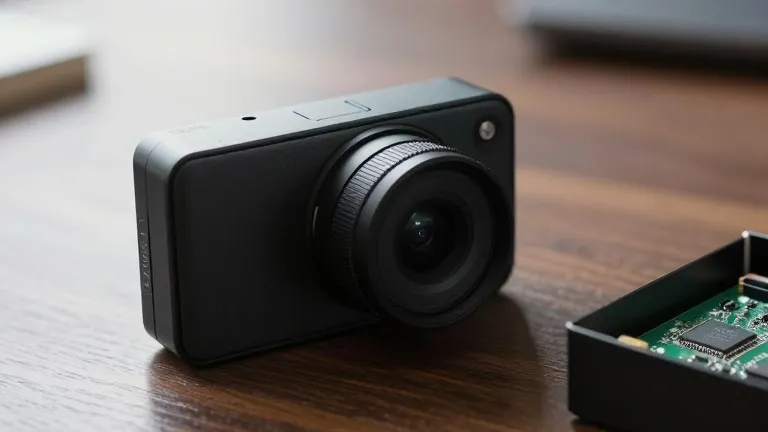
The Federal Communications Commission has banned two consumer electronics products from being sold or marketed in the United States. This is the first time the agency has used its new rule to block devices based on the specific chips inside them rather than the brand name on the box. The two banned items are a dashboard camera and a wireless video transmitter. Both products were removed from the market because they contain a HiSilicon Smart Vision system on a chip.
HiSilicon is a subsidiary of Huawei. Huawei and its subsidiaries are listed on the FCC's Covered List of entities that pose a risk to US national security. The new regulatory approach aims to close a loophole where rebranded products with Chinese-made parts could continue to reach shoppers. By targeting the silicon directly, the FCC does not need to track every individual product label or model revision.
The chip in question is the Hi3516CV610 UHD Smart Vision. It is designed for surveillance cameras and wireless CCTV systems. The processor combines WiFi, Ethernet, video encoding hardware, and an Arm Cortex-A7 processor. It also includes a neural processing unit, or NPU, which handles artificial intelligence functions.
The FCC flagged the NPU as the primary concern. The agency describes this component as a device containing logic-bearing smart parts made by entities on the Covered List. The chip's data sheet states that its Intelligent Video Engine runs on the NPU. It uses a built-in multimodal large model and transformer feature acceleration. This setup allows the AI to track relationships between objects across video frames. It maintains attention on subjects such as pets, faces, human figures, and parcels.
For consumers, this functionality could help distinguish between a pet escaping a yard and a stranger taking a courier left a package. However, the FCC believes the same logic-bearing AI could be used to survey US citizens and log faces for foreign surveillance purposes. Huawei has previously faced scrutiny for using shell companies to deceive TSMC into manufacturing AI chips for it. That occurred despite US requests for TSMC to stop supplying certain Chinese customers.
The ban takes effect immediately for new sales. Existing units already in homes can still be used, but they cannot be sold to new buyers. The FCC will continue to monitor the market for other devices using similar Huawei-linked silicon. The agency’s action applies to both wired and wireless interstate and international communications under the Communications Act of 1934.
Source: Tom's Hardware