Pirate Mystery: Jones Beach Namesake May Have Helped Henry Every Vanish
New documents suggest the 17th-century businessman who lent his name to a popular Long Island park assisted a notorious pirate crew in evading capture.
By Nikolai Morales ·
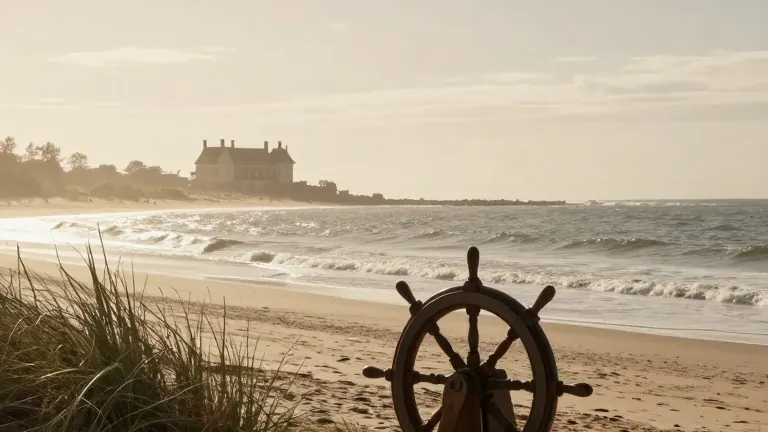
Visitors to Jones Beach in New York often stroll past the namesake of the park without knowing his history involved a violent raid on a royal Indian treasure ship. Amateur historian James Bailey argues that new evidence links Thomas Jones, the park's namesake, to the 1695 heist of the Ganj-i-Sawai. Bailey says colonial records show Jones helped the crew of Captain Henry Every, known as the King of the Pirates, escape justice after they looted tens of millions of dollars in gold and silver.
Bailey first gained attention five years ago for uncovering ancient coins connected to Every. Since then, he has examined depositions and other papers to trace the fate of the pirate captain and his associates. The crew tortured and killed many aboard the royal ship, triggering a global manhunt. While some members were caught and executed, Every and others vanished. Bailey contends that Jones was recruited to act as a wheelman, helping the group slip away from authorities.
Jones had already made a name for himself in the colonies before the raid. He served as a major in the English military and later established a whaling operation on Long Island. The property he owned on the barrier beach is now the site of the state park, which draws millions of visitors annually. Bailey notes that generations of New Yorkers have used the beach without recognizing Jones as a key figure in one of piracy's most famous crimes.
Records indicate that New York's colonial governor investigated Jones years after the heist. Charged by the British crown with curbing piracy, the governor reviewed witness depositions. In 1698, Governor Richard Coote wrote that a barrel of money from the city ended up at Jones' house on Long Island. Jones, who Coote described as formerly a pirate, testified that he knew nothing about the funds.
After aiding Every's crew, Jones returned briefly to Rhode Island. In 1696, his father-in-law, the wealthy Thomas Townsend, gifted him a large tract of land on Long Island's south shore. Bailey suggests this transfer allowed Jones to start anew, moving away from the New England coast where authorities were actively searching for the pirates. He built a homestead on the land and raised a family, though rumors of his past persisted.
Historians confirm that Jones' background made his involvement plausible. Meagan Schulman, a doctoral candidate at Fordham University specializing in 17th-century piracy, explains that privateers were essentially state-sponsored pirates. When wars ended, those who continued raiding ships were branded pirates. Schulman, who grew up visiting Jones Beach, says Jones likely did not see himself as a pirate, but the distinction was often blurry.
Local history books have long alluded to Jones' checkered past without providing details. John Hanc, author of a book on Jones Beach, says Bailey's research fills a gap in the local record. Rumors haunted Jones' estate even after his death in 1713. His mansion, demolished in the early 1800s, was said to be ghost-ridden. Robbers repeatedly desecrated his grave searching for buried treasure until it was moved to a churchyard.
A 1906 family history dismissed these stories as slander and improbable fictions. Thomas Floyd-Jones, a descendant, wrote that people cast slurs on his memory out of malice or mischief. He argued that ignorance and superstition magnified the myths for over a century after Jones' death.
Experts caution that the findings are not conclusive, partly because Thomas Jones was a common name. Richard Blakemore, a maritime history professor at the University of Reading, notes that the evidence is compelling but requires further verification. He adds that the case illustrates how piracy provided foundational wealth for many prominent families in the Northeast. Kevin McDonald, a history professor at Loyola Marymount University, agrees that the colonies were socially and economically connected to piracy, challenging the popular image of pirates as isolated outcasts.
Bailey hopes to publish his findings to bring this chapter of Jones' life into the public record. The documents he cites show Jones living a life of wealth and prominence in New York while maintaining a low profile regarding his maritime past. His story remains a blend of colonial ambition and high-seas violence, rooted in the land that now bears his name.
Source: WTOP News