New study finds school phone bans yield just two weeks of extra learning
A Harvard analysis of 3.3 million students shows strict cell phone restrictions offer small but measurable academic benefits, though experts debate if the gains will grow.
By Lorenzo Patterson ·
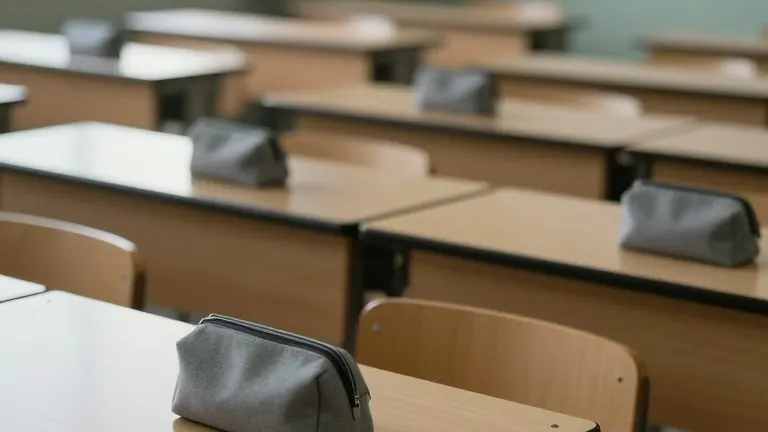
Harvard researchers released a report on Tuesday showing that schools requiring students to store phones in locked pouches saw small improvements in test scores. The study found that these strict restrictions resulted in academic gains equivalent to roughly one or two extra weeks of instruction per year. The findings come as schools across the country try to reverse a decade of declining student achievement.
The research team analyzed math and reading test data from grades four through 10 over the past five academic years. They examined scores from 3.3 million students across 4,600 schools nationally. The analysis compared schools with strict phone storage policies to similar schools without such rules. The data indicated that students in schools with locked pouches showed modest but positive academic growth compared to their peers.
Thomas Kane, a professor at Harvard and one of the study’s authors, noted that student achievement has fallen globally since 2013. This timeline aligns with the rise of social media enabled smartphones. Kane said the study confirms that phone bans have a positive effect on learning growth. However, he cautioned that the measure is not a cure all. He explained that because learning loss accumulated gradually over ten years, the recovery from phone bans is also proceeding slowly.
The study suggests that storing phones is a cost effective method to add instructional time. The estimated gain of one to two weeks is about half the size of the annual decline in test scores observed since smartphones became mainstream. The authors argued that these small gains could accumulate over time if schools continue to enforce the bans consistently.
Other researchers remain skeptical of the long term benefits. A separate study published in May found that strict phone bans had close to zero effect on test scores. That research, led by Thomas Dee of Stanford University, used different standardized tests and data from Yondr, a major provider of phone pouches. Dee described the early results as largely disappointing. He expressed concern about extrapolating long term benefits from data that is small and sensitive.
Dee suggested that the limited impact may result from students using other devices at school or suffering from out of school phone use. He noted that researchers are still unsure how to measure the total effect of digital distraction on child development. The NBER study authors were hesitant to claim a definitive overall learning benefit from the bans based on the current evidence.
Implementation issues also complicate the picture. Jean Twenge, a psychologist at San Diego State University, pointed out that many school bans are not strictly enforced. She cited examples of students using burner phones or even phone shaped rocks to bypass locked pouches. At schools where students keep phones in backpacks, adherence is often spotty. Twenge questioned whether students simply shift their social media use to laptops during class.
The role of phone use outside of school remains a major unknown. Kane said it is a big question how much late night usage affects student performance. He criticized the lack of data shared by social media companies regarding time spent on their platforms. Without that data, researchers cannot link specific usage patterns to student outcomes.