Leonid Meteor Shower: iPhone Tips for Capturing the Night Sky
Viewers can photograph up to 15 meteors per hour during the early morning hours of Nov. 17 and 18 using standard smartphone features.
By Pedro Tanaka ·
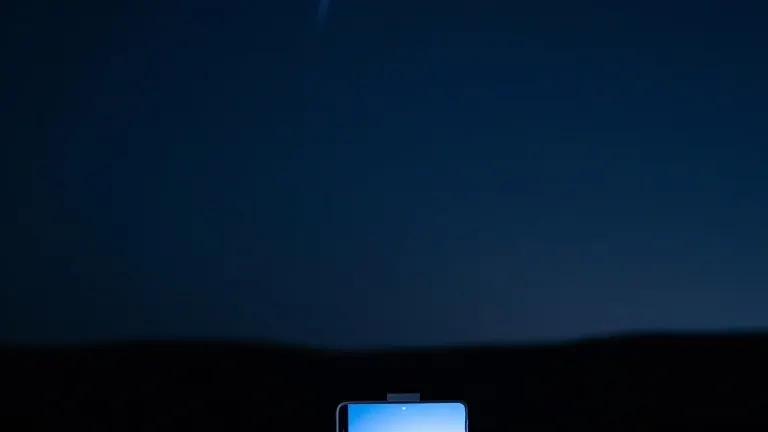
Skywatchers have a brief window to capture the Leonid meteor shower during the early morning hours of Nov. 17 and 18, and standard smartphone hardware is sufficient for the task. According to NASA, ideal conditions allow the shower to produce up to 15 meteors per hour. The primary challenge for photographers is minimizing camera shake in low light, which requires specific adjustments to an iPhone to prevent blurry images.
To maximize the chances of a clear capture, observers should travel to a location distant from city lights. NASA recommends viewing from midnight until dawn. Viewers should arrive early to allow their eyes approximately 30 minutes to adjust to the darkness. Once settled, the camera must be stabilized by mounting the iPhone on a tripod or resting it against a stationary object like a rock or backpack. Holding the device is not recommended because slight movements create blur.
Software settings are the second critical component. When the phone detects low light, Night Mode activates automatically. Users should tap and hold the moon icon in the top-right corner of the screen and select max. The phone must remain still during this process. Next, the user locates a star or specific object, taps and holds the subject on the screen, and waits for a yellow box to appear, indicating that focus is locked.
To reduce physical contact with the device, photographers can use a Bluetooth remote, AirPods, or an Apple Watch to trigger the shutter. After capturing the images, users can edit the photos by adjusting contrast, saturation, and exposure. Advanced photographers may stack multiple images to blend several meteors into a single frame.
The Leonids are generated when Earth passes through dusty trails left by comet 55P Tempel-Tuttle. This comet orbits the sun every 33 years. When Earth intersects a dense pocket of the comet's debris, particles collide with the atmosphere and burn up, creating streaks of light. These rare Leonid storms occur roughly every 33 years.
If observers miss this event, the Geminid meteor shower will occur on Dec. 13 and 14. The Ursid meteor shower follows on Dec. 22 and 23.