Israel's election system makes predicting the next prime minister difficult
Voters choose parties rather than individuals, requiring complex coalition building that determines who leads the government.
By Lorenzo Patterson ·
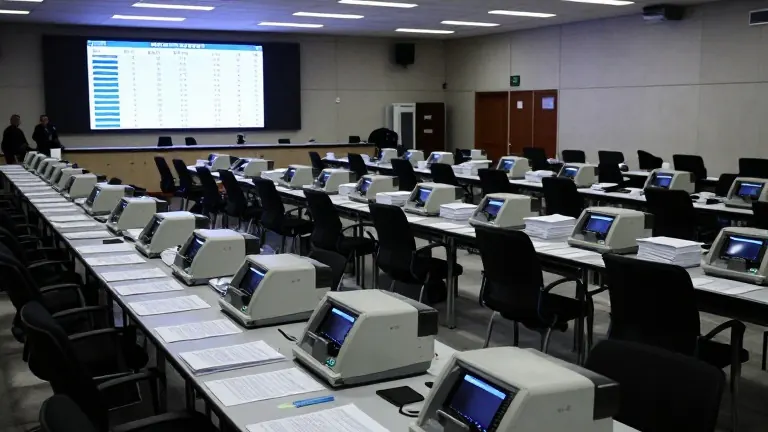
Israeli voters selected new parties for the Knesset on Tuesday, initiating a process that may take months to produce a new prime minister.
The system relies on proportional representation where citizens rank political parties instead of picking specific candidates for local districts. Each party submits a ranked list of individuals before the election day arrives. The number of seats a party receives in the 120-member parliament depends directly on its share of the total vote.
A party must secure at least 3.25% of the national vote to earn a single seat. This threshold ensures that only parties with a measurable base of support gain representation in the legislature. No party in Israeli history has ever won more than half of the available seats on its own.
The president of Israel, who holds a largely ceremonial role, assigns a member of the new Knesset the task of forming a government. This person is typically the leader of the party that received the most votes. That leader must then negotiate with other parties to create a governing coalition capable of commanding a majority in the chamber.
Negotiations often involve trading policy priorities for votes. A larger party might agree to prioritize issues favored by a smaller partner in exchange for their support in the coalition. If the initial choice fails to assemble a majority within a set timeframe, the president selects another Knesset member to try. If all attempts fail, the country returns to the polls for a new election.
Benjamin Netanyahu, the longest-serving prime minister in Israel's history, faces a challenging path to retain power. A recent poll conducted by Direct Polls and published by i24NEWS projects his coalition will secure 59 seats. This total falls one seat short of the 61 needed to hold a majority in the 120-seat Knesset.
The opposition field differs from the typical American dynamic where a struggling right-wing leader often boosts left-wing candidates. In Israel, the main challengers to Netanyahu include figures generally considered right-of-center or centrist. Former military chief Gadi Eisenkot, former prime minister Naftali Bennett, and former defense minister Avigdor Lieberman all lead popular parties in this space.
Left-wing interests are represented by former general Yair Golan, who leads a new party called The Democrats. This group functions as a coalition of remnants from historical leftist parties in the country. The election process will continue until a single leader successfully builds a stable government.
The outcome will shape Israel's political direction and its relationship with Jewish Americans. The specific policies of the new coalition will depend on the compromises reached during the formation process.
Source: The Jewish Exponent