Chinese Survey Activity Raises Pacific Undersea Cable Risks for Big Tech
A new report for a congressional advisory commission says cables owned by US firms such as Google and Meta face some of the highest sabotage risks in the Pacific.
By Lorenzo Patterson ·
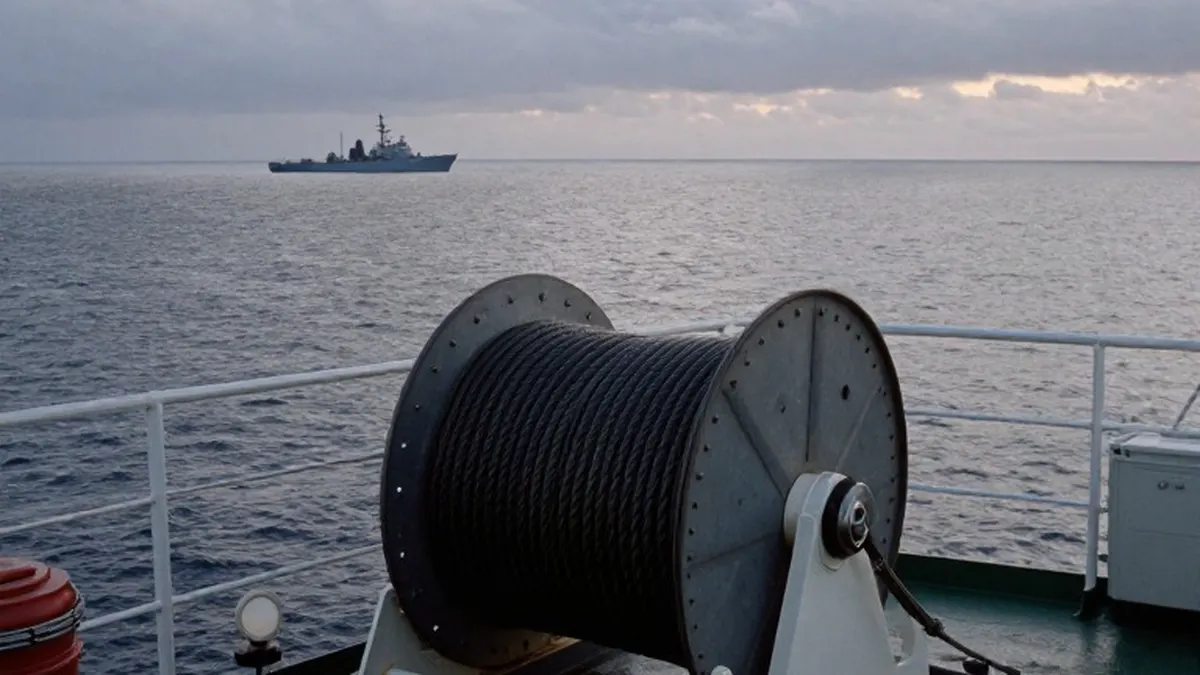
A new report warns that subsea cable projects owned by US companies such as Google and Meta face some of the greatest risks from deep-sea sabotage in the Pacific Ocean. The findings come as Chinese research ships have been spending an extraordinary amount of time apparently surveying undersea cables, and as Chinese commercial ships are being investigated over cable cuts in both European and Asian waters.
Most damage to the undersea cables that form the backbone of the Internet is accidental. Bottom-trawling fishing nets and ship anchors dragging across the seabed are the leading causes, while storms and undersea landslides also play a role.
Even so, rising international tensions and open conflicts have brought fresh scrutiny to more suspicious cases of cable damage. Analysts warn that Russia and China in particular may be using cable sabotage or tampering as "gray zone" tactics, meaning actions that stop short of direct military confrontation.
The latest assessment of China's gray zone tactics against undersea Internet infrastructure comes from the US-China Economic and Security Review Commission, an independent government commission that advises Congress. The commission contracted the research to the London-based think tank China Strategic Risks Institute, and the report was published in September 2026.
The authors built an interactive tool called the Trans-Pacific Cable Gray Zone Vulnerability Index. It ranks the undersea cables considered most at risk and displays a map of their routes across the Pacific Ocean.
Such an index could help officials decide which cables should be first in line for underwater sensors or for patrols that monitor for threats.
The index weighs several risk factors: the depth of the cable routes, nearby shipping traffic, who owns the cable, China's exclusive economic zone and its broader territorial claims, and whether a cable connects to Taiwan.
Taiwan is treated as a geopolitical hotspot. It is a self-governing island democracy that China also claims, and in recent years China has stepped up military maneuvers involving warships and aircraft around the island.
Source: Ars Technica
More News · National news · Report a business · Got a Story?