Rutgers researchers link wildfire smoke in womb to higher autism risk
Analysis of 900,000 Medicaid records shows a 30 percent risk increase per unit rise in airborne particles during mid and late pregnancy.
By Nikolai Morales ·
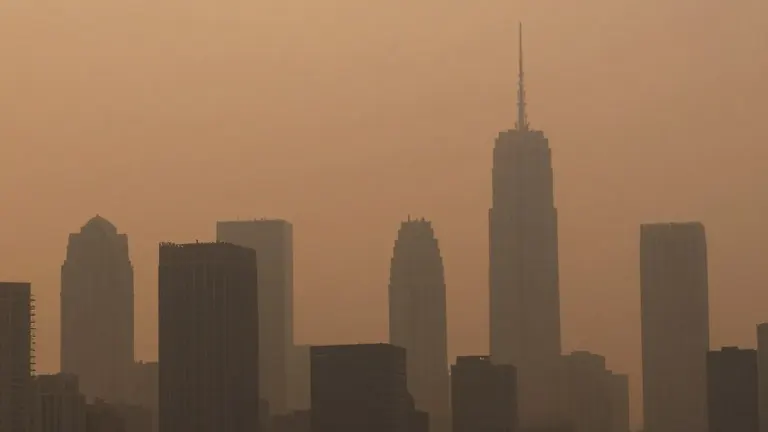
Wildfire activity has doubled in recent years, prompting scientists to examine new health impacts for developing fetuses.
A study published Tuesday in JAMA Pediatrics found a correlation between prenatal exposure to wildfire smoke and autism diagnoses in children. The research team, led by Dr. Stefania Papatheodorou of the Rutgers School of Public Health, analyzed Medicaid data from nearly 900,000 mother-child pairs collected between 2007 and 2014.
The analysis focused on fine particulate matter, or PM2.5, which measures 2.5 micrometers or less in diameter. A human hair is 80 to 100 micrometers wide. For every 0.75 microgram per cubic meter increase in the average concentration of these wildfire particles, the risk of a child being diagnosed with autism rose by 30 percent.
Papatheodorou noted that the strongest association appeared after the 15th week of gestation. She explained that this period involves rapid brain development when environmental exposures may disrupt key processes. "Pregnancy is a period of rapid brain development, when environmental exposures may interfere with important developmental processes," she said in a news release.
The findings suggest that middle and late pregnancy stages are particularly relevant for understanding how wildfire smoke affects the developing brain. The study did not find a similar link between prenatal wildfire exposure and attention deficit disorder.
The research team emphasized that the data is observational. It identifies an association between particle concentration and diagnosis but does not prove a direct cause and effect relationship. The authors restricted their analysis to mother-child pairs who remained continuously enrolled in Medicaid throughout the study period.
In July, cities like Philadelphia and New York issued Code Purple advisories due to smoke from Canadian wildfires. Papatheodorou said that smoke can travel far beyond the fire source, and exposure can occur even when the air looks clear. "Our findings suggest that the middle and later stages of pregnancy may be particularly relevant for understanding the potential effects of wildfire smoke on the developing brain and risk of autism," she added.
The next step for researchers is to monitor air quality data in urban centers to better understand exposure patterns for expectant mothers.
Source: PhillyVoice