Robert White Jr. Assumes D.C. Delegation After 36-Year Tenure Ends
The new delegate cites a 22,000 job loss and Democratic control of Congress as key factors in his strategy for statehood and local economic recovery.
By Pedro Tanaka ·
The District of Columbia lost 22,000 jobs in 2025, a decline that local officials estimate cost residents $3 billion in annual income. This economic shift sets the stage for Robert White Jr., who is stepping into the House delegation role previously held by Eleanor Holmes Norton. Norton retires after 36 years in office, ending a long tenure that began when White was eight years old.
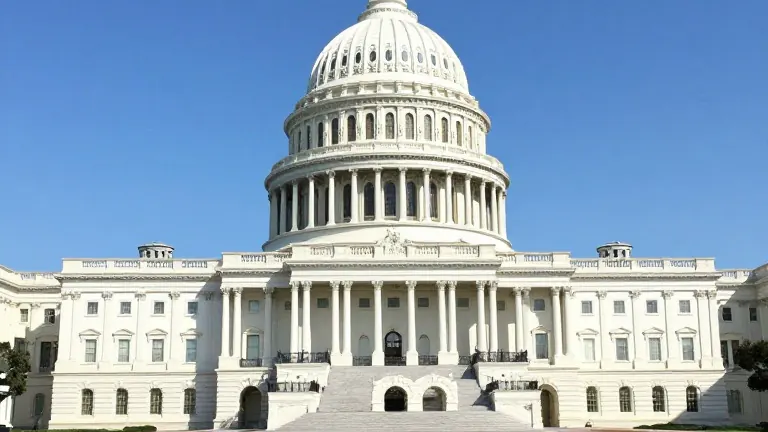
White, 44, previously served as an at-large member of the city council and worked for Norton before running for the seat himself. He told the Associated Press that his primary goals remain securing statehood for the city and improving its economic standing. He noted that Democrats currently hold an overwhelming advantage in both chambers of Congress, a political shift he believes favors the district.
The delegate argued that the 2028 Democratic presidential nominee should view support for D.C. statehood as a baseline requirement. He described it as malpractice for the party to fail to achieve statehood while controlling the House, the Senate, and the White House. White said he is working to ensure national Democratic leadership understands the strategic importance of the district.
D.C. delegates can introduce legislation but do not vote on final passage. In 2021, the House voted to grant the city statehood, but the bill stalled in the Senate due to the threat of a Republican filibuster. White stated he has begun conversations with colleagues about the potential impact of two additional senators, which he believes would be transformative for the city's political influence.
Economic concerns drive much of White's agenda. City officials attributed at least part of the job losses to the Department of Government Efficiency, which President Donald Trump empowered to reduce federal bureaucracy. White said the district lost approximately 30,000 federal jobs, causing families to struggle with the cost of living and prompting many to leave the area.
He emphasized that the loss of workers affects the local economy, as those individuals no longer spend money on lunch or evening drinks. He is speaking with incoming committee chairs who have financial and oversight roles over the city, particularly regarding projects proposed by the Trump administration.
White plans to oppose several initiatives that affect landmarks he considers local and national treasures. These include plans to transform East Potomac Golf Links into a high-end course, the shutdown of the John F. Kennedy Center for the Performing Arts, and the construction of a 250-foot triumphal arch near Arlington National Cemetery. He said these sites are currently embroiled in litigation.
The delegate also raised concerns about the ongoing National Guard deployment, which he views as a waste of money. He expressed nervousness about the potential for troops to be used in future political transitions, citing the Jan. 6, 2021, attack on the U.S. Capitol. He said the district cannot have an army under presidential control during the next peaceful transfer of power in 2028.
White works closely with incoming Mayor Janeese Lewis George, who is succeeding Muriel Bowser. He said they are aligned on next steps and believe the Democratic control of Congress will limit the president's national impact, potentially directing his attention to D.C. White is also building relationships on Capitol Hill by inviting new members to events, including a Wizards basketball game scheduled for Monday evening.
White is only the third person to serve as delegate since Congress passed the District of Columbia Delegate Act in 1970. Walter Fauntroy was sworn in on April 19, 1971, followed by Norton on Jan. 3, 1991. White said he is trying to maintain a sense of awe and privilege in the role to ensure the right work gets done for the city.