Navy Chief Admits Iran Conflict Strains Fleet
Acting Secretary Hung Cao faces a 60-vote confirmation hurdle while defending record ship deployments and shrinking weapons stocks before the Senate.
By Nikolai Morales ·
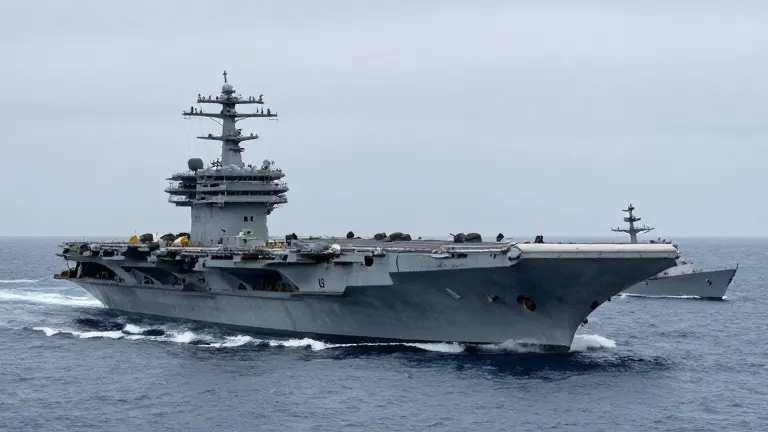
The USS Abraham Lincoln spent a record 265 days at sea before returning to San Diego in early October. Acting Navy Secretary Hung Cao acknowledged that this extended deployment places a heavy burden on the maritime service as he seeks permanent confirmation to lead the branch.
Cao testified before the Senate Armed Services Committee on Tuesday regarding the impact of the US-Israel war on Iran, which has entered its ninth month. He stated that the conflict is a strain on the Navy, although he argued that joint military efforts have set China back on its heels.
Senators from both parties questioned the acting secretary on dwindling weapons stockpiles and the diversion of resources away from the Asia-Pacific region. The hearing took place against a backdrop of political fallout, including a failed House bid to impeach Defense Secretary Pete Hegseth over his management of the war.
Voter frustration with the economic cost of the conflict influenced the November midterm elections. The results cost Republicans control of both chambers, and the new Democratic-controlled 120th Congress will be sworn in on January 3, 2027.
Sen. Jack Reed of Rhode Island pressed Cao on the quiet removal of the leadership team from the nuclear-powered attack submarine USS South Dakota after an underwater collision in October. Cao defended the Navy's decision to bypass standard congressional notification, arguing that protecting officers' livelihoods requires privacy during career transitions.
Lawmakers also scrutinized mental health issues and low morale aboard carrier strike groups. The US Navy is currently massing three carrier strike groups, including the USS George Washington and USS Theodore Roosevelt, to maintain a naval blockade against Iran. Cao countered criticism by noting that he does not control deployment lengths, which have risen to nearly a year from the previous six to eight-month standard.
Republican Chair Roger Wicker expressed support for the nomination but noted the service faces major challenges. Cao faces a steep confirmation path because he left active duty in October 2021, falling short of the seven-year separation period required by federal law. He must secure a 60-vote waiver to become the permanent secretary, a threshold that requires cross-party support to avoid a filibuster.