New dye helps surgeons spot hidden ovarian tumors
Inova Schar Cancer became the first health system in the Mid-Atlantic to use CYTALUX, an FDA-approved agent that makes cancerous cells glow during surgery.
By Pedro Tanaka ·
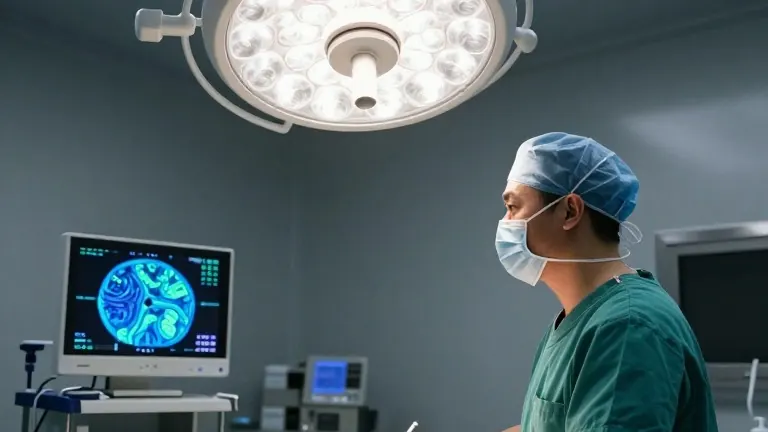
Inova Schar Cancer became the first health system in Virginia and the Mid-Atlantic to use a new imaging drug for ovarian cancer surgery.
Colleen Abbott, 60, from Gaithersburg, Maryland, was the first local patient to undergo the procedure. Diagnosed in February after feeling pressure in her pelvic area, Abbott underwent a hysterectomy where doctors discovered the cancer had spread throughout her abdomen. The disease originated in a fallopian tube. Abbott has since completed six rounds of chemotherapy and surgery.
The drug, known as CYTALUX, is administered as an infusion before the operation. It causes ovarian cancer cells to emit light, allowing surgeons to distinguish between healthy tissue and tumors in real time. This capability is particularly useful after chemotherapy, when treated cancer can be difficult to identify with the naked eye. Dr. Leslie Randall, director of Gynecologic Oncology at Inova Schar Cancer, explained that the dye helps determine if a visible mass is a viable tumor.
Surgeons must remain careful, as not all tissue that glows is cancerous. Randall noted that lymph nodes can also light up without containing cancer, requiring medical judgment to interpret the visual data. The technology addresses a common challenge in gynecologic oncology, where cancerous tissue often blends in with surrounding healthy organs.
Clinical trials indicate that CYTALUX helped surgeons identify additional cancer that might otherwise have been missed in nearly 30% of patients. Randall emphasized that ovarian cancer surgery is often a single, critical intervention in a patient's treatment course. The goal is to remove as much of the disease as possible during that one operation. The visual aid allows for a more precise removal of tissue.
Ovarian cancer remains the deadliest gynecologic cancer in the United States, accounting for more than 12,000 deaths annually. The disease is frequently diagnosed at an advanced stage because symptoms are often vague and there is no routine screening test for women at average risk. Abbott is now in remission and credits the technology with helping doctors remove all detectable cancer.
Some patients have reported minor side effects from the drug, such as nausea, which doctors can manage with medication. Most patients tolerate the infusion well. Inova plans to continue using the technology for eligible patients undergoing ovarian cancer surgery.
Abbott said the experience gave her more time with her family. She expressed gratitude for the medical team and the new visual tool that guided her surgery. The procedure marked the first use of the agent by a health system in the Mid-Atlantic region.
Source: NBC4 Washington