Mexico's President Cites 1.4 Million Unseized Fentanyl Pills to Criticize DEA
Claudia Sheinbaum accused U.S. officials of interfering by launching tip lines in Sinaloa while ignoring corruption at home.
By Lorenzo Patterson ·
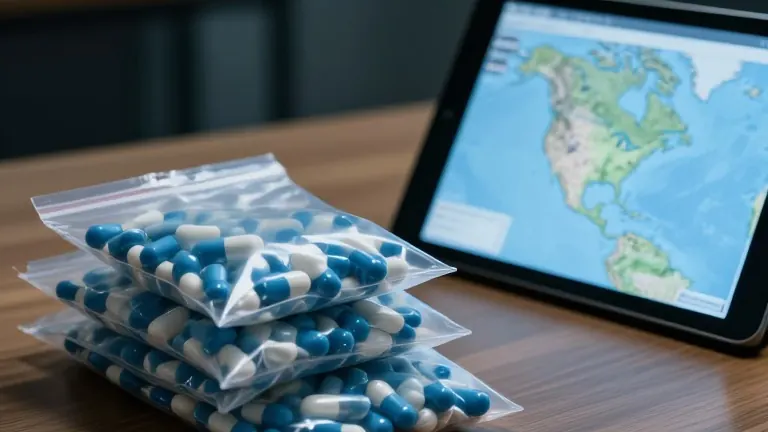
Mexican President Claudia Sheinbaum criticized the U.S. Drug Enforcement Administration on Thursday, citing a report that shows the agency allowed 1.4 million counterfeit fentanyl pills to enter the market while tracking a trafficking ring.
The president read excerpts from an Associated Press investigation during a public address. The report details how the DEA spent eight months monitoring a network that flooded the Southwest with synthetic opioids. During that period, agents permitted the movement of the pills without seizing them.
“The DEA has plenty of work to do in its own country. A lot,” Sheinbaum said. “The first thing it should do is investigate corruption in the United States linked to organized crime, or what they call terrorist groups.”
Her comments came less than 24 hours after DEA Administrator Terry Cole announced the creation of anonymous tip lines on his X account. The agency encouraged residents of Sinaloa state to report members of criminal networks, corrupt officials, and money launderers. Cole stated that tips submitted via Signal, WhatsApp, and email would be handled confidentially to protect the identity and safety of informants.
The United States has increased pressure on Mexico to combat cartels and has offered to deploy troops on Mexican soil. Sheinbaum has rejected that deployment, maintaining that security cooperation will proceed “but without subordination.”
Tensions have persisted since late April, when federal prosecutors in New York unsealed a drug trafficking indictment against Sinaloa Governor Rubén Rocha Moya. He and nine other officials were accused of collaborating with a faction of the Sinaloa cartel, which the Trump administration designated a foreign terrorist organization. Rocha Moya took an indefinite leave of absence, and his bank accounts in Mexico were frozen. Mexican authorities refused the U.S. request to arrest him.
In June, DEA whistleblowers told the AP that agents in New Mexico permitted hundreds of thousands of fentanyl pills to go unseized in recent years. The DEA initially denied knowing it allowed the trafficking of the opioid, which the White House has designated a weapon of mass destruction.
New findings contradict that denial. Court documents, investigative records, wiretap reports, and 12 hours of surveillance footage show dealers moving large packages of pills in plastic bins and duffel bags. The drugs passed through hotels, apartment complexes, Airbnb rentals, and self-storage facilities in six states between August 2024 and April 2025.
Sheinbaum labeled the DEA’s strategy the “Fast and Furious of Fentanyl.” She compared it to the 2011 gun-walking scandal, in which straw buyers smuggled approximately 2,000 assault weapons into Mexico to trace firearms to cartel leaders. She questioned why the United States was acting in Mexico when its own prosecutor’s office and Security Ministry were active domestically.
On November 20, Mexican military forces captured Fausto Isidro Meza Flores, also known as El Chapo Isidro. He is a key ally of a Sinaloa cartel faction and appeared on the FBI's Ten Most Wanted Fugitives list. Mexico requested U.S. support for the operation, and the United States sent a drone to gather intelligence. Attorney General Ernestina Godoy stated that Meza Flores will be tried in Mexico, despite the U.S. request for his extradition. Former Sinaloa Security Secretary Gerardo Mérida Sánchez surrendered to U.S. authorities in May.
Cole announced that a tip channel for the state of Jalisco would go public on Thursday. The state is a stronghold for the Jalisco New Generation Cartel, known as CJNG. Washington also designated that group a terrorist organization. The DEA did not immediately respond to a request for comment regarding the president's remarks.