Hungary Builds a Factory to Assemble One Million Rubik's Cubes Each Year
A new automated line in Jászberény will manufacture one million puzzles a year, ending decades of overseas manufacturing.
By Nikolai Morales ·
For more than 50 years, the colorful puzzle invented in Budapest has become a global symbol of logic and play. On Tuesday, that story came full circle as manufacturing of the Rubik's Cube shifted back to its point of origin.
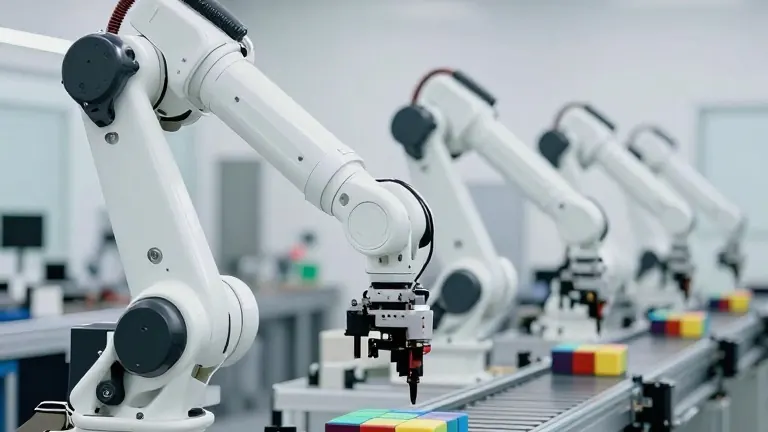
A new production facility in the Hungarian town of Jászberény began operations on Tuesday. The line is fully automated and designed to assemble one million cubes annually. This marks the first time in decades that the mass production of the puzzle has taken place in the country where its creator first built it.
Ernő Rubik, the 82-year-old architect and professor who invented the device in 1974, attended the opening. He noted that the invention was originally a wooden prototype created to demonstrate three-dimensional movement. The first commercial units, known then as the Magic Cube, sold in Budapest in 1977. Rubik said the early success in socialist Hungary overwhelmed local supply chains, forcing the company to seek materials elsewhere and eventually move production abroad.
The puzzle was licensed to foreign toy companies in the late 1970s and early 1980s. That move led to a massive surge in sales, with 200 million units sold between 1980 and 1983. Since then, the brand has remained a staple in the toy market, selling millions of units every year despite fluctuations in popularity.
Spin Master, the Canadian toy company that owns the Rubik's Cube trademark, oversaw the return of production. Steve Radewych, a senior vice president at Spin Master, described the event as a return to the puzzle's roots. He told Rubik that the invention had become a global social phenomenon rather than just a toy.
Radewych emphasized the cognitive benefits of the puzzle, describing it as a tool for problem-solving and intellectual discipline. He noted that the cube continues to attract young users who find both joy and frustration in solving it. The company aims to capitalize on the enduring appeal of the product through this localized manufacturing base.
The new facility relies on robotic arms to assemble and test each cube for durability. Rubik said this level of automation is vastly different from the hand-assembly methods used in the early days. He views the cube not just as a game, but as a transformable sculpture that blends art with engineering.
Interest in the puzzle has seen a recent rise due to competitive speed-solving events. According to the World Cube Association, the current world record for solving the puzzle is 2.51 seconds. That record was set last month in China by Xuanyi Geng, a nine-year-old competitor.
More Business · Business Complaints · Report a business · Got a Story?