How to Clean Plastic and Wood Cutting Boards Correctly
Experts advise specific sanitation methods for different materials to prevent bacteria and maintain kitchen tools.
By Nikolai Morales ·
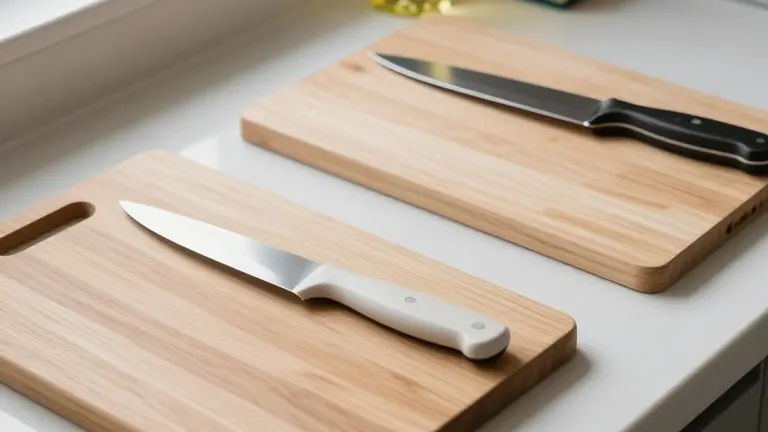
Home cooks often debate whether wood or plastic is the better material for cutting boards, but food safety experts say the method of cleaning matters more than the material itself.
Donald Schaffner, a professor of food science at Rutgers University, noted that research on bacterial transfer is complex. He observed that while plastic was long considered safer, Dean Cliver at the University of Wisconsin-Madison found in the 1990s that salmonella and E. coli pulled into wood fibers did not multiply and eventually died. Schaffner stated that wood is not as risky as previously thought and contains natural antimicrobial compounds.
Nicole Papantoniou, senior director of the Kitchen & Cooking Lab at the Good Housekeeping Institute, uses both materials and favors composite boards made from bonded wood or paper fibers. Dave Benson, CEO of Epicurean, explained that cuts in composite materials stay open rather than closing over food residue, making them easier to clean. Papantoniou advises against using glass, marble, or slate for cutting because they dull knives, slide around, or are prone to breaking.
For daily use, washing boards with warm, soapy water and allowing them to air dry is sufficient. Schaffner warned that tap water is rarely hot enough to kill bacteria. After handling raw meat or poultry, he recommends sanitizing with boiling water, a dishwasher sanitize cycle, or diluted bleach. He noted that vinegar and hydrogen peroxide are less effective than bleach for this purpose. Wood boards should be washed by hand to prevent warping, while plastic and composite boards can go in the dishwasher.
Lisa Bosio, vice president of group marketing at John Boos & Co., which has manufactured butcher blocks in Effingham, Illinois, since 1887, advised oiling wood boards once a month. She suggested using a food-safe mineral oil applied in a thin layer and left to soak overnight. For stains from tomatoes or beets, Noah Pinsonnault of the Good Housekeeping Institute recommended a paste of 3% hydrogen peroxide applied for five minutes, noting it may lighten darker woods like walnut. Garlic odors can be removed with a baking soda and water paste.
There is no fixed timeline for replacing a board. Schaffner discards boards when they become difficult to clean visibly. Papantoniou replaces warped boards, plastic boards with deep grooves or curled edges, and wood boards that crack or show dark spots indicating mold. She noted that while using separate boards for raw meat and produce is a reasonable precaution, bacteria can still travel via water droplets to hands and other kitchen items.