Crimean residents advised to stockpile food as logistics costs soar
Transport operators are urging residents of occupied Crimea to prepare three months of food supplies due to rising risks and costs along key land routes.
By Nikolai Morales ·
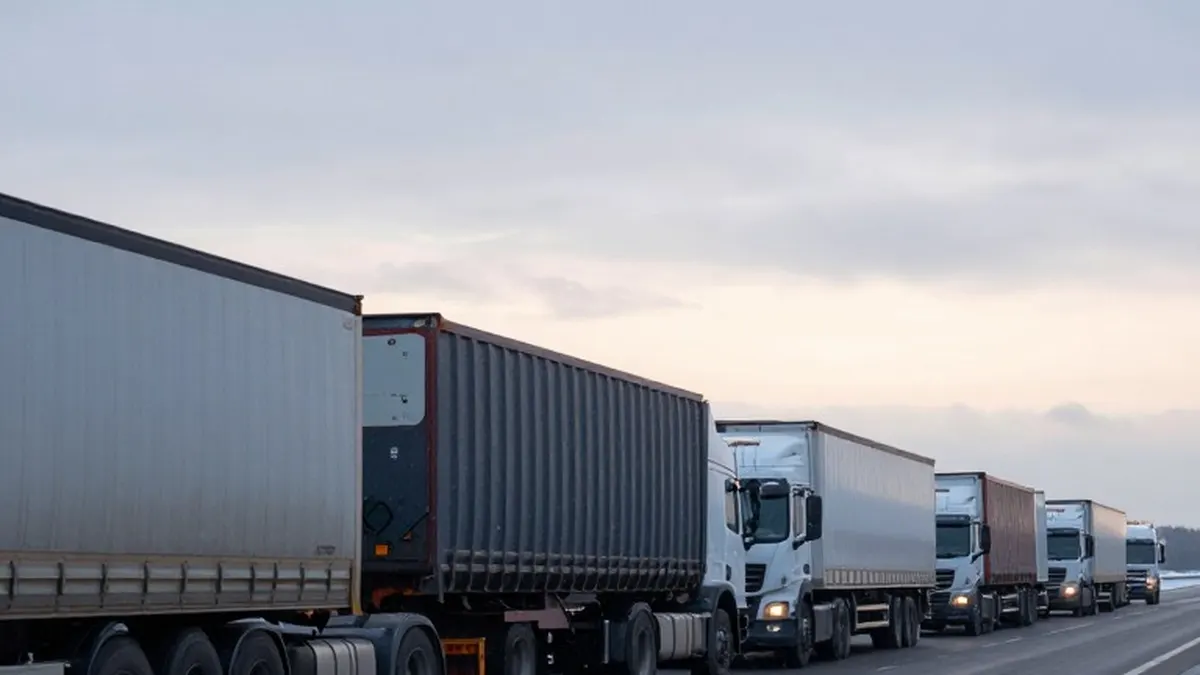
Representatives of Russian transport companies have advised residents of the temporarily occupied Crimean peninsula to accumulate food supplies sufficient for three months. This recommendation comes amid growing concerns about potential disruptions to deliveries along the R-280 Novorossiya highway, a route that traverses occupied Ukrainian territories.
The call for preparedness is driven by an increase in drone attacks on road transport. Industry insiders report that a diminishing number of drivers are willing to deliver goods to Crimea via the land corridor due to heightened security risks. While major shortages have not yet appeared in local food shops, the dangers faced by logistics crews are already being reflected in operational costs.
The financial burden of transport has increased significantly. According to transport industry data, the cost of shipping a lorry from Moscow to Crimea has surged from approximately 250,000 rubles, or about 3,000 US dollars, to as much as one million rubles, equivalent to roughly 12,000 US dollars. This sharp rise highlights the premium now placed on safe delivery through contested zones.
Conditions are expected to deteriorate further with the arrival of winter. Currently, lorries, even those traveling with military escorts, attempt to navigate the dangerous stretch between Rostov-on-Don and Mariupol at speeds of 130 to 140 kilometers per hour. This high-speed transit has resulted in a notable increase in head-on collisions. As winter approaches, drivers will likely need to reduce speeds to handle icy roads, snow, and blizzards, thereby increasing their exposure time to Ukrainian drones.
The peninsula remains heavily dependent on food imports from mainland Russia. Roman Bulonov, a member of the Committee for Agricultural Development within the Crimean Chamber of Commerce and Industry, noted that local production covers only 25% of meat consumption and 35% of dairy products. He described the local production of many food types as unprofitable, reinforcing the need for external supply chains.
Alternative routes have also faced challenges. The Kerch ferry crossing, which serves as a secondary logistics channel, was operating with restrictions as of November 23. This route is primarily utilized for cargo destined for the Russian Defense Ministry and the Federal Security Service. General cargo, including essential items like food and medicines, typically faces waiting periods of three to 18 days after receiving clearance. Additionally, ferry services in the Kerch Strait are subject to periodic suspensions caused by storms and strong winds.
These logistics issues follow a series of strategic operations by Ukraine's defense forces aimed at isolating Crimea. In May 2026, Ukrainian forces began targeting lorries and fuel tankers on the R-280 highway with mid-range drones, leading to a severe fuel crisis and rationing on the peninsula by late May and early June.
In July, attacks by Ukraine's Unmanned Systems Forces disabled three of the five ferries at the Kerch crossing, nearly halting operations. More recently, on November 8, drones struck a bridge over the Mius River in Rostov Oblast for the first time, prompting a temporary road closure. Further strikes on November 14 and 17 damaged bridges over the Mius Estuary and the Mius River again.
The pressure intensified on November 16 and 17 when Ukrainian forces launched a series of strikes on the Crimean Bridge. These attacks caused part of the road deck and one metal arch to collapse into the sea. The following morning, queues formed at petrol stations and shops, with some retailers in Kerch restricting food sales. On the night of November 18 and 19, Neptune coastal missile systems were used to further damage the railway track on the bridge, leading to the suspension of train traffic.
The convergence of these factors has prompted transport operators to warn residents to plan ahead. The combination of rising costs, weather-related delays, and ongoing military strikes on infrastructure creates a volatile environment for supply chains, making short-term stockpiling a prudent measure for households in the region.