French astronaut Thomas Pesquet explores the link between space travel and medical discovery
In his new book, "Space in 100 Questions," astronaut Thomas Pesquet details how orbital conditions reveal biological phenomena that remain hidden on Earth.
By Pedro Tanaka ·
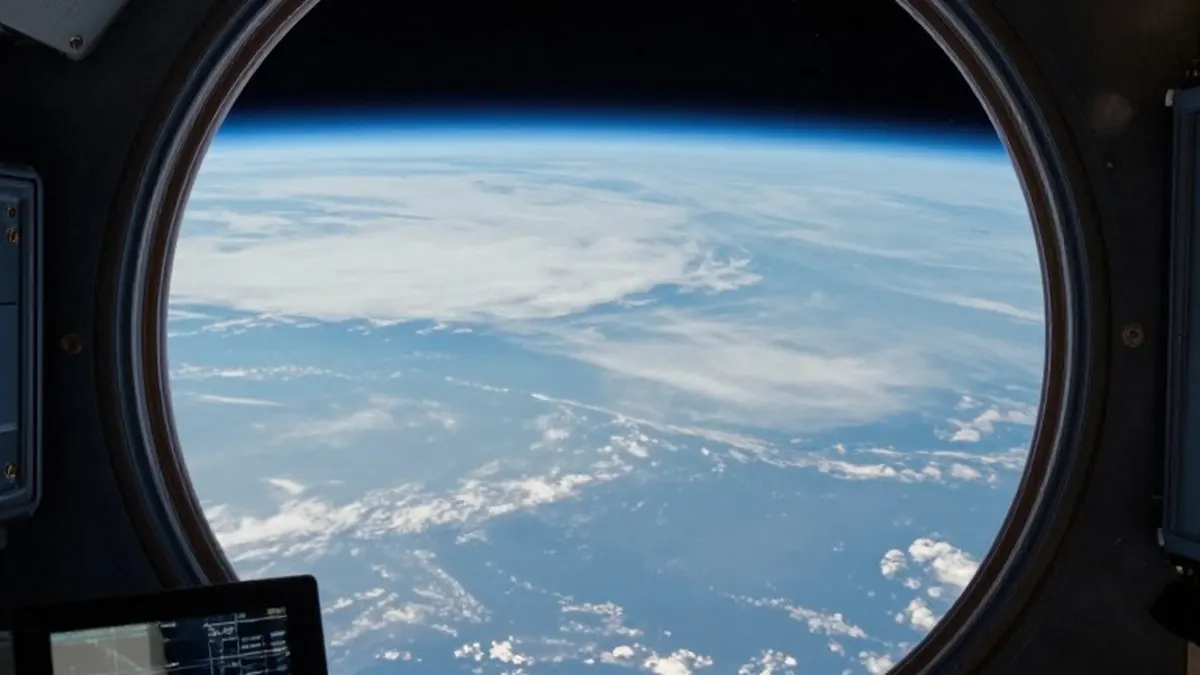
French astronaut Thomas Pesquet has released a new publication titled "Space in 100 Questions" that aims to demystify the final frontier for readers of all ages. The book serves as a gateway into the complexities of space exploration, offering enthusiasts an in-depth look at the mechanics and mysteries of life beyond Earth. Pesquet, who is widely admired in France, uses the work to share insights gained from his professional experiences while aboard the International Space Station.
The publication draws heavily on Pesquet’s personal accounts from his two missions to the ISS. He details the physical and psychological adjustments required to live and work in orbit, describing the rigorous preparation astronauts undergo in the fields of physics, psychology, social dynamics, and academics. These preparations are essential for ensuring that crew members can maintain their health and productivity while exploring the heavens and observing Earth from above.
One of the central themes of the book is the connection between space travel and advancements in medicine. Pesquet explains that the unique environment of orbit allows scientists to observe biological processes that are often obscured by the constant pull of gravity on Earth. By removing this gravitational parameter, researchers can identify hidden variables in human physiology that provide new avenues for medical research.
The experience of reaching orbit is described with vivid precision in the text. Pesquet notes that the acceleration during launch is immense, stating that the vehicle gains 100 kilometers per hour every 1.8 seconds for a period of eight minutes and 48 seconds. Once the engines cut off and the spacecraft reaches a speed of 28,000 kilometers per hour, it enters a state of free fall around the Earth, and the crew begins to float.
This transition from high-speed acceleration to weightlessness marks a profound shift in perception for astronauts. Pesquet emphasizes that once in space, the removal of certain physical constraints allows for a fresh perspective on the human body. He argues that this altered state enables the discovery of phenomena that are not visible or measurable in ground-based laboratories.
The book is structured to answer common curiosities about the space environment, including the sensory experience of weightlessness. Pesquet’s narrative provides a practical overview of how astronauts adapt to their new surroundings, highlighting the blend of scientific discovery and personal adaptation that defines spaceflight.
By sharing these insights, Pesquet seeks to inspire a sense of wonder and curiosity in readers, similar to the feelings evoked by looking up at the night sky. The work bridges the gap between the awe of celestial observation and the tangible scientific benefits derived from space exploration.
The release of the book comes at a time when public interest in space travel remains high. Pesquet’s perspective as a veteran astronaut lends authority to the discussions on how orbital conditions can advance our understanding of human health.
The text also touches on the broader implications of space research, suggesting that findings from the ISS contribute to a deeper understanding of how the human body functions under extreme conditions. This knowledge is crucial for planning future long-duration missions and improving medical treatments on Earth.
Ultimately, "Space in 100 Questions" offers a comprehensive look at the intersection of space exploration and medical science, inviting readers to consider the hidden benefits of venturing into the final frontier.