Ukraine claims responsibility for drone strike on Russian warship in Benghazi
Ukrainian President Volodymyr Zelenskyy acknowledged a drone attack on a Russian vessel in Libya, prompting concerns from both rival Libyan administrations that the incident could disrupt the nation's fragile reunification efforts.
By Nikolai Morales ·
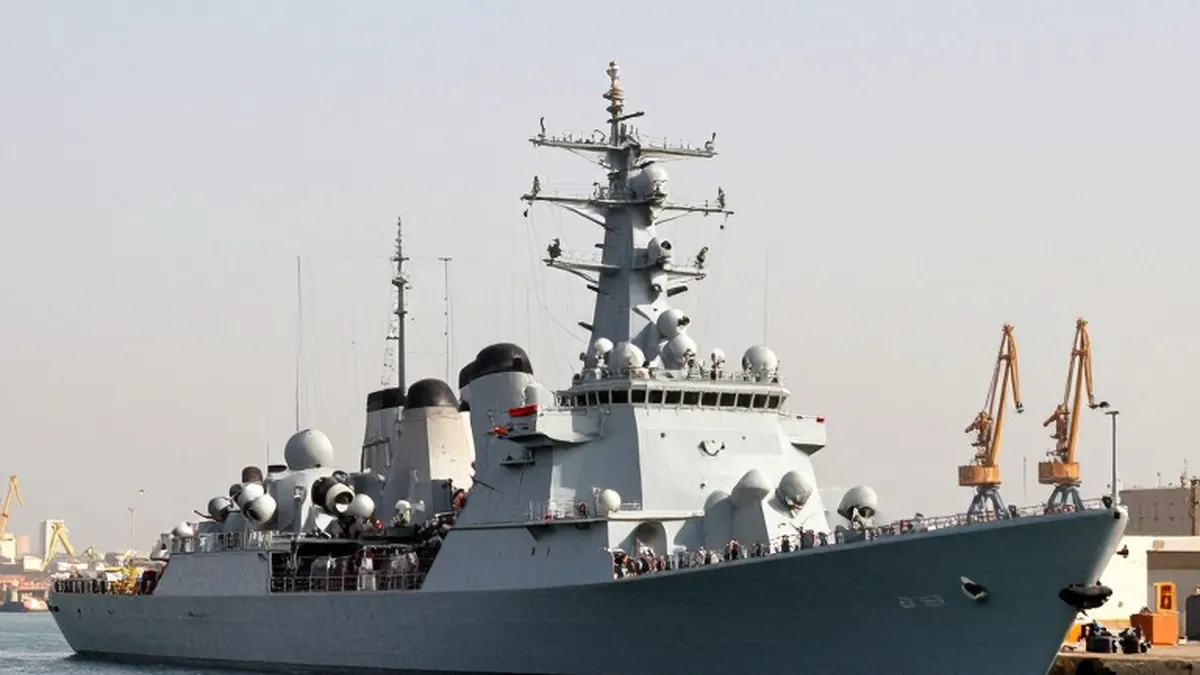
Ukrainian President Volodymyr Zelenskyy took responsibility on Monday for a series of drone strikes that targeted a Russian warship docked in the port of Benghazi, Libya. The attack, which occurred on Sunday, has drawn sharp condemnation from political leaders on both sides of Libya’s fractured governance structure. Officials fear the incident threatens the delicate progress made over recent years to unify the country after more than a decade of division and conflict.
Since the fall of Muammar Gaddafi in 2011, Libya has been governed by two rival administrations. The internationally recognized Government of National Unity is based in Tripoli and led by interim Prime Minister Abdul Hamid Dbeibah. In the east, authorities linked to military commander Khalifa Haftar control much of the region from Benghazi. Haftar has maintained close ties with Moscow, which has allegedly provided his forces with weapons, mercenaries, and diplomatic support in exchange for a military and logistical foothold in the country.
This Russian presence includes control over ports, airfields, and overland routes that are critical for supporting operations across Africa. Estimates suggest between 1,000 and 1,800 Russian personnel are currently in Libya, including members of the Africa Corps. The strategic importance of eastern Libya increased significantly after the fall of Syrian President Bashar al-Assad in December 2024, as it now serves as a key logistics bridge for Moscow’s deployments in the Sahel and Central Africa.
The Tripoli based government has sought to counterbalance Russian influence by strengthening partnerships with other nations, most notably Turkiye. The Government of National Unity has adopted a pro-Ukraine stance, issuing an unqualified condemnation of Russia’s invasion in 2022 and voting to suspend Russia from the UN Human Rights Council. In 2023, talks on military cooperation began, leading to Ukrainian forces providing training and technical support to Libyan troops in the west.
Russia has long accused Ukraine of arming forces in western Libya to target its interests in Africa. Previous incidents, including attacks on the Russian cargo ship Lady Mariia in September and the LNG carrier Arctic Metagaz in December, were suspected to be carried out by Ukrainian forces. Zelenskyy’s claim of responsibility for the Benghazi strike removed any ambiguity about Ukraine’s involvement in these operations.
Despite the recent military friction, Libya has made cautious progress toward political reconciliation. In April, the country adopted its first unified national budget in over a decade, a move welcomed by ten major international actors. In late August, the rival sides agreed to hold presidential and legislative elections within 24 months under a single executive authority, a deal mediated by the United Nations.
Analysts suggest that while the attack is significant, it may not derail the ongoing talks. Sansom Milton of the Center for Conflict and Humanitarian Studies noted that the current framework represents the clearest opening for a political settlement in years. He stated that the Haftar and Dbeibah camps have shifted their focus from sharing oil wealth to sharing power, making it unlikely that the strikes alone would disrupt the process.
However, the overt nature of the attack could complicate Ukraine’s future role in the region. Mousa al-Koni, a member of the Libyan Presidential Council, described the strike as terrorist and promised diplomatic measures, including a referral to the UN Security Council. Experts warn that both Russian and Haftar loyalist factions may feel compelled to retaliate, potentially reducing Ukraine’s visibility and control in the country rather than leading to a full expulsion.
Both Libyan administrations have insisted that they do not want a foreign conflict between Russia and Ukraine played out on their shores. The incident highlights the complex interplay between regional stability and broader geopolitical rivalries, with observers watching closely to see if the pressure for retaliation will impact the fragile peace process.