COGAT Chief Reviews Winter Aid Gaps and Infrastructure Plans in Gaza
Maj.-Gen. Yoram Halevi met with UN and peace board officials to address delays in winter supplies and coordinate infrastructure upgrades for Gaza.
By Nikolai Morales ·
Maj.-Gen. Yoram Halevi, the head of the Coordinator of Government Activities in the Territories (COGAT), held discussions on Monday with leaders from United Nations agencies operating in Gaza and representatives of the Board of Peace (BoP). The primary focus of the meeting was to review preparations for the approaching winter season and to assess the current status of humanitarian aid delivery. The Israel Defense Forces (IDF) confirmed the meeting in an official statement.
The gathering took place against the backdrop of what the IDF characterized as a misleading propaganda campaign launched by the Gaza Winter Emergency Committee, a body affiliated with the Hamas government. According to the military, this campaign aims to exaggerate the severity of the humanitarian crisis in the territory. During the session, officials examined the progress of a winter preparedness plan. This initiative is being driven by the Palestinian Authority's Ministry of Public Works and Housing in partnership with the BoP, various UN agencies, and other international organizations.
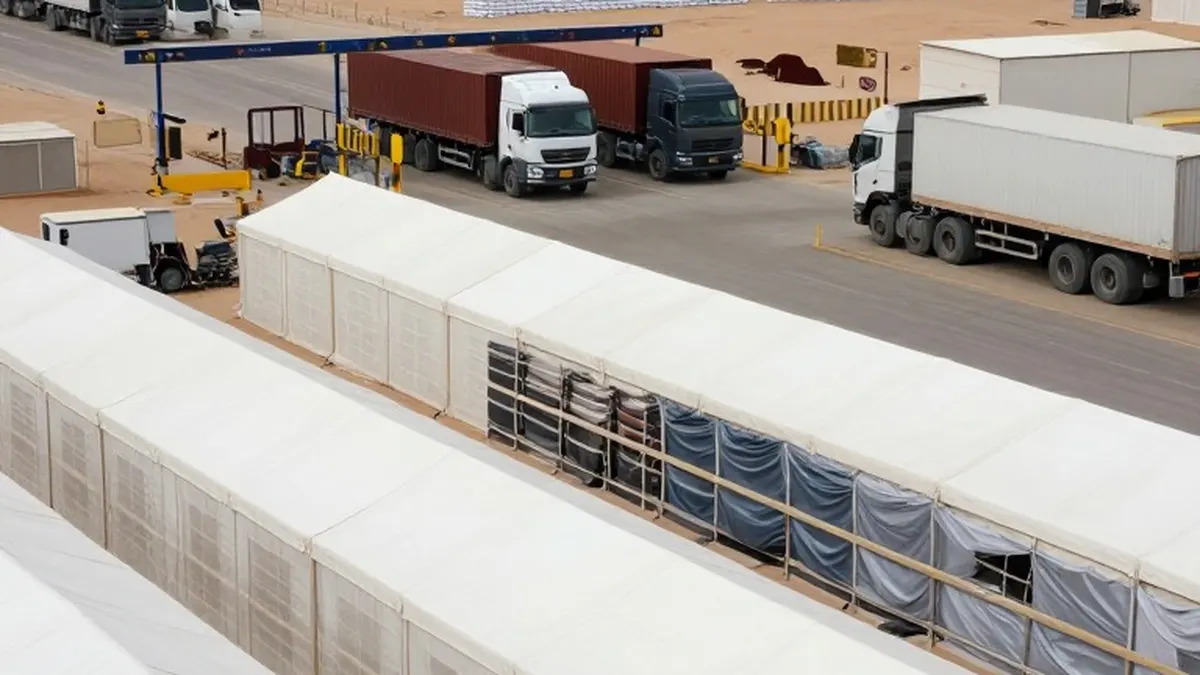
Data presented to the group indicated that significant logistical efforts have already been made. Nearly 100,000 tents and more than 9,000 trucks have entered Gaza. These vehicles transported essential supplies, including waterproof tarps, blankets, clothing, and other materials required for winterization. However, the meeting also revealed a notable discrepancy between the volume of supplies approved for entry and the actual amount that has reached the ground.
A substantial amount of approved aid remains outside the territory. This backlog includes over 67,000 tents, thousands of additional waterproof tarps, and tens of thousands of clothing items. The delayed cargo also comprises waste removal trucks and critical equipment necessary for repairing sanitation infrastructure. To address these needs, officials presented a new package of measures designed to bolster Gaza's infrastructure before the winter weather sets in.
This additional package includes mobile sewage pumps, generators, the oil required to operate those pumps, water tankers, and medical equipment. The IDF stated that this equipment will be brought into Gaza under a specific monitoring and oversight mechanism. The goal of this system is to prevent Hamas from diverting the assets for terrorist purposes or military buildup, ensuring they are used for their intended humanitarian function.
The discussion also covered recently approved emergency measures for the Sheikh Ajlin and Sheikh Radwan stormwater treatment facilities. These efforts are being coordinated in close consultation with the Board of Peace. Maj.-Gen. Halevi acknowledged the hardships facing Gaza residents during the cold months and emphasized that COGAT is working to facilitate a targeted humanitarian response.
Halevi noted that while assistance is being provided, responsibility remains with Hamas as long as the group refuses to disarm. He stated that Hamas continues to exploit equipment meant for residents to strengthen its military capabilities. "But as long as Hamas refuses to disarm and continues to exploit equipment intended to assist the residents in order to strengthen itself militarily, it bears direct responsibility for the fact that long-term solutions to improve living conditions and rebuild the Strip cannot progress," he said.
The COGAT chief also accused Hamas of running a false information campaign to deflect attention from its role in the humanitarian situation and its ongoing terrorist activity. "We are ignoring the background noise and false publications and focusing on actions. We will continue to advance preparations for the winter and enable the entry of aid into the Gaza Strip," Halevi remarked.
In closing, Halevi stressed that cooperation between the BoP, UN agencies, and international organizations is vital. He urged these partners to exercise their responsibilities by coordinating the introduction of already-approved equipment and increasing the flow of assistance. He called for additional requests to be submitted based on the specific needs identified on the ground, ensuring that help reaches residents before the next storm arrives.