US Army plans emergency detonation of unstable chemicals in Iowa
The US Army intends to invoke emergency rules to detonate degraded lead azide in Iowa, overriding a recent court order to prevent potential risks from falling winter temperatures.
By Lorenzo Patterson ·
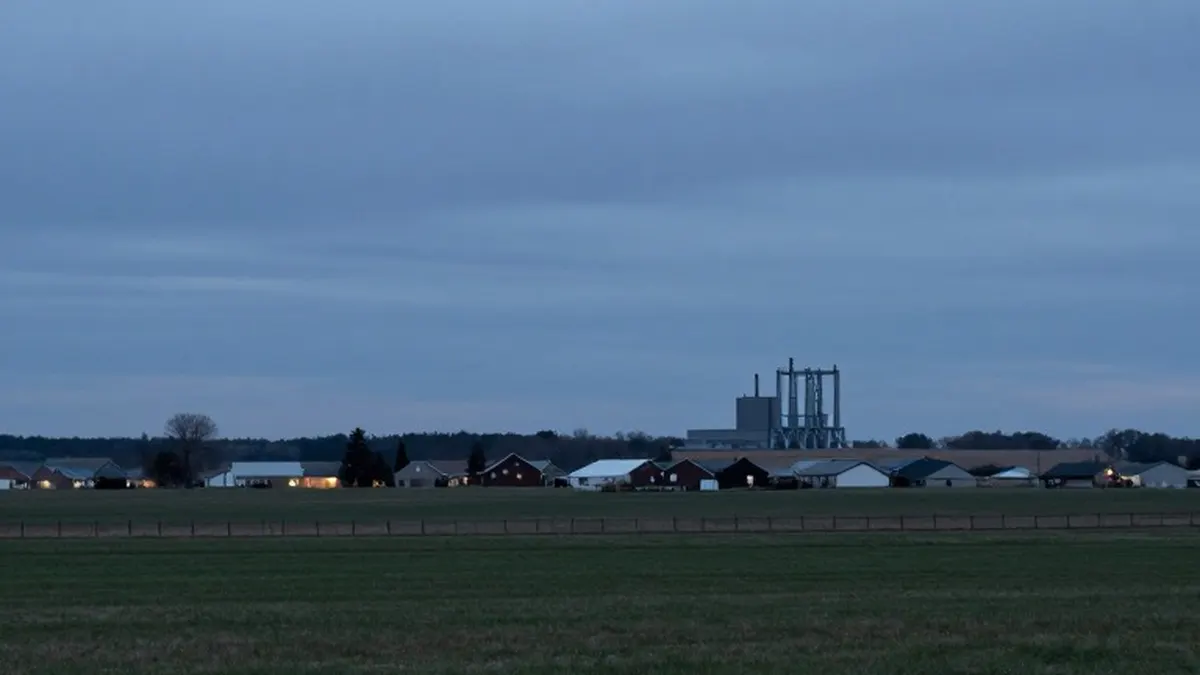
The US Army has moved to invoke emergency legal provisions in an effort to bypass a court order that had temporarily halted plans to detonate several tons of bomb-making chemicals in Iowa. Government officials argue that further delays increase the danger posed by the material, particularly as the weather begins to cool for the season. The military aims to carry out the detonation by Tuesday, citing the urgent need to protect both its personnel and the surrounding communities.
In a filing submitted late on Saturday to the eight US circuit court of appeals, government lawyers emphasized the necessity of swift action. They stated that the protection of human health and the environment requires immediate steps rather than continued delay. This legal maneuver comes after the appeals court granted a request on Thursday to pause the permit that had previously authorized the detonation. The operation is set to take place in Middletown, a small community located approximately 160 miles southeast of Des Moines.
The detonation was originally scheduled for Friday but was postponed to Monday following a significant outpouring of public concern regarding potential health and environmental impacts. Environmental groups have criticized the government's latest move, describing it as a strategic maneuver to circumvent the court order. They argue that the Army is attempting to avoid public demands for greater safety measures and transparency in the process.
Thien Chau, an attorney at Earthjustice, expressed skepticism about the Army's approach in a Sunday statement issued alongside the Iowa Environmental Council and the Sierra Club. Chau noted that the Army appeared more focused on finding a way to sidestep the judicial process than on meeting the public's demands for stronger protection of people, property, and the environment. The groups questioned whether all alternative options had been given appropriate consideration by the authorities.
Government lawyers contend that the Army does not require a permit to take emergency action against an immediate threat from explosive material. They explained that the standards of federal laws regulating hazardous waste do not apply in situations where there is an immediate threat to health, safety, or the environment, as determined by an explosive or munitions emergency response specialist. Officials assert that the chemicals are unstable and that the risk of an uncontrolled explosion is growing as temperatures drop.
Specifically, officials warned that there is a risk the chemicals may explode as temperatures are expected to fall below 30 degrees Fahrenheit in the coming days. The situation originated in March when staff at the Iowa Army Ammunition Plant discovered several dozen barrels of degraded lead azide, a material used in munitions production. The crystallization of this material created an unstable condition, prompting the Army to assemble a team of experts in munitions chemistry, engineering, and environmental safety to develop a response plan.
According to documents from the US Environmental Protection Agency, alternatives such as neutralizing or decomposing the contents with other chemicals were considered. However, officials stated that handling the drums would increase the probability of an accidental and potentially fatal detonation. Environmental groups disagreed with this assessment, arguing in their petition that other alternatives were not fully evaluated and criticizing officials for not sharing more information with the public.
While nearly 400 people reside in Middletown, thousands more in the surrounding areas could be affected by the detonated material, which may disperse in the air and settle on the ground. Residents in the region have been advised to stay indoors, keep windows and doors closed, and bring pets and livestock inside. They were also instructed to clean cars, windowsills, and outdoor surfaces after the event.
An official advisory explained that the detonation will result in an air plume containing lead particles that will disperse and deposit on the ground. The advisory highlighted that lead is toxic to both humans and animals, underscoring the potential health risks associated with the operation.