Taiwan likely to receive less attention as Xi and Trump prepare for APEC talks
Technology and trade disputes are expected to dominate the anticipated meeting in Shenzhen as China increases pressure on Taiwan and U.S. defense cooperation continues.
By Nikolai Morales ·
Taiwan is expected to receive limited attention when Chinese President Xi Jinping and U.S. President Donald Trump meet on the sidelines of this week’s APEC summit in Shenzhen, China. Technology competition and trade tensions are pressing issues for Washington and Beijing, while experts anticipate little progress concerning the self-ruled island claimed by China.
Export controls, the continuing trade dispute and a scandal that forced Nvidia’s chief executive to resign have heightened the focus on technology. Arthur Zhin-Sheng Wang, a cross-Straits relations expert at Taiwan’s Central Police University, said Taiwan is not a central issue in the Trump administration’s relationship with China. Washington does not formally recognize Taiwan but remains its largest informal ally and arms supplier.
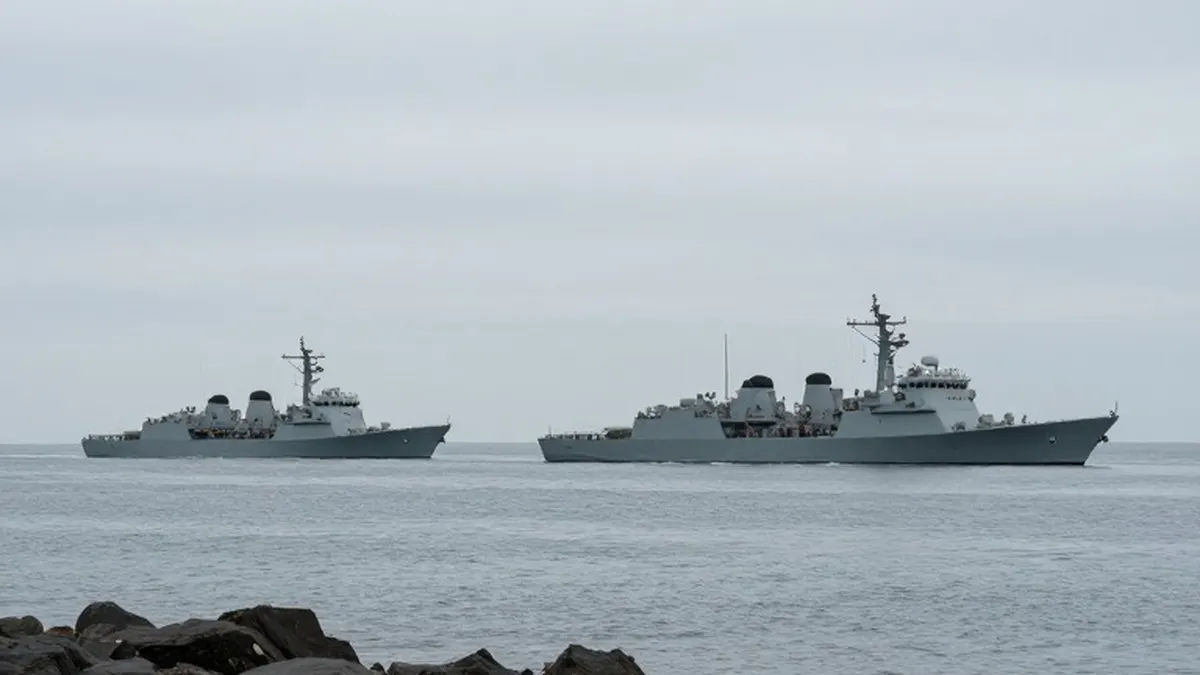
Despite Trump’s public ambivalence, experts say practical cooperation remains strong. During the summer, the de facto U.S. embassy in Taiwan published a photograph of joint coast guard patrols, an unusual public acknowledgment of direct cooperation involving defense. Kuo Yu-jen, a defense studies expert who directs Taiwan’s Institute for National Policy Research, described the image as evidence of decades of joint training and cooperation.
U.S. law requires Washington to help Taiwan defend itself, with arms sales serving that purpose. Whether American forces would intervene against a Chinese invasion remains deliberately ambiguous. Polling over the past five years by Taiwan’s government-funded Institute of National Defense and Security Research shows a persistent division: roughly half the public expects U.S. troops to help in an invasion, while roughly half does not.
Trump has urged Taiwan to increase its defense spending since beginning his second term, and Taiwan has pledged to devote 5% of GDP to defense. Although a stalled $14 billion arms package has attracted considerable attention, an $11 billion package approved at the end of 2025 is proceeding. Experts say some delays began before Trump returned to office.
Taiwan received its first two long-delayed F-16V fighter jets from the United States in October, followed by three more earlier in November. The aircraft belong to a backlog of American orders valued at almost $30 billion, according to George Mason University’s Taiwan Security Monitor research project. Trump’s disclosure that he discussed arms sales with Xi earlier this year raised concerns about political considerations, but production constraints may explain delays, particularly for future deliveries.
Congress approved long-range precision strike systems for Taiwan in December 2025, but limited supplies have created competing demands. Kuo said some approved weapons, including HIMARS rockets, are also being used by U.S. forces in the ongoing Iran war. He attributed the supply problem to manufacturers’ inability to produce enough missiles quickly.
China’s pressure on Taiwan has meanwhile intensified. Skyfaring, which compiles public Taiwanese defense ministry data, recorded about 5,448 Chinese fighter jet sorties toward Taiwan during exercises in 2025. Such flights were sporadic before 2023. The total for 2026 stood at 2,401 as of November 12, below the full-year figure for 2025.
Taiwan’s National Security Council chief Joseph Wu said in a November 3 post on X that Beijing had recently conducted unannounced Western Pacific drills involving more than 100 vessels near Taiwan and Japan. Wang said China’s exercises increasingly emphasize blockading Taiwan rather than firing live missiles, alongside aggressive activities that remain below the threshold of open warfare.
The Chinese coast guard began patrols off Taiwan’s Pacific-facing east coast in June, extending beyond outlying islands nearer China. Wang compared this with Beijing’s use of coast guard patrols in South China Sea waters disputed with the Philippines, describing it as a way to assert sovereignty.
More News · National news · Report a business · Got a Story?