Supreme Court declines to review Maryland public gun carry restrictions
The high court chose not to hear a challenge to Maryland's broad limits on firearm carrying in public spaces, leaving the state's laws in effect without defining the scope of sensitive places.
By Pedro Tanaka ·
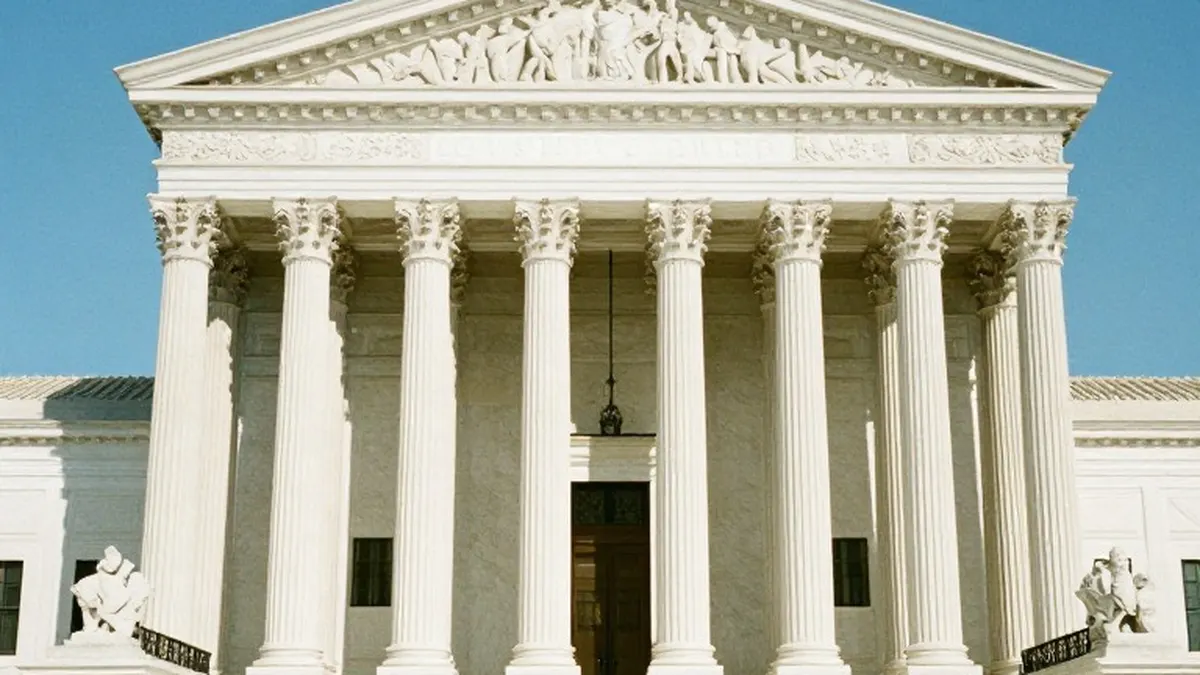
The United States Supreme Court on Monday, November 16, declined to hear a significant legal challenge to Maryland's extensive regulations governing the carrying of firearms in public areas. By refusing to take up the case, the justices avoided the immediate task of providing a precise definition for what constitutes a sensitive place, a concept referenced in previous decisions to identify locations where gun ownership might be restricted. Consequently, the various Maryland statutes remain fully in force.
The state measures at issue prohibit the carrying of firearms in a wide array of public settings. These restrictions apply to state parks, public transportation systems, school grounds, healthcare facilities, and establishments that sell alcohol. The case presented a complex legal landscape due to the number of distinct provisions being challenged simultaneously.
Justice Clarence Thomas, a member of the court's conservative majority, issued a brief statement explaining his concurrence in the decision not to hear the case. He noted that the broad scope of the petitioners' challenge would complicate the court's review process. However, Thomas indicated an interest in considering a future case that would be more narrowly focused. He further expressed skepticism regarding the legality of the specific Maryland provisions, suggesting they may not withstand scrutiny if challenged individually.
Several of the contested Maryland laws were enacted in 2023, following the Supreme Court's 2022 ruling that established a constitutional right to carry a firearm outside the home. That earlier decision introduced a new legal standard for evaluating gun restrictions, requiring judges to assess whether laws align with the historical understanding of the Second Amendment. This shift placed legal pressure on both newly enacted and long-standing firearm regulations across the country.
The legal debate is rooted in a 2008 decision where the court first recognized an individual right to bear arms. In that majority opinion, Justice Antonin Scalia wrote that the ruling should not be interpreted to cast doubt on laws forbidding the carrying of firearms in sensitive places, such as schools and government buildings. Gun rights advocates generally accept that there is a historical basis for banning firearms in specific locations like courthouses, legislatures, and polling places.
However, proponents of expanded gun rights argue that Maryland has extended these bans too far into modern public spaces, including airports and entertainment districts. Lawyers representing individual Maryland residents and four gun rights groups argued in court filings that the state's restrictions are overly broad and severely limit the ability to carry firearms in public. They described Maryland officials as openly hostile to gun rights.
Maryland Attorney General Anthony Brown urged the court to leave the case to the lower courts, arguing in his filings that there is vast areas of shared consensus regarding which locations should be considered sensitive. Other states with similarly broad restrictions, including California, New York, New Jersey, and Hawaii, are also navigating these legal questions.
Since the 2022 ruling, lower courts have struggled to apply the new historical test to contemporary contexts. The Supreme Court acknowledged this complexity in a 2024 ruling that upheld a federal law preventing individuals subject to domestic violence restraining orders from possessing firearms, a decision that drew criticism from gun rights activists. In June, the court struck down a Hawaii law limiting firearms on private properties open to the public, a provision similar to one in the Maryland law that had already been invalidated by a lower court and was not part of the current appeal.
The decision leaves the legal framework for public gun carry in Maryland unchanged, but it does not resolve the broader constitutional questions surrounding the definition of sensitive places. The case highlights the ongoing tension between the expanded interpretation of the Second Amendment and the states' traditional authority to regulate firearms in specific public venues.
More News · National news · Report a business · Got a Story?