Senate Advances Major Permitting Reform Bill to Speed Up Energy Projects
The Senate voted to pass a bipartisan bill designed to streamline environmental reviews and reduce regulatory hurdles for infrastructure and energy development.
By Lorenzo Patterson ·
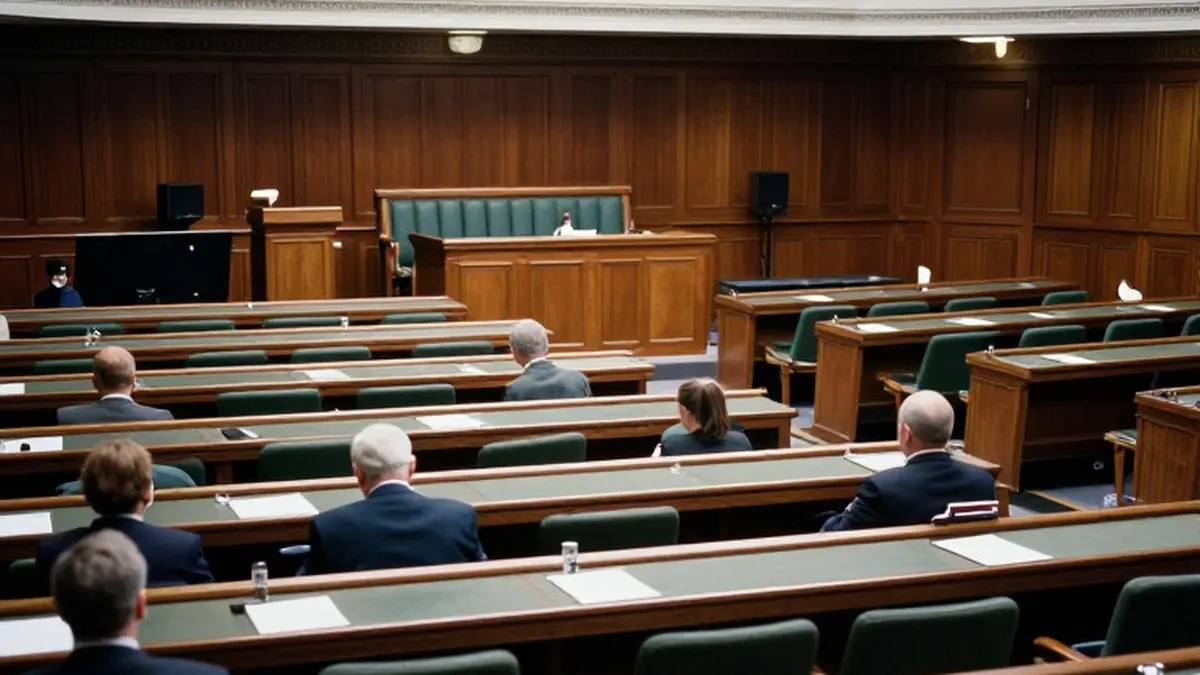
The United States Senate voted 62 to 33 on November 19 to advance a comprehensive piece of legislation aimed at overhauling the permitting process for energy and infrastructure projects. The bill, known as the Bipartisan American Affordability and Jobs Act, seeks to accelerate the approval of various development initiatives by modifying existing regulatory frameworks.
The legislation was developed by a diverse coalition of senators, including Shelley Moore Capito from West Virginia, Sheldon Whitehouse from Rhode Island, Mike Lee from Utah, and Martin Heinrich from New Mexico. This grouping represents an unusual alignment of political viewpoints on the issue of government efficiency and project execution.
Key provisions of the bill include stricter deadlines for environmental reviews, measures to accelerate the expansion of electricity transmission networks, and restrictions on the ability of federal agencies to revoke previously issued permits. The goal is to eliminate bottlenecks that often delay the completion of major construction and energy projects.
Conservative supporters of the bill frame it as a necessary step to cut through government bureaucracy. Senator Capito argued that critical investments in the nation's economy and energy production have been stalled for too long by excessive red tape, duplicative reviews, and regulatory uncertainty. She emphasized the need to allow these projects to move forward without unnecessary delays.
Democratic supporters highlight the bill's potential to lower costs and facilitate the construction of long-sought clean energy projects. Senator Whitehouse stated that Democrats are focused on reducing energy costs, cutting emissions, and ensuring that data centers pay their fair share of infrastructure costs. He suggested that Americans would see quick relief if the bill moves forward.
Addressing concerns regarding the growing number of data centers, the legislation requires new facilities with a capacity of 20 megawatts or more to pay the full incremental cost of the infrastructure built to serve them. This provision aims to prevent data centers from benefiting from public infrastructure spending without contributing to its upkeep.
Despite the bipartisan support, the bill faced opposition from certain environmental groups and Native American tribal organizations. These groups expressed concern over the easing of environmental review and consultation rules, which they view as vital protections. In the Senate, the majority of the opposition came from Democratic members, though the bill still passed with significant support from both parties.
The willingness of some Democrats to support simplified permitting marks a philosophical shift. Policy experts noted that existing laws often hindered the goals of previous liberal administrations. Adam Jentleson, founder of the Searchlight Institute, observed that the bill removes obstacles that had previously hamstrung climate investments, including those under the Inflation Reduction Act, which often failed to break ground due to regulatory complexities.
The bill now heads to the House of Representatives for further consideration. House Majority Leader Steve Scalise expressed optimism that Congress will reach an agreement to send a final version to President Donald Trump. He noted that while details are important, there is a strong desire to pass a bill that can be signed into law.
Senate Majority Leader John Thune advised that the clearest path to enacting the law is for the House to adopt the Senate's version. He pointed out that the measure has undergone extensive debate and procedural scrutiny over several months. Thune suggested that further procedural complications could arise if the bill were to bounce between chambers, urging the House to move the legislation forward to avoid delays.
More News · National news · Report a business · Got a Story?