Pew Study Projects Gradual Religious Shifts in India and Global Demographics
A Pew Research Center study projects gradual demographic shifts in India and global religious populations, highlighting the growing influence of Africa on Christianity and the continued predominance of Hinduism in India.
By Nikolai Morales ·
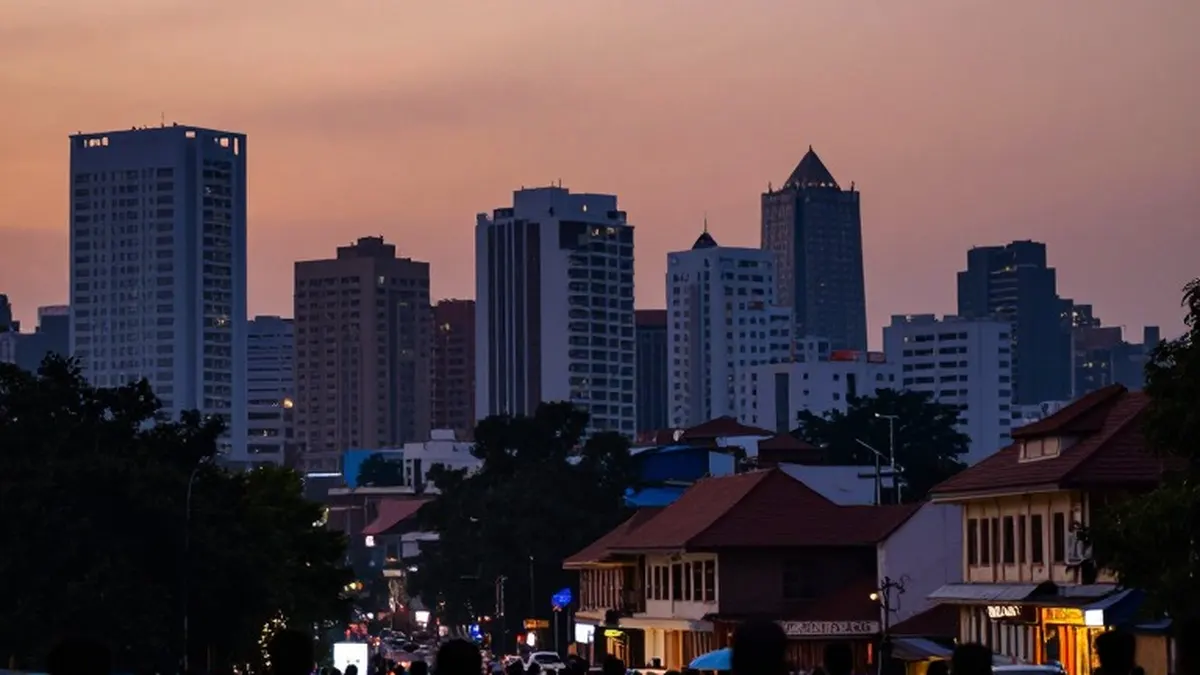
A new study from the Pew Research Center projects that India will remain predominantly Hindu for decades, although its religious composition is expected to undergo gradual changes. By 2070, Hindus are estimated to comprise 76% of the population, down from 79% in 2020. Meanwhile, the Muslim share of the population is projected to rise from 15% to 20% over the same period.
These demographic shifts are primarily driven by differences in age structures and fertility rates. Indian Muslims are statistically younger than Hindus and have higher average fertility rates. The report notes that while the gap in the number of children per woman has narrowed significantly since 1992, Muslim women in India are still expected to have an average of 2.3 children between 2025 and 2030, compared to 1.8 for Hindu women.
Stephanie Kramer of the Pew Research Center explained to the BBC that the changes are driven by long-standing demographic patterns rather than conversion. She noted that Hindu fertility rates are already below the replacement level, whereas Muslim fertility rates are projected to remain above that threshold for another two decades. This dynamic ensures that the Muslim population will grow at a faster pace than the Hindu population in the coming years.
India is expected to hold the second-largest Muslim population in the world by 2070, with approximately 334 million followers. Pakistan is projected to surpass Indonesia as the country with the largest Muslim-majority population, reaching an estimated 461 million. Bangladesh will also see substantial growth, with its Muslim population rising to 218 million.
Experts suggest that these projections counter dramatic narratives about India's religious future. KS James, an Indian demographer at Princeton University, stated that while the fertility gap is well established, it is expected to narrow further as fertility declines across all communities. He added that the data does not support alarmist scenarios suggesting Muslims will eventually outnumber Hindus, as the Hindu population is still projected to grow by 176 million between 2020 and 2070.
On a global scale, the study predicts that Muslims will overtake Christians as the world's largest religious group by 2035. By 2070, the global Muslim population is expected to reach 3.64 billion, accounting for 36% of humanity. In contrast, Christianity is projected to have just under three billion followers. This shift is partly due to the growing number of people identifying as religiously unaffiliated in Western nations.
Africa is poised to play a central role in the future of Christianity. The report forecasts that more than half of the world's Christians will live in sub-Saharan Africa by 2070, up from 31% in 2020. The Democratic Republic of Congo is expected to overtake the United States as the country with the largest Christian population. Meanwhile, Europe's share of the global Christian population is projected to drop to 11%, and the US is expected to lose its Christian majority by 2065.
Other notable trends include the rise of the religiously unaffiliated in countries such as the UK, France, and South Korea. However, their share of the global population is forecast to decline from 24% to 17%, largely due to population declines in China. Buddhism faces a demographic squeeze in East Asia, with populations in China, Japan, and South Korea expected to fall by more than half.
The study emphasizes that these are projections based on current trends in fertility, migration, and religious switching, rather than absolute predictions. Factors such as wars, epidemics, and economic changes are not fully accounted for. Nevertheless, the broad direction indicates a world where South Asia remains a religious hub, Africa shapes the future of Christianity, and Europe becomes increasingly secular.
Ultimately, the global religious landscape by 2070 is expected to be shaped less by mass conversion and more by the arithmetic of births, deaths, and migration. India and Pakistan will continue to dominate the Muslim demographic, while the center of gravity for Christianity shifts dramatically toward Africa.