Knesset Advances Key Bills on October 7 Inquiry and Prime Minister Term Limits
The Israeli parliament has moved forward with legislation to establish an independent inquiry into the October 7 attacks and impose new restrictions on the prime minister's tenure.
By Nikolai Morales ·
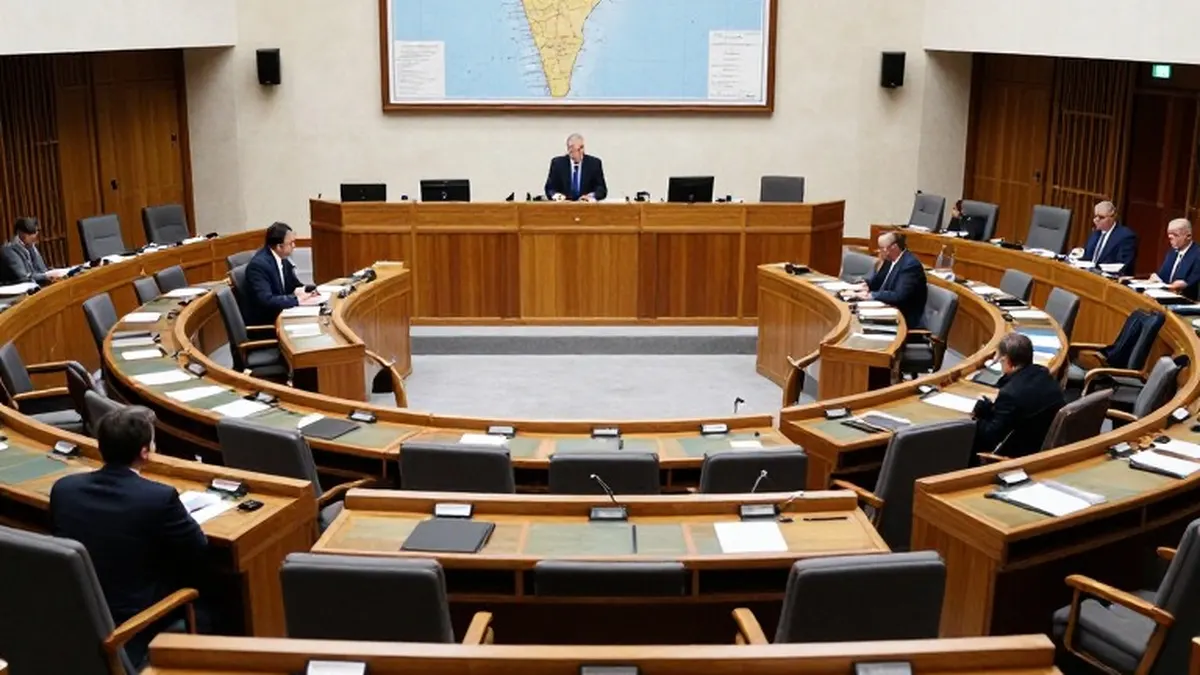
The Knesset voted on Wednesday to advance two significant pieces of legislation that mark a new phase in the political struggle surrounding Prime Minister Benjamin Netanyahu. The initial approval was granted for a bill to create a state commission of inquiry into the events of October 7, 2023, and a separate measure to impose term limits on the prime minister. These moves represent a dual political setback for the longtime premier, who has resisted an independent investigation for over three years.
The legislative push is being driven by the bloc led by Gadi Eisenkot, chairman of the Yashar party. This group secured a parliamentary majority with the support of Arab-majority parties after the recent election. Although Netanyahu remains in office as a caretaker prime minister, the Eisenkot bloc is using its numerical advantage to advance its campaign pledges before a new government is formally formed.
In a 65-50 vote, lawmakers approved the preliminary reading of the bill to establish a five-member state commission of inquiry. This body is Israel's highest investigative authority, possessing the power to subpoena witnesses and issue recommendations that can influence political careers. The commission would examine failures leading up to the Hamas-led onslaught and the subsequent war, a process that has been a central demand of victims' families for years.
Emotional appeals were heard in the gallery during the vote. Gil Dickmann, cousin of slain hostage Carmel Gat, expressed relief at the progress, calling it a giant step toward change. Eyal Eshel, whose daughter was killed at the Nahal Oz base, stated that he had sworn to fight for accountability and finally saw a path forward. The bill requires an initial budget of NIS 7 million and mandates an interim report within one year of the commission's establishment.
The second major measure, passed by a vote of 65-48, aims to limit the power of the prime minister. Sponsored by Oded Forer, the bill would cap consecutive terms at eight years, followed by an eight-year cooling-off period. It also bars lawmakers facing criminal indictments from forming a government, unless a specific legal determination is made regarding the nature of the charges. This legislation is widely viewed as targeting Netanyahu, who has served for a cumulative total of more than 19 years.
The term limit bill also repeals a 2023 law that restricted the circumstances under which a prime minister could be declared incapacitated. That previous law was criticized for being designed to shield Netanyahu from removal during his ongoing corruption trial. The new legislation would take effect in the next Knesset, though questions remain about whether its retroactive elements will withstand scrutiny by the High Court of Justice.
Beyond these two primary bills, the Knesset advanced a measure to repeal a controversial law that gave the justice minister control over the department investigating police misconduct. This move is part of a broader effort to reverse elements of the judicial overhaul implemented by the Netanyahu government. The repeal bill passed with a vote of 62-48, aiming to restore independence to the investigative body.
In contrast, two bills proposed by members of Netanyahu's outgoing coalition were defeated. These measures sought to freeze the arrests of military draft evaders, a move seen as an attempt to ease tensions with ultra-Orthodox parties during coalition negotiations. The Knesset voted against both proposals, signaling a shift in legislative priorities under the current majority.
The political landscape remains fluid as Eisenkot works to form a governing coalition. His mandate to do so expires at the end of December. If he fails to assemble a government, the mandate could revert to Netanyahu, who would then gain significant control over the legislative process through the Knesset Arrangements Committee. The coming weeks will be critical in determining whether these advanced bills become law or are stalled in committee.
The proceedings were marked by intense debate, with opposition members criticizing the inquiry bill as targeting soldiers and the term limit bill as a personal attack on the prime minister. Despite these challenges, the passage of these preliminary readings signals a strong intent by the new majority to address the political and security issues that have defined Israel's recent history.