Kan Documentary Reveals Extensive Use of Palestinian Civilians as Human Shields in Gaza
A new investigative report details how IDF units utilized innocent detainees for reconnaissance missions, a practice that spread despite official prohibitions and ended only after low-ranking soldiers challenged the orders.
By Lorenzo Patterson ·
Israel Defense Forces soldiers and commanders provided on-record testimony in a Kan public broadcaster documentary aired Wednesday, November 25, confirming the widespread use of Palestinian civilians as human shields during operations in Gaza. The one-hour episode of the series Zman Emet detailed how various units forcibly recruited innocent detainees to conduct reconnaissance missions. The military acknowledged that the practice was used to minimize risks to troops, often without proper oversight and with senior commanders overlooking the phenomenon.
The use of these civilians, referred to by slang terms such as mosquito, shawish, or human platforms, began in early 2024 during fighting in Khan Younis. Infantry and armored units observed special forces sending Palestinians into sites before entering themselves. A reserve major testified that this observation led regular units to adopt the method, viewing it as a practical solution to the threat of booby traps laid by Hamas in nearly every home.
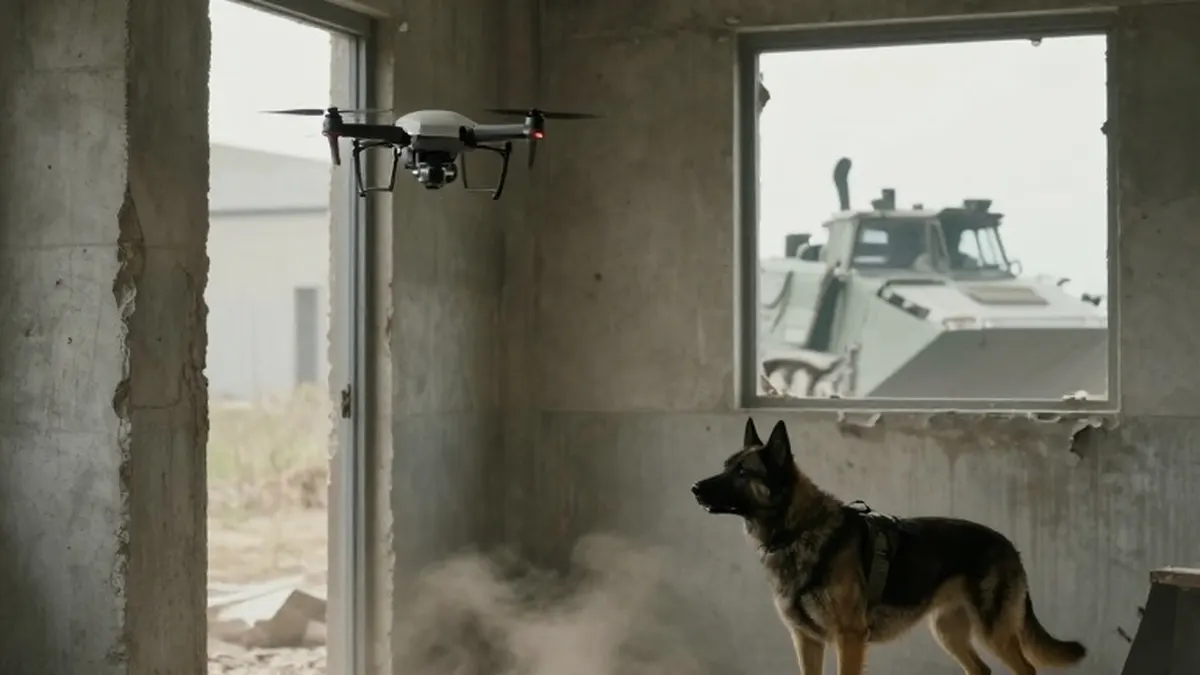
As specialized capabilities like dogs, drones, and engineering vehicles became scarce or unavailable, troops turned to these detainees. Lt. Col. (res.) Elitzafan Granevich, deputy commander of the Kiryati Reserve Armored Brigade, noted that resources were limited and commanders sought to reduce danger to their units. Col. (res.) Eli Gino, former chief of staff of the Givati Infantry Brigade, added that while everyone wanted all available assets, resources could not be allocated to every unit equally.
The detainees were typically obtained at army checkpoints, where individuals with no known terror ties were selected. Soldiers described choosing young men who were physically capable of navigating rubble. A sergeant recalled that two Palestinians, one of whom was around 16 years old and shaking, were handed to his platoon with instructions to use them to open sites. The men were handcuffed and blindfolded, and the soldiers struggled to communicate with them, as the detainees repeatedly asked for Rafah or a toilet.
The practice, though technically forbidden for infantry units, spread rapidly across different brigades. Officers described how the method allowed units to clear buildings faster and with less risk than using tank shells or digging. One officer noted that a battalion using a detainee worked twice as fast as their own unit. The Shin Bet security agency and Unit 504, which specialize in intelligence, are authorized to use detainees under strict regulations, but infantry units often operated without such approval or documentation.
The lack of clear guidelines led to confusion and incidents. Granevich stated that it was unclear who was responsible for the detainees or what actions they could perform. In one incident, a soldier was killed in an ambush after troops entered a building following a civilian who had found no explosives. The documentary highlighted that while the practice was known up the command chain, formal answers regarding its regulation were often delayed or avoided.
The end of the practice came not from senior commanders but from low-ranking soldiers who began questioning the method. Granevich described asking a deputy battalion commander if he had any shawishim, to which the officer replied with surprise, as if they were transferring standard equipment. A senior officer in another brigade noted that after checking with the Shin Bet, it was confirmed that the detainees were not terrorists, leading to a decision to end the use of the so-called mosquito protocol.
In the Kiryati Brigade, the decision to stop the practice led to a logistical challenge: releasing the detainees without returning them to Hamas-held territory in army uniforms. Granevich ordered his forward command team to buy civilian clothes and shoes from a nearby store. The following day, six Palestinians were gathered, their blindfolds removed, and they were released at the Netzarim Corridor.
Defense Minister Israel Katz announced on Tuesday that he was seeking to censor the report, while opposition leader Avigdor Liberman called for its withdrawal. However, this is not the first media investigation into the matter, with previous reports by Haaretz, the New York Times, and the Associated Press having already detailed the practice. The IDF has launched at least 10 criminal probes into such cases since the initial public exposure in August 2024.
The documentary underscores the complex dynamics of the war, where tactical necessities often clashed with established military law. While many detainees were released alive, some were accidentally killed by friendly fire, prompting troops to dress them in uniforms without protective gear. The testimony suggests that while the practice was effective in some contexts, it raised significant legal and moral questions that the military hierarchy struggled to address until the ground-level push for change.