Russia's Kolyma Mining Region Supplies Recruits for War in Ukraine
Deaths in a remote gold-mining settlement show how prison recruitment, debt relief and military pay have drawn men from Russia's far northeast into the war.
By Lorenzo Patterson ·
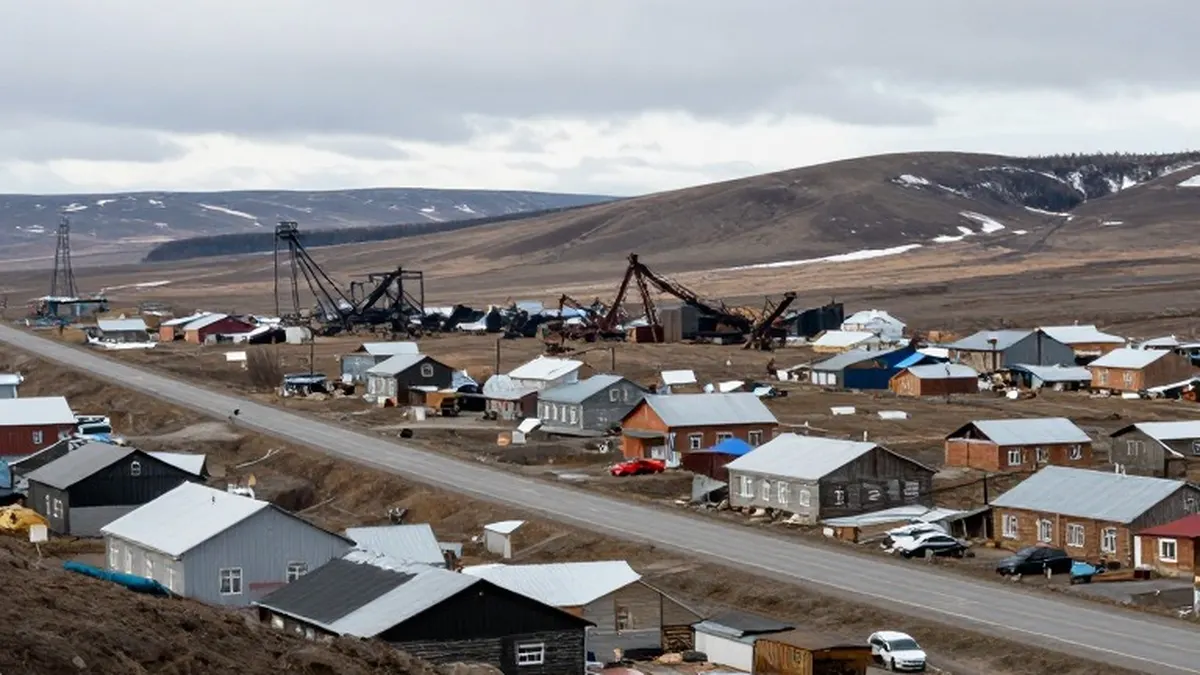
At least 20 men from Ust-Omchug, a settlement of roughly 2,500 people in Russia's far northeastern gold-mining region of Kolyma, have died fighting in Ukraine, according to open-source records gathered by journalists. Nearly all had criminal convictions or persistent debts, highlighting the role of prison recruitment and financial incentives in supplying soldiers for Russia's war.
Among them was Denis Dmitriyev, a former mine worker and father of two daughters who was killed in February 2025. He had been serving an eight-year robbery sentence when military recruiters and prison authorities began pressing him to enlist for combat about 10,000 kilometers away. A relative told RFE/RL's Siberia Realities that his wife urged him to finish his sentence instead, but he wanted his children to see him return as a hero.
The relative, who requested anonymity for fear of prosecution, said Dmitriyev's wife never received DNA results and the family remained uncertain whether the person buried in Ust-Omchug was actually him. Local officials told her to purchase a grave marker herself and seek reimbursement afterward, the relative said. As of November 2026, the grave still had no marker.
A traveling exhibition commemorating Kolyma's military dead recorded at least 46 men killed across the region. Their deaths illustrate the impact of the invasion President Vladimir Putin ordered in February 2022 on distant Russian communities. Prisons have supplied recruits through offers of reduced sentences, while military wages and benefits provide another incentive. Authorities have also offered to erase debts in return for service.
Those military payments exceed earnings available even in Kolyma's demanding mining industry. Tenkinsky District, which includes Ust-Omchug, is the region's leading gold-producing area, with monthly wages for unskilled workers ranging from 70,000 to 250,000 rubles, or about $850 to $3,000. A local resident identified only as Boris told RFE/RL that jobs were available at major operators Polyus and Pavlik, but prolonged shifts, harsh weather and years spent living in trailers made the work difficult.
Other local casualties had substantial criminal histories. Nikolai Dremin, 38, died in Ukraine's Luhansk region in summer 2024 and received several medals and commendations afterward. His earlier convictions included theft and an incident in which he drunkenly tried to shoot a neighbor's dog with a hunting crossbow but accidentally killed his wife. Court records showed that an 18-month prison sentence was converted to forced labor. He was sent to Ukraine in spring 2024.
Support for the war is visible at Ust-Omchug's community center, where officials organize film screenings and volunteers make souvenirs and camouflage netting for soldiers. The center has also hosted funerals and an exhibition featuring portraits and biographies of fallen servicemen from Kolyma.
The settlement also commemorates an earlier history of coercion and loss. An iron-and-stone monument dedicated in 2018 honors tens of thousands of political prisoners who labored in Kolyma's mines, mainly during the 1920s and 1930s. It was crafted by Oleg Zakutny, a blacksmith who moved from the Ukrainian city of Kramatorsk to Kolyma in 2015.